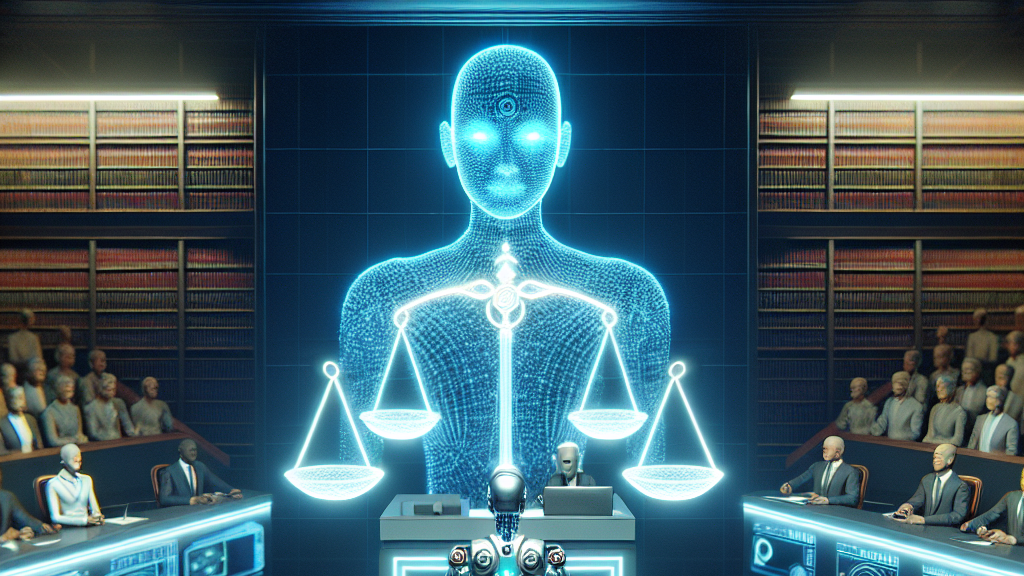
Imagine a world where robots aren’t just making decisions, they’re critiquing how humans do it too. This study peeks into how AI judges human decision-making, and shockingly, it seems that these AI systems might be a little biased. When humans and AI provide input, these machines tend to discredit human opinions more harshly if a mistake is made. And it gets even more intriguing: the bias intensifies when they reveal whether it’s a human or an AI offering the advice, especially if humans speak second.
The researchers dug into this with large language models, which are sophisticated AI systems that can understand and generate text. They tested how these AI tools reacted to human versus algorithmic advice in a controlled setting. They discovered that even when both humans and machines made similar errors, the AI still trusted its own kind more. Picture it like a match where the AI always seems to give itself the benefit of the doubt, perhaps putting human input on the back burner.
Why does this matter to you? Well, think about decisions at your workplace—like setting prices or creating discounts. Even if your company can’t use these AI tools directly due to privacy, they might still influence decisions through anonymized outputs. Understanding this bias is crucial. Companies need to rethink how to design AI systems that integrate human judgment fairly, ensuring machines don’t overlook valuable human insights.
Did you know that AI systems can be as biased as humans, sometimes that means they’re less likely to ‘listen’ to human input simply because it’s not machine-made?
FAQs
Why might AI systems undervalue human decisions in hybrid setups?
AI systems often apply a heavier penalty to human errors, possibly due to inherent biases in algorithmic design favoring machine-generated data over human opinion even when both have similar error rates.
How can firms use AI without direct implementation due to privacy restrictions?
Firms can employ AI as intermediary tools through anonymized outputs and decision pipelines to guide choices like pricing without compromising proprietary data.
What are the implications of AI systems penalizing human errors more than machine errors?
This bias can reduce trust in human input, skewing decision-making processes and potentially undermining the benefits of human-AI collaboration.
How does disclosure of advice source affect AI’s valuation of human input?
Revealing whether advice comes from a human or AI and placing human input second can exacerbate AI’s bias against human judgments.
What can practitioners do to balance AI bias in decision-making systems?
Practitioners should audit AI weighting systems, calibrate trust dynamics, and design decision sequences that ensure fair consideration of human input.
Background
At the heart of this study is the concept of hybrid decision-making systems, where both humans and AI contribute inputs. Large language models serve as the AI component, capable of processing and evaluating data. The research highlights how these systems evaluate and integrate human advice, often showing a preference for machine-generated data due to the design of algorithmic trust mechanisms.
History
The exploration of AI in decision-making has evolved from focusing on human reluctance to embrace algorithmic advice, to now examining how AI evaluates human judgment. This study builds on previous work but flips the perspective, highlighting the biases AI might hold against human input, which is a relatively new inquiry in the field of management and AI collaborations.
Based on “Human aversion? Do AI Agents Judge Identity More Harshly Than Performance” by Yuanjun Feng, Vivek Chodhary, Yash Raj Shrestha, available on arXiv (arxiv.org/abs/2504.13871), used under CC BY 4.0 (creativecommons.org/licenses/by/4.0/).