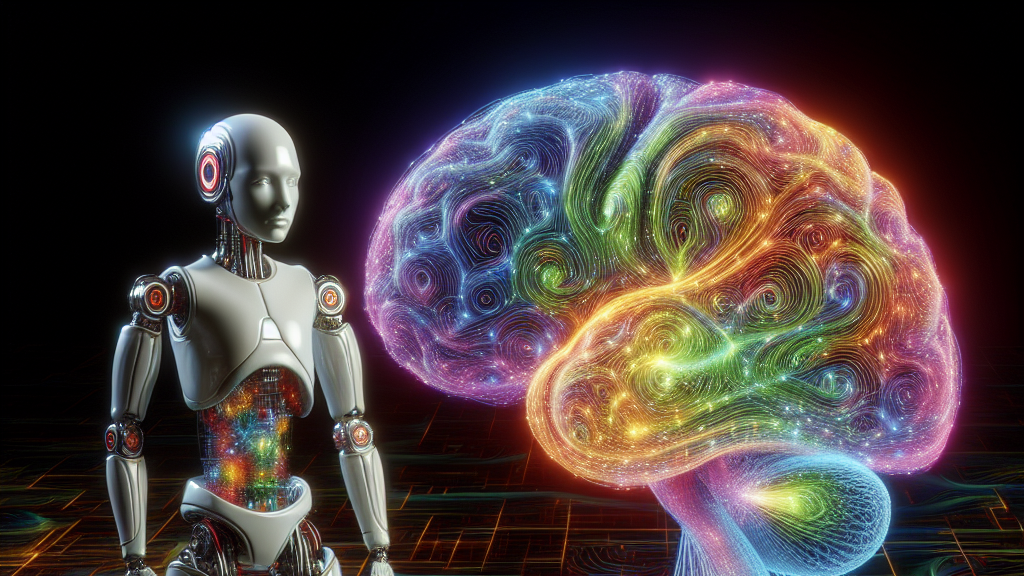
Have you ever wondered if computers could learn like humans do, absorbing new information without forgetting the old stuff? Imagine a computer that remembers your favorite pizza toppings even after learning a million new things. In the world of AI, this is a big challenge known as ‘catastrophic forgetting.’ It’s like your smartphone suddenly forgetting your password each time it syncs new apps. Imagine that hassle!
Recent research has been inspired by how the human brain works to tackle this problem. They’ve figured out that computers can decide if new information is fresh, known, or completely confusing. Scientists are also intrigued by how specific parts of the computer’s brain can be trained to hold onto the old information better while learning new things. They track which parts work too hard or too little, sort of like spotting which friends are always keen to help with homework and which ones avoid it by hiding in the corner.
If this research succeeds, your apps and devices could become much smarter, adapting to learning new things just like you do. Picture this: an AI assistant that seamlessly learns your evolving music taste or instantly understands that you’ve switched to a vegetarian diet without asking a billion questions first. This could make technology far more user-friendly and intuitive, making life smoother and more enjoyable.
Human brains can update their beliefs while sleeping, but AI needs new methods to achieve this kind of effortless learning.
FAQs
How does this research help AI handle new information better?
The research mimics human cognition to help AI detect if new information is familiar, new, or conflicting, allowing for better integration without forgetting previous knowledge.
Why is ‘catastrophic forgetting’ a problem for AI?
This occurs when AI learns new information, which sometimes leads it to forget previous knowledge, much like a computer overwriting old files. The research aims to fix this by adopting human-like cognitive strategies.
How might AI learning improvements impact everyday technology?
Improved AI learning could lead to smarter devices that adapt better to our preferences, making technology more intuitive and enhancing user experience.
Are there limitations in current AI models?
Yes, current AI models struggle with contradictions or conflicting data, often resulting in loss of unrelated information. The research suggests new cognitive methods to fix this.
What surprising discovery did the research uncover?
The study found that when AI receives conflicting information, it often confuses and disrupts its entire knowledge base. This shows the need for new methods of handling contradictions.
Background
Large language models (LLMs) are advanced AI systems designed to process and generate human-like text. However, they struggle with continuously updating information, a problem known as ‘catastrophic forgetting.’ Unlike humans, who can seamlessly learn new things without erasing old memories, LLMs often overwrite existing knowledge. This research introduces methods inspired by human cognition, such as recognizing familiar or conflicting information, to address this challenge.
History
The journey of AI learning and knowledge updating has evolved from simple neural network models to complex language models capable of understanding and generating human-like text. Early attempts often faced the challenge of information retention. This research builds on previous studies by introducing cognitive-inspired mechanisms aiming to mimic how humans effectively update knowledge without forgetting existing information.
Based on “In Praise of Stubbornness: The Case for Cognitive-Dissonance-Aware Knowledge Updates in LLMs” by Simone Clemente, Zied Ben Houidi, Alexis Huet, Dario Rossi, Giulio Franzese, Pietro Michiardi, available on arXiv (arxiv.org/abs/2502.04390), used under CC BY 4.0 (creativecommons.org/licenses/by/4.0/).