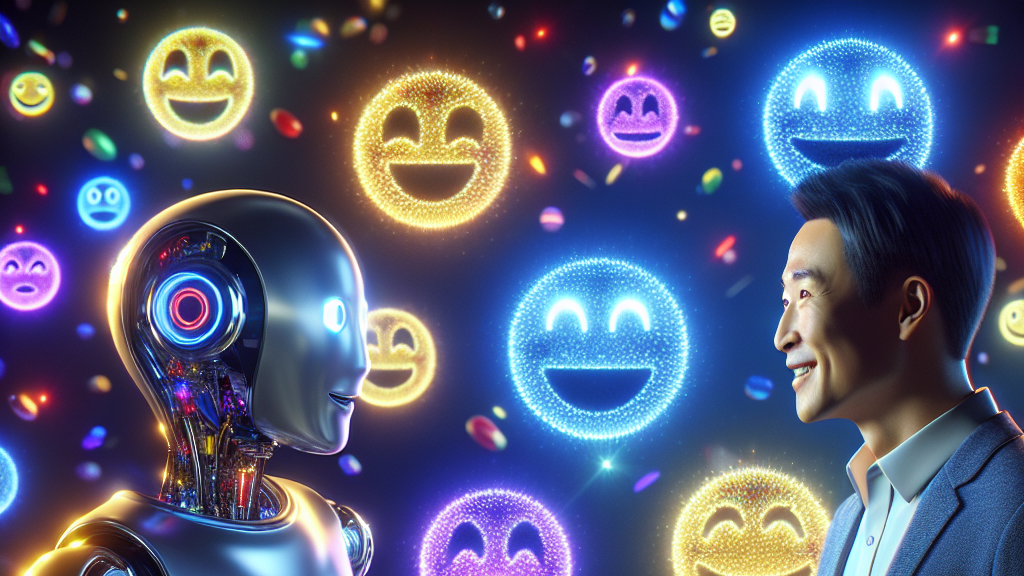
Imagine talking to a robot and feeling like it understands you just like a human would. That’s the dream this research is working towards. Scientists are trying to teach AI models how to show emotions during long chats. It’s like giving them a crash course in feelings so that they respond more naturally when you type away.
These smart researchers tried something new by using AI to analyze emotions in conversations happening between AI itself. They found that while some models could keep up an emotional vibe throughout, others struggled, especially with more intense emotions like extreme happiness or anger. This showed that if we want more emotionally intelligent chatbots, we need to teach them how to adapt and express emotions better.
Imagine in the future, when you ask your AI assistant how they’re doing, and they answer with a smile in their ‘voice’, or even sound a bit glum when responding to a sad story. This kind of emotional interaction could make having a conversation with AI feel more like chatting with a friend, opening up new possibilities for how we use technology every day.
Did you know? Some AI language models can express a range of emotions, but they still find it difficult to keep consistent feelings, especially during really emotional conversations.
FAQs
What is affect control in language models?
Affect control in language models refers to their ability to express and adapt emotions accurately during conversations, making interactions feel more natural and human-like.
Why is emotional expression important in AI?
Emotional expression in AI can enhance user experiences by making interactions seem more relatable, increasing user satisfaction, and potentially leading to more effective communication.
What challenges do language models face in emotional expression?
Language models find it tough to maintain consistent emotional states, especially during intense dialogues. They struggle to adapt their emotions to suit different conversational contexts.
How could improved emotional intelligence in AI impact everyday life?
With better emotional intelligence, AI could become more intuitive and responsive in various applications, from personal assistants to customer service, making tech interactions feel genuinely human.
What does this study suggest about the future of AI?
This study highlights the potential for more emotionally intelligent AI systems that can interact more naturally, indicating a future where technology and human interaction blend seamlessly.
Background
Affect control in AI refers to how these systems can manage and express emotions during interactions. The challenge is to program AI in a way that mimics human emotional responses, so conversations with them are more engaging and realistic. This research uses the concepts of arousal (how intense an emotion is) and valence (how positive or negative it is) to measure and analyze AI’s emotional expressions.
History
Earlier studies have focused on making AI understand human emotions by reading text or facial expressions. However, expressing emotions is more complex because it requires AI to adjust its output dynamically, depending on the conversational context. This research builds on past work by diving into the depths of emotional expressiveness in AI language models, aiming to refine and broaden their emotional range.
Based on “Don’t Get Too Excited — Eliciting Emotions in LLMs” by Gino Franco Fazzi, Julie Skoven Hinge, Stefan Heinrich, Paolo Burelli, available on arXiv (arxiv.org/abs/2503.02457), used under CC BY 4.0 (creativecommons.org/licenses/by/4.0/).