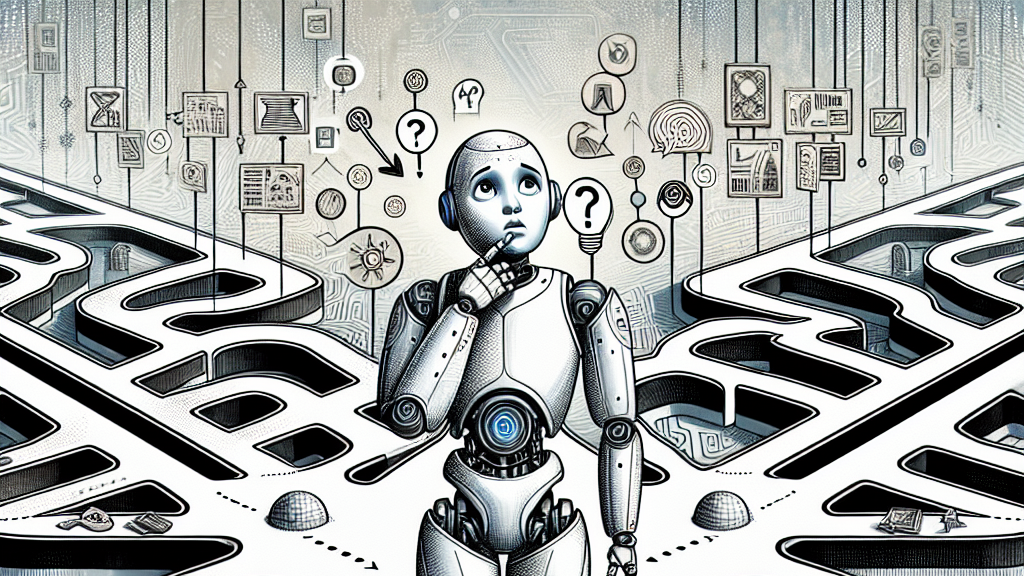
Ever wondered if machines can grapple with tough decisions the way we do? Turns out, machine learning agents are great at crunching numbers but not so good when it comes to the kind of in-the-moment decision-making we humans excel at. When faced with hard choices where both options seem equally viable, humans rely on a unique blend of intuition and reasoning. But for AI, this kind of choice can be really challenging.
The crux of the problem lies in how machines handle multiple goals. They typically use methods like Scalarised Optimisation or Pareto Optimisation to weigh their options. However, these methods struggle with ‘incommensurability,’ where neither choice clearly outweighs the other. This means current AI can’t identify or resolve hard choices like we can, making them seem alien to our human perspective. Imagine deciding whether to save money or splurge on a vacation; this kind of decision-making nuance is something AI hasn’t mastered yet.
Researchers are exploring potential solutions to this problem, like creating ensemble methods that combine several decision-making strategies. By improving AI decision-making, we could see smarter virtual assistants or robots helping us make the best choices. Picture a future where AI can truly understand our preferences and help us weigh options in complex life decisions, from financial investments to career paths. Until then, the human touch remains irreplaceable in navigating life’s hardest choices.
Did you know? Machines can’t naturally make decisions when options don’t have clear, measurable differences, a skill humans use regularly in everyday life!
FAQs
Why can’t machine learning agents make hard choices like humans?
Machine learning agents rely on structured decision-making methods like Scalarised Optimisation and Pareto Optimisation, which struggle with ‘incommensurability’—situations where choices can’t be easily compared. In contrast, humans use a blend of intuition and reasoning that machines don’t naturally possess.
What are the limitations of current AI decision-making models?
Current AI models can’t identify or resolve complex decisions where options are equally viable. This creates an alignment problem with human decision-making processes, as AI methods don’t handle ‘hard choices’ effectively.
How could improving AI decision-making affect everyday life?
By enhancing AI’s ability to understand complex human preferences, we could see more intuitive virtual assistants and robots helping with decisions ranging from financial planning to personal lifestyle choices, ultimately making our lives easier and more efficient.
What is the role of ‘incommensurability’ in AI decision-making?
Incommensurability refers to situations where options can’t be easily compared. Current AI methods struggle with these scenarios, leading to limitations in how machines approach human-like decision-making.
What is an ensemble solution in AI?
An ensemble solution involves combining multiple decision-making strategies to improve AI’s ability to identify and potentially handle complex choices, making AI decision-making more aligned with human reasoning.
Background
Machine learning agents often use mathematical optimization techniques to make decisions by evaluating different options based on their merits. These techniques typically involve setting multiple objectives and finding ways to balance them. However, when faced with ‘hard choices,’ where options aren’t easily comparable, these methods struggle. Humans, on the other hand, have a more nuanced approach to decision-making involving both logic and intuition.
History
In the evolution of AI, decision-making has been a significant area of focus. Early systems could make simple, rule-based decisions, but as AI technologies advanced, researchers sought to enable machines to make more complex decisions. Multi-Objective Optimisation emerged as a way to tackle this, but it faces challenges with ‘hard choices,’ unlike humans who can naturally navigate these scenarios. This study builds upon previous efforts by highlighting the limitations and seeking innovative solutions to enhance AI decision-making.
Based on “Can Machine Learning Agents Deal with Hard Choices?” by Kangyu Wang, available on arXiv (arxiv.org/abs/2504.15304), used under CC BY 4.0 (creativecommons.org/licenses/by/4.0/).