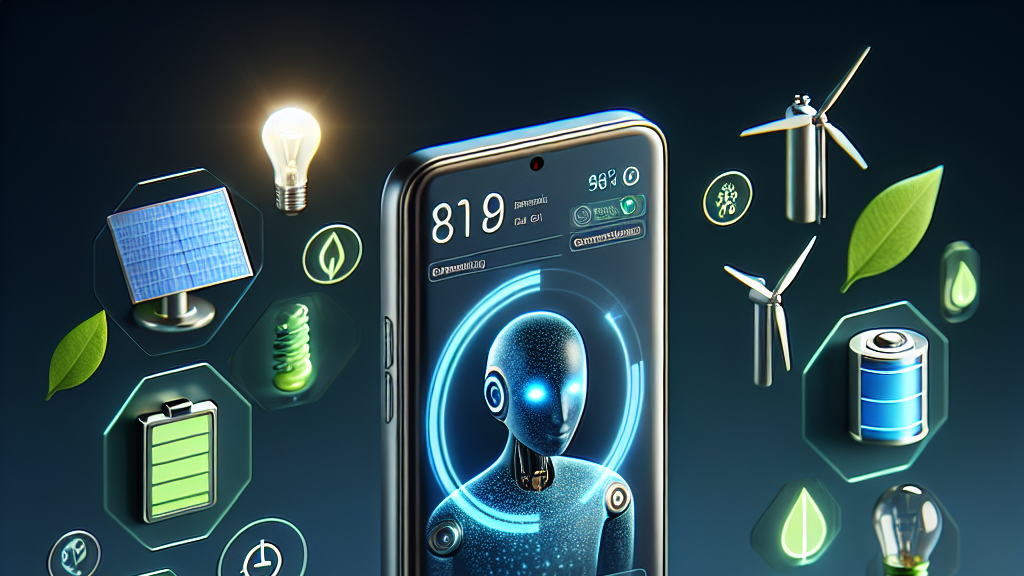
Imagine never having to guess how long your phone or car battery will last. That’s what researchers are working on right now! Using artificial intelligence, they’re on the brink of making accurate battery life predictions a reality. Why does this matter? Well, not only could it save you from those unexpected dead-battery moments, but it also means your gadgets could perform better and last longer.
The team behind this breakthrough used something called machine learning—a way for computers to learn on their own to get better at predicting things. They created a super-smart model that looks at various factors, like how often and how much you charge your battery. They even built a way to make these predictions understandable, so you know what’s most affecting your battery’s health. In simple terms, it’s like giving your battery its own personal doctor, advising it on the best way to live a longer life.
What does this mean for you in the future? Well, think about your phone automatically knowing exactly when to stop charging to save energy, or your car’s battery giving you a precise heads-up before it needs maintenance. This could revolutionize how we use and care for our electronics, making them more sustainable and cost-effective. So next time you plug in your device, imagine it doing all this smart thinking in the background to ensure it lasts as long as possible!
Did you know? AI can predict battery life with nearly 99% accuracy!
FAQs
How does AI help in predicting battery life?
AI uses machine learning models to analyze battery usage patterns, charging cycles, and other data points to predict how long the battery will last and when it needs charging.
What are key factors affecting a battery’s lifespan according to AI?
The AI models highlight the cycle index and charging parameters as critical factors that influence the remaining useful life of a battery.
Can AI improve battery performance in my everyday devices?
Yes, by predicting optimal charging times and cycles, AI can reduce energy consumption and enhance battery performance, leading to a longer lifespan of your devices.
How accurate is the AI in predicting battery health?
The AI models achieve up to 99% accuracy in classifying battery health, providing highly reliable predictions for battery maintenance.
Is there an easy way to use this AI battery prediction model?
Researchers have developed a user-friendly GUI that allows users to input data and receive battery life predictions in real-time, making it accessible for everyday use.
Background
Machine learning involves teaching computers to make predictions or decisions without being explicitly programmed to perform a task. In this case, researchers used two approaches, a two-level ensemble learning framework and a CNN+MLP hybrid model, to predict how long a battery will last based on various factors. They used SHAP analysis to interpret which factors are most influential, such as the number of charging cycles and the way a battery is charged. Additionally, they introduced a simple-to-use interface for real-world applications.
History
Predicting the lifespan of batteries has been a challenging area of research due to the many variables that affect battery health, such as charging patterns and usage frequency. Previous research focused on traditional machine learning methods, while more recent studies have explored deep learning approaches. This study is significant because it combines these methods with new hybrid models, making the predictions more accurate and reliable than ever before. This progression represents a substantial improvement over earlier techniques, which struggled with accuracy and practicality.
Based on “Remaining Useful Life Prediction for Batteries Utilizing an Explainable AI Approach with a Predictive Application for Decision-Making” by Biplov Paneru, Bipul Thapa, Durga Prasad Mainali, Bishwash Paneru, Krishna Bikram Shah, available on arXiv (arxiv.org/abs/2409.17931), used under CC BY 4.0 (creativecommons.org/licenses/by/4.0/).