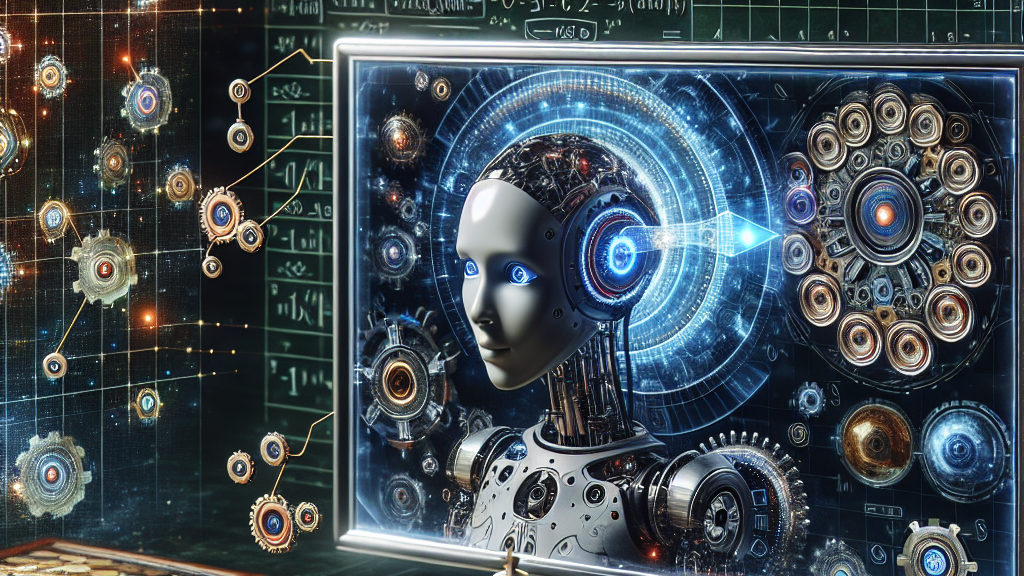
Imagine if a computer could predict your opinions on climate change just by knowing what you think about your favorite sports team. Sounds crazy, right? Well, a cutting-edge AI, known as GPT-4o, is doing just that! Researchers found that this AI can see the hidden connections between what we think about different, seemingly unrelated topics, showing that our beliefs are more connected than we might realize.
The scientists used a special set of data that records how we feel about numerous things, from politics to pop culture. They then tasked GPT-4o with figuring out how our attitudes were connected. While it’s not shocking that similar opinions are linked—like loving dogs and nature—this AI surprised everyone by finding connections even between completely different beliefs, like your thoughts on social media and your views on education reform!
In the future, this kind of AI might be used to help tailor educational content to students’ unique thought patterns or help businesses create better advertising by understanding customer preferences. It could even support mental health professionals by providing insights into behavior based on belief patterns. Essentially, this AI is digging into the uncharted territories of how we think and could reshape how we understand human nature.
Did you know? This AI could predict how you might vote based by analyzing your opinions on TV shows!
FAQs
How does AI predict human attitudes across different topics?
AI like GPT-4o uses a large set of human response data to find hidden relationships between diverse attitudes. Even when two attitudes seem dissimilar, the AI uncovers underlying patterns that connect them.
What makes AI predictions of human attitudes important?
This ability to predict can transform areas like marketing, education, and mental health by offering personalized insights based on individuals’ belief patterns.
Can AI really understand complex belief systems?
While AI doesn’t ‘understand’ in the human sense, it analyzes data to detect patterns, allowing it to make accurate predictions about our beliefs even when topics don’t appear related.
Background
Large language models, like GPT-4o, are advanced types of AI that process and generate human-like text by learning from vast datasets. They understand the underlying structure of language, which allows them to identify patterns and make predictions about how different pieces of information might be connected.
History
The journey of language models began with simpler algorithms that could understand basic text patterns. Over the years, they became more sophisticated, leading to models like GPT-3, which could generate coherent text. The leap to models that can predict beliefs across dissimilar topics represents a new frontier in understanding the complexity of human thought.
Based on “Can Large Language Models Predict Associations Among Human Attitudes?” by Ana Ma, Derek Powell, available on arXiv (arxiv.org/abs/2503.21011), used under CC BY 4.0 (creativecommons.org/licenses/by/4.0/).