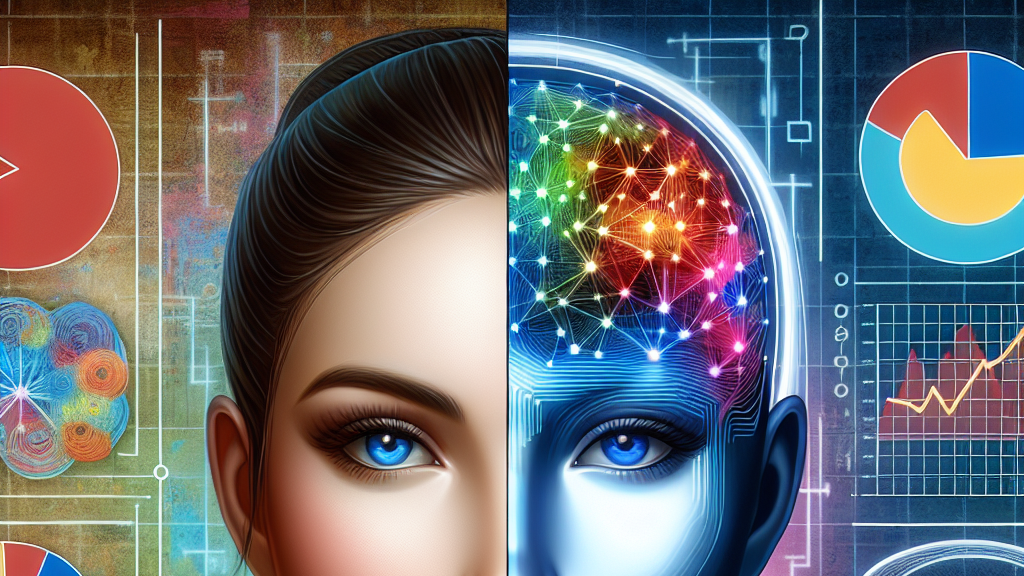
Have you ever wondered if a computer could predict election results as accurately as a pollster? With recent advances in AI, specifically Large Language Models, there’s growing excitement about their potential to simulate human-like responses and even predict political poll outcomes. But is AI really ready to take on this daunting task? Recent discussions have revealed a mix of potential and pitfalls.
This research dives into an exciting yet controversial area—can AI-generated responses replicate the diverse tapestry of human populations? Using repeated random sampling, researchers found that AI’s demographic estimates matched the 2020 U.S. population in some respects, yet stumbled in others. For example, AI accurately predicted the gender distribution and average age but significantly overestimated the proportion of Black individuals and those with advanced education levels. While AI’s ability to generate consistent responses is impressive, it also showed a lack of ideological lean, making it challenging to rely on these forecasts entirely.
So why does this matter to you? Imagine using AI for more than just answering questions but as a reliable predictor for social surveys, like predicting your city’s mayoral election results. While AI shows potential, its current biases highlight the need for careful improvements. As AI continues to evolve, it could soon transform how we interpret and use data from polls and surveys, affecting decisions from your local community to national policy-making.
Despite their power, AI models still struggle to accurately reflect certain demographic groups, often over-representing specific populations like highly educated individuals.
FAQs
How do AI models like GPT predict political poll outcomes?
AI models like GPT generate responses by processing vast amounts of text data and simulating human-like answers. While they show potential in echoing real poll predictions, their results can sometimes diverge due to demographic biases.
What are the challenges of using AI in social surveys?
One significant challenge is demographic bias, where AI over-represents some groups while under-representing others, leading to skewed predictions. Another challenge is AI’s deterministic nature, which lacks the nuanced variability found in human responses.
Can AI models truly imitate human demographics?
While AI models can align with some demographic aspects, like gender and age, they often inaccurately estimate proportions of racial and educational demographics, indicating they have more to learn to mimic human diversity accurately.
Why are AI-generated responses more deterministic than human ones?
AI responses are based on fixed algorithms and data input, lacking the personal experiences and emotional influences that make human responses varied and unpredictable.
What improvements are necessary for AI to serve in polling?
Enhancements in AI models to better mimic nuanced human demographics and personalities are needed. Additionally, reducing deterministic tendencies could help AI adapt more realistically to diverse human responses in polls.
Background
Large Language Models are sophisticated artificial intelligence systems designed to process and generate human-like text by analyzing large datasets. These models can potentially simulate how humans would respond to surveys, drawing attention to their ability to predict outcomes in polls and surveys. Researchers are interested in bridging the gap between AI-generated data and real human responses to enhance the reliability of these predictions.
History
Research on AI’s ability to predict human behavior gained momentum with advances in machine learning and data processing. Initially, AI applications focused on simple text processing tasks. Over time, as models like GPT evolved, their potential to simulate complex human responses became more evident. This new study builds on earlier research, aiming to address inconsistencies noted in previous findings and refine AI’s predictive capabilities for social surveys.
Based on “ChatGPT vs Social Surveys: Probing Objective and Subjective Silicon Population” by Muzhi Zhou, Lu Yu, Xiaomin Geng, Lan Luo, available on arXiv (arxiv.org/abs/2409.02601), used under CC BY 4.0 (creativecommons.org/licenses/by/4.0/).