Connect with us

Search by keyword

Computers

Can AI Really Remember Important Details?

Imagine if your digital assistant forgets the latest info you input because it recalls old data instead. That’s what this study explores about AI memory, revealing that AI struggles with mixing new information due to interference from earlier data. Understanding and improving this could make our AI helpers more reliable and efficient.

Can AI Really Remember Important Details
✨Researched by humans. Explained by robots. Learn more.

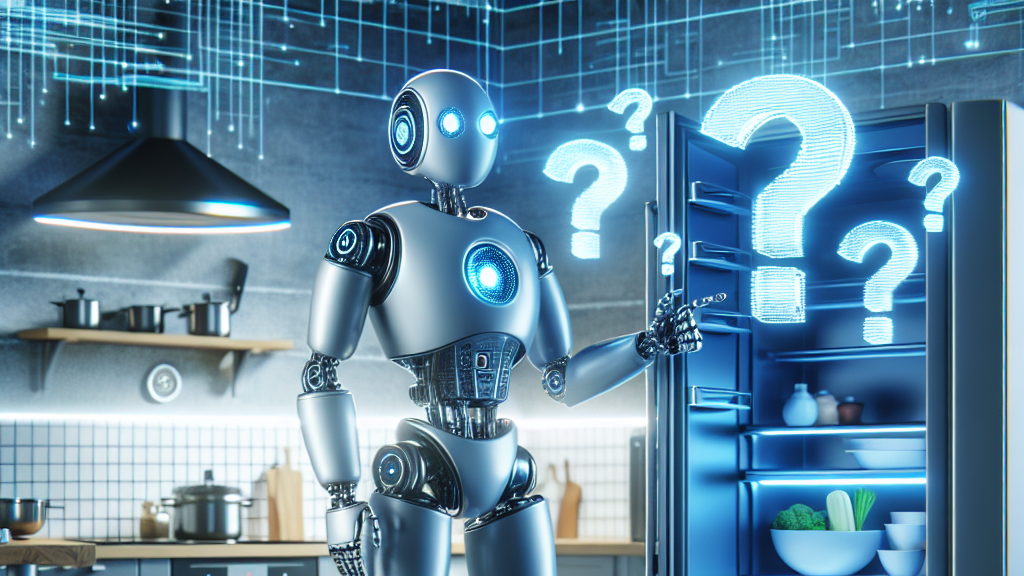
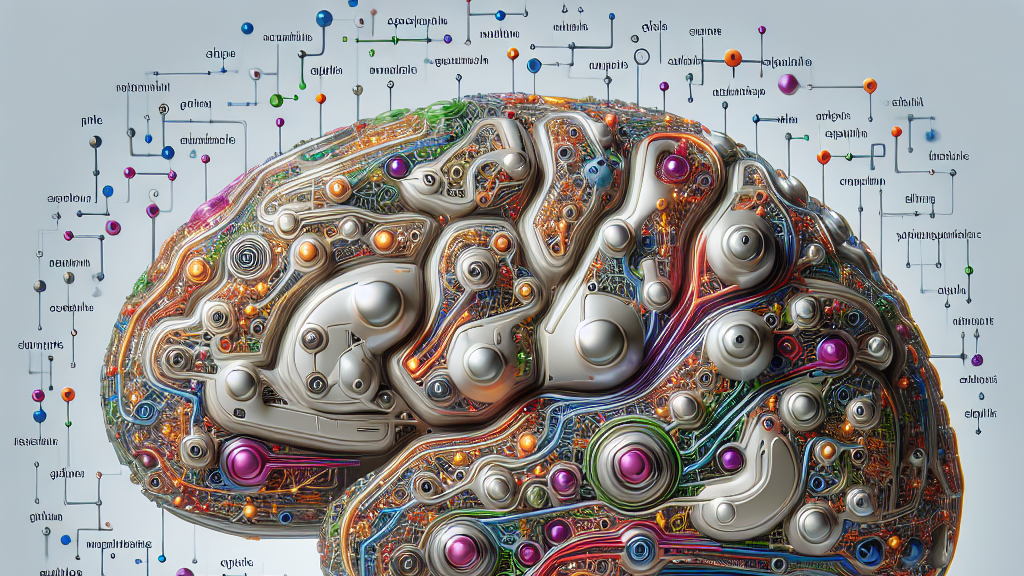
Imagine if your computer assistant started recalling outdated info instead of what you just told it. That’s not far from what this eye-opening research reveals about large AI models. They, too, struggle with remembering new information when old data interferes, much like how we might forget a recent shopping list because of previous ones crowding our memory.

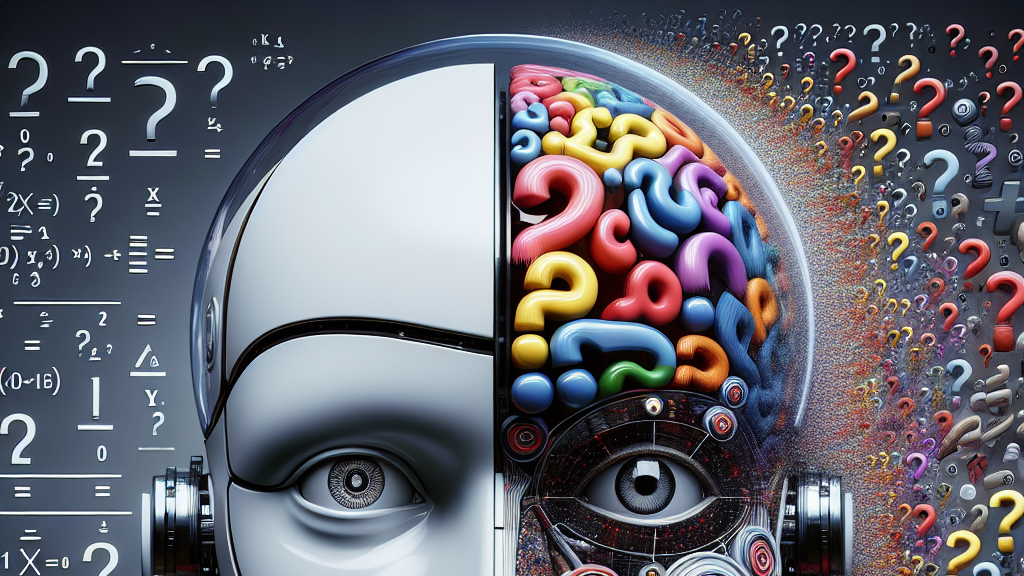
This research adapted a concept from cognitive science known as proactive interference, where older data in our minds disrupts our ability to recall recent inputs. By simulating this effect in AI models, scientists found that these models’ ability to retrieve accurate information decreases significantly as more previous context is added. What’s even more surprising is that no amount of prompt adjusting—essentially giving extra instructions—seemed to help much in overcoming this challenge.

In practical terms, this insight could pave the way for developing smarter AI that can better manage relevant data. Imagine virtual assistants that don’t just answer questions but also keep track of evolving projects or to-do lists with pinpoint accuracy. This research highlights a key limitation in current AI technology, but also the exciting potential for future innovation to create truly intelligent assistants that remember like we do.

Proactive interference, a cognitive hurdle for humans, also challenges AI, making new data retrieval tough amid old information.

FAQs

What does this research reveal about AI and memory?

This research shows that AI models experience ‘interference,’ meaning they struggle to remember recent information when older data disrupts their ability to retrieve correct details.

How does this interference help us understand AI memory limits?

The study reveals that AI’s memory, like human memory, can be pressured by too much old information, leading to problems accurately recalling new data.

Why is understanding AI interference important for future technology?

Understanding interference is crucial for developing AI that can efficiently manage and retrieve data without confusing recent updates with outdated information.

How could this research improve digital assistants?

Future digital assistants could become more reliable by overcoming these memory issues, allowing them to accurately track our communications and updates without error.

What makes proactive interference a bottleneck for AI?

Proactive interference limits AI’s capacity to separate relevant from irrelevant input, highlighting a fundamental constraint that parallels human cognitive challenges.

Background

Large Language Models (LLMs) are akin to advanced digital encyclopedias that can not only store information but also generate new content. However, like human brains, they can get overwhelmed by too much information, leading to a phenomenon known as proactive interference, where old information hinders the recollection of new data. This research uses concepts from cognitive science to understand how AI can get mixed up by this interference, much like humans forget recent things when they have too much on their mind.

History

Information retrieval has long been a key area in AI research, evolving from simple data lookup to complex generation tasks. This study expands on the understanding of memory limitations in AI, building on past insights from cognitive science, which have shown how memory interference affects human recall. By applying these principles to AI, this research marks a shift towards more nuanced models that mimic aspects of human cognition, revealing new potential for AI learning and memory.

Based on “Unable to forget: Proactive lnterference Reveals Working Memory Limits in LLMs Beyond Context Length” by Chupei Wang (University of Virginia), Jiaqiu Vince Sun (New York University), available on arXiv (arxiv.org/abs/2506.08184), used under CC BY 4.0 (creativecommons.org/licenses/by/4.0/).


Trending

Latest

Can AI Save Water Discover How

Computers

AI is transforming the tech world, but it uses lots of water! A new tool, SCARF, helps us measure and reduce AI's water footprint,...

Whats a Forbush Decrease and Why Should We Care Whats a Forbush Decrease and Why Should We Care

Space

Scientists just observed the biggest solar storm event in years, revealing unexpected cosmic ray patterns. Understanding these changes could help us protect our technology...

Can Cars Spot Danger Faster Than Humans Can Cars Spot Danger Faster Than Humans

Computers

Think about how quickly you react when something unexpected happens on the road. This research brings us closer to creating self-driving cars that can...

Can Fear of the Other Stop Social Harmony Can Fear of the Other Stop Social Harmony

Physics

Fear of the unknown might make it harder for people to agree and get along. This study shows that when people have strong xenophobic...

Can AI Revolutionize Breast Cancer Diagnosis Can AI Revolutionize Breast Cancer Diagnosis

Electricity

This research introduces a groundbreaking AI model that can accurately assess HER2-positive breast cancer using widely accessible staining methods, potentially revolutionizing how we diagnose...

Can AI Transform Your Singing into a Choir Can AI Transform Your Singing into a Choir

Computers

Imagine singing solo and having AI turn you into a choir. This research unveils a groundbreaking AI tool that transforms your voice into rich...

You May Also Like

Computers

This research explores how AI models designed to understand both images and words might improve their performance simply by teaching themselves to think better....

Computers

Imagine if playing games could make a computer program better at understanding and creating text! This research suggests that by using creative tasks like...

Computers

Imagine a super-smart AI that can watch your daily life in real-time and remember everything without taking up much space. This research shows how...

Computers

This research explores how artificial intelligence language-powered robots might think they're seeing things that aren't actually there. Investigating this quirk could lead to more...

Computers

Researchers have found a way for AI models to recall text exactly as it was, using a special memory token. This could change how...

Computers

This exciting study reveals that just like us, AI has its own biases that can skew its thinking, especially when solving problems. Understanding and...

Computers

This research uncovers vulnerabilities in AI that could expose private and sensitive data while fine-tuning these models for specific fields like healthcare. By understanding...

Computers

Discover how language models might not be as random as we thought! By examining their decision-making processes, researchers found that these models can sometimes...

Computers

Understanding how small changes in computer settings can lead to big differences in AI performance has huge implications for reliability in AI applications. This...

Copyright © 2024 8ig8rain.

Disclaimer: The content on 8ig8rain.com consists of AI-generated summaries of scientific abstracts from arXiv. Please note that most arXiv abstracts are preprints and may not have undergone formal peer review. While these summaries aim to convey key ideas and potential applications, they are provided for informational purposes only and should not be interpreted as validated scientific findings or professional advice. The summaries are intended to educate, spark curiosity, and inspire further exploration of science.