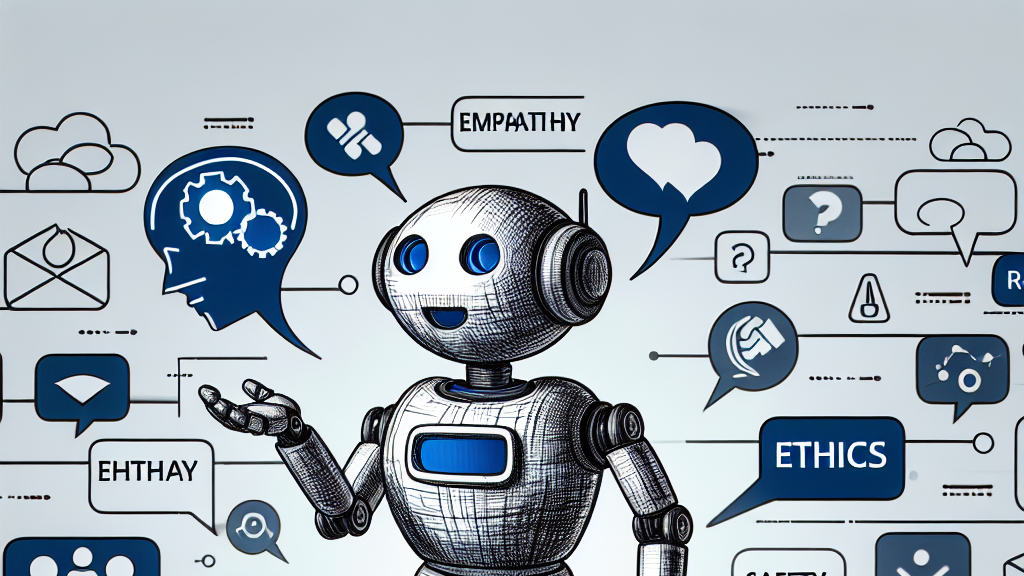
Have you ever wondered if computers could help make the internet a kinder place? Well, researchers are diving into this idea by using super-smart AI to create responses that counteract hate speech online. But here’s the catch—they need these responses to be not just effective, but also friendly and easy to understand for everyone, even if you’re not a tech whiz.
The study investigates how different AIs like GPT-4o-Mini and Meta’s LLaMA can generate replies to hateful comments. These machines create what’s called counter-narratives, or simply, smart responses that try to stop hate in its tracks. The researchers test different ways to prompt these AIs to produce replies that don’t just use fancy vocabulary but also feel empathetic and safe.
Imagine a world where social media is free from hateful comments, thanks to AI-generated responses that not only shut down negativity but do so in a way everyone can understand. This research could lead to technology that helps people communicate more kindly online, no matter their reading level or background. It’s like having a digital superhero ready to jump in whenever things get ugly!
AI can compose responses to online hate that sound both smart and empathetic, opening doors to kinder conversations on the web.
FAQs
What are automated counter-narratives, and how do they help reduce online hate speech?
Automated counter-narratives are AI-generated responses that aim to neutralize hate speech by offering alternative, positive perspectives. These efforts help foster a more respectful and empathetic online environment.
How are researchers evaluating AI’s effectiveness in creating counter-narratives?
Researchers are studying AI responses by looking at how empathetic, easy-to-read, and ethically sound they are. They want to ensure these counter-narratives not only counter hate effectively but also are accessible to everyone.
Why is the readability of AI-generated responses important?
The readability of AI-generated responses is crucial because they should be understandable for people with different literacy levels, ensuring more people can benefit from and engage with them.
Can AI-generated counter-narratives pose any risks?
There are potential risks, such as the AI misinterpreting context or producing responses that might not be appropriate for all audiences. Ensuring ethical robustness is key to minimizing these risks.
How might this AI technology change our online interactions in the future?
As this technology evolves, it could lead to more positive online interactions by providing people with tools to engage in kinder, more understanding conversations across various platforms, bridging communication gaps and reducing hate speech.
Background
Automated counter-narratives are responses generated by AI to combat hate speech. They leverage large language models, which are advanced AI systems trained on vast amounts of text data, to produce human-like text. These models can respond to hateful or harmful comments online by offering a positive alternative narrative. The challenge lies in ensuring these responses are effective, ethically sound, and understandable to a wide audience.
History
The concept of counter-narratives has been a part of social change for decades but gained traction in the digital age as a tool against online hate. Past studies focused on manually curated responses, but with advancements in AI, there’s a shift towards automating this process. Previous research highlighted limitations in AI’s ability to generate empathetic and readable responses, prompting the current study to refine these systems.
Based on “Think Like a Person Before Responding: A Multi-Faceted Evaluation of Persona-Guided LLMs for Countering Hate” by Mikel K. Ngueajio, Flor Miriam Plaza-del-Arco, Yi-Ling Chung, Danda B. Rawat, Amanda Cercas Curry, available on arXiv (arxiv.org/abs/2506.04043), used under CC BY 4.0 (creativecommons.org/licenses/by/4.0/).