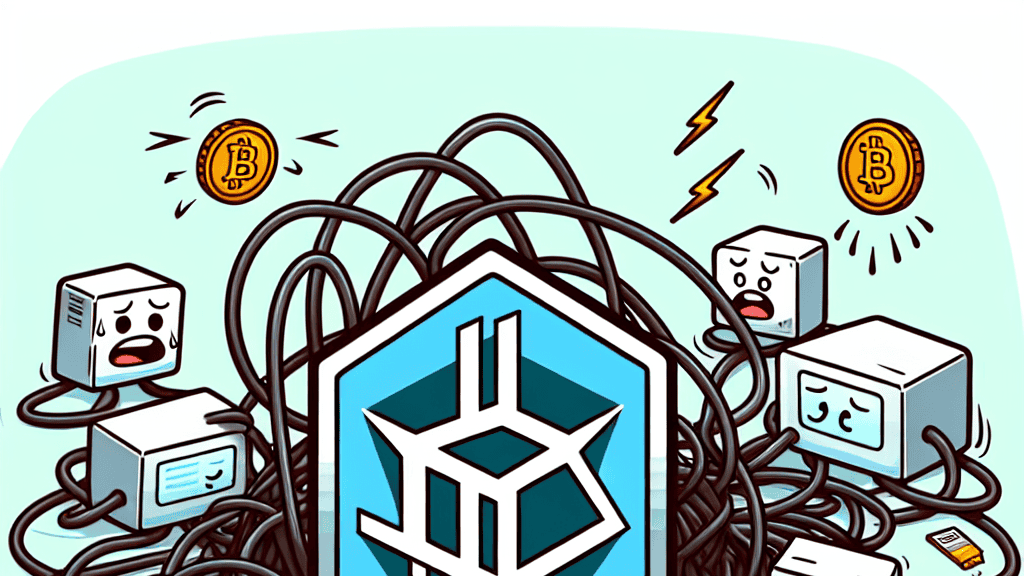
Imagine a world where you can send money as fast as a text message without breaking the bank. Blockchain technology, especially systems like Ethereum, is working towards that future by using something called layer-2 solutions to speed up transactions and lower costs. But, as with all good things, there’s a catch—these solutions might not be as secure as we thought.
Recent research has uncovered an intriguing flaw in one of the popular layer-2 techniques known as Optimistic Rollup. In simple terms, this method involves a ‘dispute game’ where people can challenge inaccuracies in transaction blocks. The problem arises when the challengers don’t always get a fair reward, even if they win. This fault could tempt some crafty players to exploit the system, which, ironically, could be encouraged by higher rewards meant to spur more participation.
However, don’t worry just yet! The researchers aren’t just doom-spreading; they have some bright ideas to fix this. By implementing tactics like an escrowed reward mechanism and a commit-reveal process, they aim to make things safer. Imagine this as having to confirm a secret code before finalizing a transaction, ensuring everyone plays fair. These changes could make our future online transactions even more secure and trustworthy.
Did you know? In blockchain’s ‘dispute game,’ winning isn’t always profitable!
FAQs
What are blockchain layer-2 solutions?
Blockchain layer-2 solutions are techniques used to improve the speed and lower the cost of transactions on blockchain networks like Ethereum, without changing the original blockchain.
How does the Optimistic Rollup method work?
The Optimistic Rollup method uses a ‘dispute game’ where validators can challenge blocks they believe are incorrect. If they win the challenge, they should theoretically receive a reward.
Why is there a problem with the Optimistic Rollup’s dispute game?
There’s a structural flaw where even winning challengers might not get fair rewards, allowing potential system manipulation by malicious proposers.
How can blockchain’s security be improved according to the study?
The study suggests enhancements like escrowed rewards and a commit-reveal protocol to ensure fair play and increase security during transactions.
Why does this research on blockchain security matter?
Understanding and fixing vulnerabilities in blockchain systems is crucial for making digital and financial transactions more secure and efficient in the future.
Background
Layer-2 solutions are additional structures built on top of the normal blockchain to handle more data and process transactions faster. Optimistic Rollups are one such layer-2 solution where decisions about data blocks are made assuming honesty, but challenges can be posed if errors are suspected.
History
Blockchain systems have been evolving rapidly, with Ethereum seen as a leader in exploring new ways to handle more transactions efficiently. The concept of layer-2 solutions like Optimistic Rollups is relatively new, aiming to deal with the scalability issues of the original blockchain. However, vulnerabilities have been the subject of scrutiny, pushing researchers to examine and refine these methods.
Based on “Hollow Victory: How Malicious Proposers Exploit Validator Incentives in Optimistic Rollup Dispute Games” by Suhyeon Lee, available on arXiv (arxiv.org/abs/2504.05094), used under CC BY 4.0 (creativecommons.org/licenses/by/4.0/).