Connect with us

Search by keyword

Computers

Can Ghosts Teach Robots to Learn From Mistakes?

This research shows how using ‘Ghost Policies’ within an augmented reality framework lets robots learn from their mistakes, potentially making AI more reliable and effective in real-world applications.

Can Ghosts Teach Robots to Learn From Mistakes
✨Researched by humans. Explained by robots. Learn more.

Imagine if robots could learn from their own mistakes just like we do. That’s the fascinating idea behind a new study introducing ‘Ghost Policies.’ Using these, robots can visualize and embrace their past failures, turning them into lessons instead of headaches. It’s like giving robots a second chance to get it right, a concept as revolutionary as it sounds.

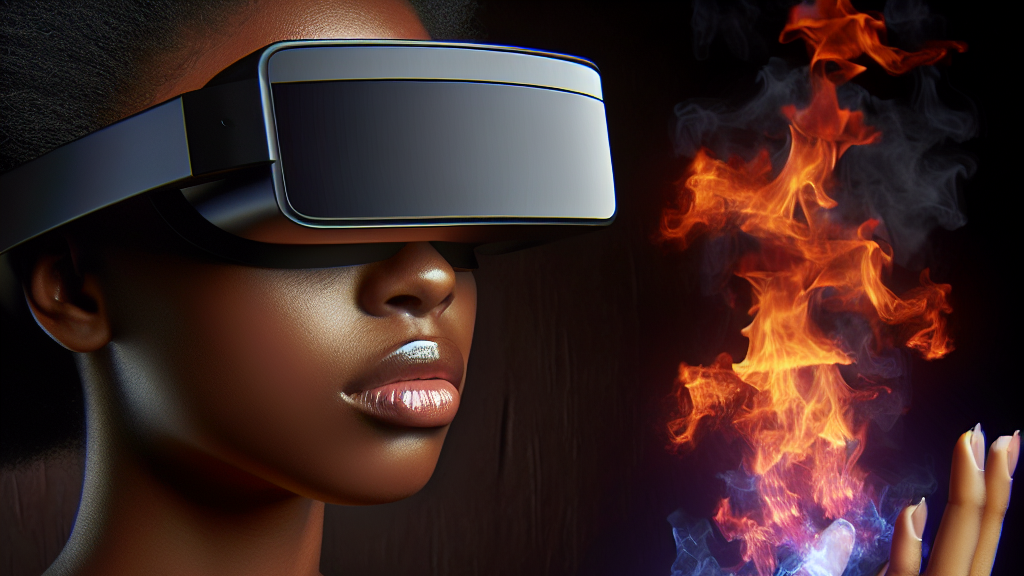
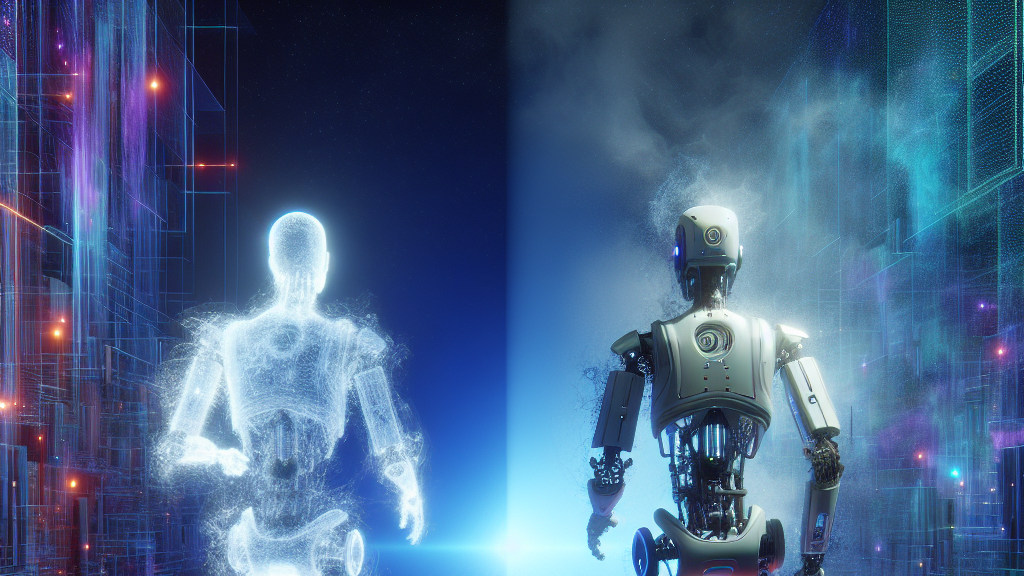
The secret lies in a new Augmented Reality system called Arvolution, which lets robots see their past errors as ‘ghosts’ right alongside their current actions. These ghostly trails help robots compare what went wrong with what they’re doing now, much like a ghost replaying its life choices. This approach isn’t just a techy gimmick—it’s a shift in how robots can become better learners and decision-makers, blending human intuition with machine precision.

In the future, imagine your household robots or automated cars making fewer mistakes, all because they’ve learned to visualize and adapt from their ‘ghost’ failures. This research doesn’t just improve robot resilience but could even pave the way for safer, smarter AI that seamlessly interacts with our world. The era of ghost-driven learning is ripe with possibilities!

Did you know? Ghosts in this context aren’t spooky; they’re a high-tech tool that helps AI learn by visualizing past mistakes!

FAQs

How do ‘Ghost Policies’ help Deep Reinforcement Learning agents?

‘Ghost Policies’ enable AI agents to view their past errors through augmented reality. This visualization helps them learn from mistakes by seeing where they went wrong compared to their current actions.

What is the core innovation of Arvolution in AI learning?

Arvolution introduces a breakthrough by integrating augmented reality to visualize failed learning paths as ‘ghosts,’ aiding in understanding and correcting errors, significantly improving AI’s decision-making abilities.

Why is visualizing errors crucial for improving AI?

Visualizing errors allows AI to learn from its mistakes more effectively by providing a clear comparison between past failures and current actions. This process aids in transforming costly errors into valuable learning experiences.

Can this technology impact everyday life?

Yes, by helping robots and AI systems learn from their mistakes, technologies like automated cars or home robots could become more reliable, reducing errors and enhancing safety in daily operations.

Why is the term ‘ghost’ used in this research?

The term ‘ghost’ describes the semi-transparent visualization of past failures, akin to ghostly figures replaying past actions to guide present decisions.

Background

Deep Reinforcement Learning is a type of machine learning where agents learn by interacting with their environment, often through trial and error. However, understanding what goes wrong when these agents fail can be tricky. By using augmented reality to visualize mistakes as ‘ghost’ paths, we can make these errors visible and tangible, providing valuable insights that help both machines and humans learn from them.

History

The concept of reinforcement learning has evolved over years, with many approaches focused on refining how agents learn and evolve. Prior methods primarily dealt with static data but left room for improvement in real-time learning from failures. This study builds on these foundations by introducing a novel AR framework, pushing the boundaries of how AI can learn from its mistakes.

Based on “Ghost Policies: A New Paradigm for Understanding and Learning from Failure in Deep Reinforcement Learning” by Xabier Olaz, available on arXiv (arxiv.org/abs/2506.12366), used under CC BY 4.0 (creativecommons.org/licenses/by/4.0/).

Trending

Latest

Can AI Save Water Discover How

Computers

AI is transforming the tech world, but it uses lots of water! A new tool, SCARF, helps us measure and reduce AI's water footprint,...

Whats a Forbush Decrease and Why Should We Care Whats a Forbush Decrease and Why Should We Care

Space

Scientists just observed the biggest solar storm event in years, revealing unexpected cosmic ray patterns. Understanding these changes could help us protect our technology...

Can Cars Spot Danger Faster Than Humans Can Cars Spot Danger Faster Than Humans

Computers

Think about how quickly you react when something unexpected happens on the road. This research brings us closer to creating self-driving cars that can...

Can Fear of the Other Stop Social Harmony Can Fear of the Other Stop Social Harmony

Physics

Fear of the unknown might make it harder for people to agree and get along. This study shows that when people have strong xenophobic...

Can AI Revolutionize Breast Cancer Diagnosis Can AI Revolutionize Breast Cancer Diagnosis

Electricity

This research introduces a groundbreaking AI model that can accurately assess HER2-positive breast cancer using widely accessible staining methods, potentially revolutionizing how we diagnose...

Can AI Transform Your Singing into a Choir Can AI Transform Your Singing into a Choir

Computers

Imagine singing solo and having AI turn you into a choir. This research unveils a groundbreaking AI tool that transforms your voice into rich...

You May Also Like

Computers

This research unlocks the secret to crispier VR video streaming by juggling communication and computation resources smartly. Expect smoother and sharper VR experiences, thanks...

Computers

Imagine being able to create amazing 3D designs just by snapping a photo, without needing to know anything about 3D modeling software. That's the...

Computers

Imagine feeling the warmth of a virtual campfire or the chill of an icy breeze in augmented reality—this research shows how realistic temperature feedback...

Computers

Imagine feeling the warmth of a sunny day or the chill of an iced drink in an augmented reality experience. This research unveils a...

Computers

Discover how an AI-powered framework can turn your voice into 3D magic in augmented reality! This open-source tool doesn't just create awesome digital objects;...

Computers

Bioelectric signals might just be key to helping our bodies heal from injuries or diseases by guiding how cells grow and organize. Imagine a...

Computers

Imagine you and a friend solving mysteries together in an escape room, but without leaving your living room! ARctic Escape uses augmented reality to...

Computers

Imagine a world where robots see the unseen with 'invisible' markers, enhancing navigation and object recognition without disrupting our aesthetic world. These markers could...

Copyright © 2024 8ig8rain.

Disclaimer: The content on 8ig8rain.com consists of AI-generated summaries of scientific abstracts from arXiv. Please note that most arXiv abstracts are preprints and may not have undergone formal peer review. While these summaries aim to convey key ideas and potential applications, they are provided for informational purposes only and should not be interpreted as validated scientific findings or professional advice. The summaries are intended to educate, spark curiosity, and inspire further exploration of science.