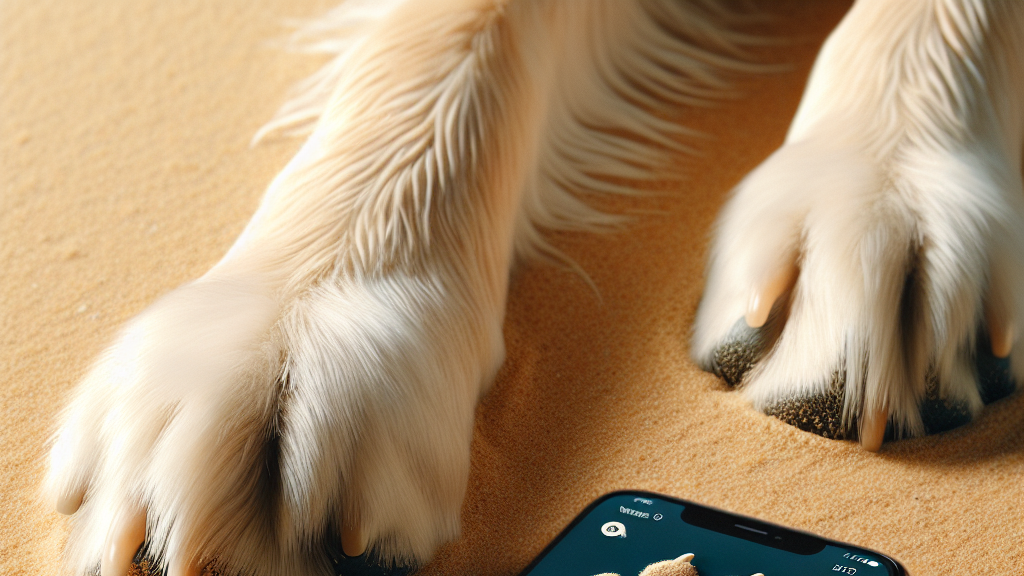
Did you know nearly 66% of households in the United States have pets as of 2023? Unfortunately, nearly 10 million dogs and cats get lost or stolen every year! While this is a scary thought for any pet owner, there’s a new, potentially game-changing solution on the horizon that could make losing a pet a lot less stressful.
Introducing PawPrint and PawPrint+, groundbreaking ways to identify and locate your furry friends using their unique footprints. Unlike traditional collars or microchips that can get lost or damaged, PawPrint focuses on the unique patterns in your pet’s pawprints. Through analyzing these prints, new technologies in neural networks can identify your pet in a non-invasive way. This could be a dream come true for pet owners who want to keep their pets safe without the hassle of collars or invasive chips.
Imagine being able to track your pet’s whereabouts just by scanning their paws. Not only does this method promise a safer way to keep tabs on pets, but it also has the potential to aid in wildlife conservation. By identifying unique footprints, researchers could closely monitor endangered species without interfering with their natural behaviors. It’s a promising step forward in both pet care and conservation efforts.
Every pet’s pawprint is as unique as a human fingerprint, making them perfect for identification.
FAQs
How do footprint identification systems work for pets?
Footprint identification systems analyze the unique patterns found in a pet’s pawprint, similar to how fingerprints are analyzed in humans. These systems use advanced neural networks to match pawprints to individual pets, offering a non-invasive way to identify them if they are lost.
Why are traditional pet identification methods like collars and microchips limited?
Traditional methods can be easily lost or removed. Collars can break or slip off, and microchips require a scanner to be useful. Plus, they rely heavily on someone finding and reporting the pet, which isn’t always possible.
What potential does footprint identification hold for wildlife conservation?
This technology could revolutionize wildlife conservation by allowing researchers to non-invasively monitor animal populations. By identifying unique footprints, scientists can track individual animals without disturbing their natural habitats, offering a more ethical approach to wildlife management.
Background
Pet identification has historically relied on tactile methods like collars, ID tags, and microchips. However, these can be fallible, whether through physical detachment or reliance on external help. Footprint identification, a more recent innovation, leverages advanced neural networks to recognize the unique patterns inherent in an animal’s pawprint. This methodology is poised to change how we safeguard our pets, offering a more reliable and less invasive solution.
History
The journey of pet identification began with simple tags and collars, evolving to include microchips, which first appeared in the late 20th century. However, these methods have limitations. Recent advancements in technology have introduced the potential of using biometric features, like pawprints, made possible by developments in neural networks and machine learning. This study builds upon these techniques, offering a new direction that holds significant promise for both pets and wildlife.
Based on “PawPrint: Whose Footprints Are These? Identifying Animal Individuals by Their Footprints” by Inpyo Song, Hyemin Hwang, Jangwon Lee, available on arXiv (arxiv.org/abs/2505.17445), used under CC BY 4.0 (creativecommons.org/licenses/by/4.0/).