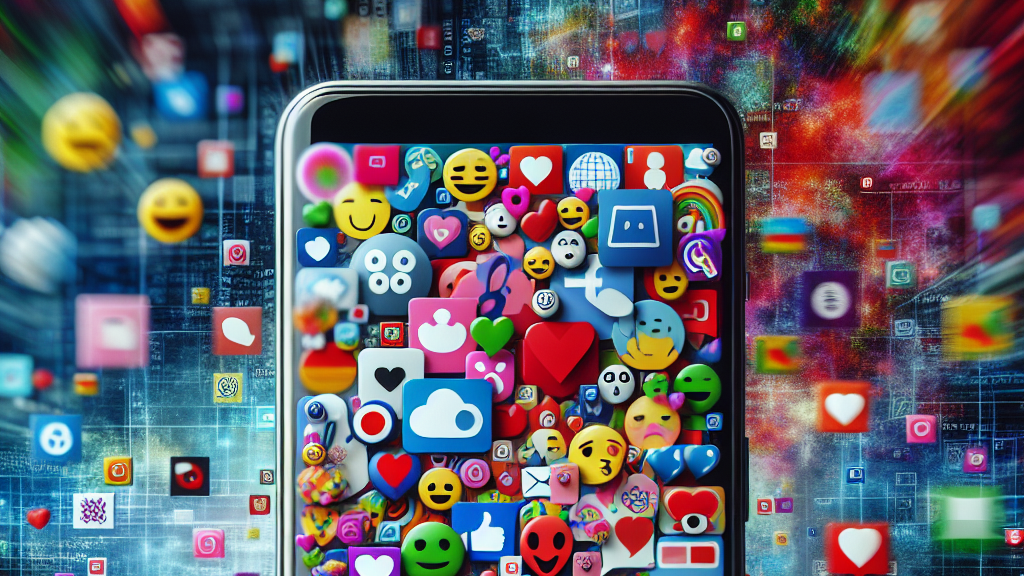
**Imagine a world where digital stickers can express your emotions better than words, making every chat more colorful and meaningful.** Stickers are those cute, expressive images we often use in texts to show our feelings or add a bit of fun to our conversations. They bridge the gap when words just aren’t enough. But finding that perfect sticker can be a real hassle, mainly because it can be subjective and takes a lot of effort. That’s where the magic of our research comes in. We wanted to make it easier for you to find exactly the right sticker every single time. So we created the ultimate sticker language, called Sticktionary, to help you do just that!
**Our research tackled a tricky problem: creating a system that can understand and organize stickers just like we do.** We designed a unique framework called Sticktionary, where people play games that help us gather data on how various stickers can be used. Then, we developed a bilingual dataset called StickerQueries, filled with thousands of sticker ideas in English and Chinese, created with the help of over 60 amazing volunteers. Using this dataset, we were able to train language models to understand stickers’ meanings better than ever before.
**Imagine not having to scroll through endless sticker packs to find the one that matches your mood.** Our research could reshape how we communicate digitally, making conversations more vibrant and unique. With our new dataset and models, the stickers you love will be at your fingertips, ready to make you smile or laugh with just the right touch. This could change the way we think about messaging apps and online communication, making it an exciting time to be part of the sticker revolution!
Did you know that stickers are used by people of all ages and cultures, making them one of the most universally loved forms of digital communication?
FAQs
What is Sticktionary and how does it help with sticker queries?
Sticktionary is a gamified annotation framework that helps gather a wide range of sticker queries by engaging people in fun activities. This process allows for the collection of diverse and high-quality data on how stickers can express different messages.
How does StickerQueries improve the way we find stickers?
StickerQueries is a bilingual dataset with over 1,115 English and 615 Chinese sticker queries. By using this data, new models can better understand and retrieve the perfect sticker for any given context or emotion, making your digital interactions richer.
Why are language models struggling with sticker queries?
Large language models are great at handling typical language tasks, but sticker queries are more about intuition and visual cues, which are harder for machines to grasp without proper datasets like StickerQueries to guide them.
How can this research change digital communication?
This research can make digital conversations more expressive and enjoyable by simplifying how users find and use stickers, ultimately enhancing online communication across various platforms.
What makes stickers a unique communication tool?
Stickers can convey emotions and ideas in a way that words sometimes can’t, bridging cultural and linguistic gaps and adding personality to digital conversations.
Background
Stickers are a form of digital expression used in messaging apps to convey emotions or messages visually. They are popular because they add a layer of fun and expressiveness that plain text often lacks. However, the subjective nature and sheer variety of stickers make creating a reliable system for finding the right one challenging. This has led to the need for a structured approach to understanding and organizing sticker queries to improve retrieval systems.
History
The use of stickers in digital communication has grown significantly with the advent of messaging platforms like WhatsApp and Facebook Messenger. Initially, finding stickers was a manual and subjective process, heavily reliant on personal collections. Over time, researchers have attempted to improve sticker organization through machine learning, but with limited success due to the lack of comprehensive datasets and the nuanced nature of visual expressions. The introduction of Sticktionary and StickerQueries represents a pivotal moment in this evolution, offering a more structured and data-driven approach to understanding stickers.
Based on “Small Stickers, Big Meanings: A Multilingual Sticker Semantic Understanding Dataset with a Gamified Approach” by Heng Er Metilda Chee, Jiayin Wang, Zhiqiang Guo, Weizhi Ma, Min Zhang, available on arXiv (arxiv.org/abs/2506.01668), used under CC BY 4.0 (creativecommons.org/licenses/by/4.0/).