Connect with us

Search by keyword

Computers

Can We Finally Explain Fake News Videos?

Ever watched a news video and wondered if it’s real or fake? This research helps explain exactly why a video is fake, making media more trustworthy and easier to navigate.

Can We Finally Explain Fake News Videos
✨Researched by humans. Explained by robots. Learn more.

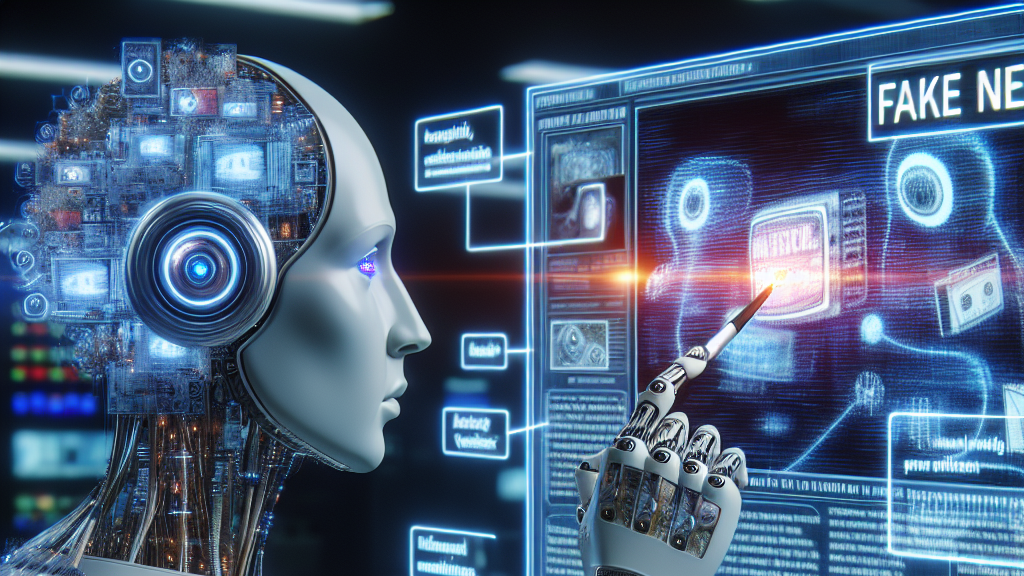
Imagine watching a video online and questioning its authenticity, but having no clear answer why it’s fake. It’s frustrating, right? In today’s digital world, fake news spreads faster than ever, confusing everyone from casual news followers to keen researchers. This research brings clarity by explaining why certain news videos are fake, diving deep into their core content to debunk falsehoods and reveal truths.

This research introduces a groundbreaking method to explain fake news videos using natural language. By creating new datasets and employing a cutting-edge AI model called the Multimodal Relation Graph Transformer (MRGT), researchers have developed a way to analyze news videos and provide understandable explanations about what makes them misleading. This tool doesn’t just say a video is fake—it tells you exactly why, using a blend of text and video content.

Imagine a world where you watch a news video and, alongside it, receive clear explanations about any fake aspects. It could revolutionize how we consume information, making us savvier and helping to rebuild trust in media. Whether it’s discerning truth from deceit or educating the next generation on media literacy, this research could play a crucial role in shaping a more informed society.

Did you know that fake news spreads seven times faster than real news online?

FAQs

What makes fake news videos so convincing?

Fake news videos often combine real and fabricated elements to deceive viewers, making them emotionally engaging and seemingly believable.

How does the Multimodal Relation Graph Transformer (MRGT) model work?

The MRGT model analyzes both visuals and text in news videos, creating a comprehensive representation that helps identify and explain misleading content.

Why is explaining fake news videos important?

Understanding why a video is fake helps users navigate media more confidently and fosters a more informed public.

What are ONVE and VTSE datasets?

ONVE and VTSE are new datasets designed specifically to understand and explain fake news videos, facilitating research in this important area.

How could this research impact everyday media consumption?

With clearer explanations of fake news, consumers can make better-informed decisions, promoting media literacy and trust.

Background

Fake news is a massive issue today, with false and misleading information spreading quickly online. Traditional methods of identifying fake news often label content as false without explaining why. This lack of clarity leaves audiences scratching their heads, unsure of the truth. The new research seeks to address that by defining a framework for understanding and explaining the falseness of news videos using advanced AI techniques.

History

Fake news detection has seen various approaches over recent years, typically focused on text-based content. However, as video content becomes more prevalent, the challenge has shifted to identifying falsehoods in multimedia. Prior research largely treated the issue as a simple classification problem, ignoring the need for deeper explanations. This study shifts the narrative by providing tools to understand and articulate why specific video content is misleading.

Based on “Multimodal Fake News Video Explanation Generation: Dataset, Model, and Evaluation” by Lizhi Chen, Zhong Qian, Peifeng Li, Qiaoming Zhu, available on arXiv (arxiv.org/abs/2501.08514), used under CC BY 4.0 (creativecommons.org/licenses/by/4.0/).

Trending

Latest

Can AI Save Water Discover How

Computers

AI is transforming the tech world, but it uses lots of water! A new tool, SCARF, helps us measure and reduce AI's water footprint,...

Whats a Forbush Decrease and Why Should We Care Whats a Forbush Decrease and Why Should We Care

Space

Scientists just observed the biggest solar storm event in years, revealing unexpected cosmic ray patterns. Understanding these changes could help us protect our technology...

Can Cars Spot Danger Faster Than Humans Can Cars Spot Danger Faster Than Humans

Computers

Think about how quickly you react when something unexpected happens on the road. This research brings us closer to creating self-driving cars that can...

Can Fear of the Other Stop Social Harmony Can Fear of the Other Stop Social Harmony

Physics

Fear of the unknown might make it harder for people to agree and get along. This study shows that when people have strong xenophobic...

Can AI Revolutionize Breast Cancer Diagnosis Can AI Revolutionize Breast Cancer Diagnosis

Electricity

This research introduces a groundbreaking AI model that can accurately assess HER2-positive breast cancer using widely accessible staining methods, potentially revolutionizing how we diagnose...

Can AI Transform Your Singing into a Choir Can AI Transform Your Singing into a Choir

Computers

Imagine singing solo and having AI turn you into a choir. This research unveils a groundbreaking AI tool that transforms your voice into rich...

You May Also Like

Computers

AI is transforming the tech world, but it uses lots of water! A new tool, SCARF, helps us measure and reduce AI's water footprint,...

Computers

Think about how quickly you react when something unexpected happens on the road. This research brings us closer to creating self-driving cars that can...

Electricity

This research introduces a groundbreaking AI model that can accurately assess HER2-positive breast cancer using widely accessible staining methods, potentially revolutionizing how we diagnose...

Computers

Imagine a machine capable of reading ancient books, deciphering complex pages with precision! This research is paving the way for AI to unlock the...

Economics

Discover how AI models can unknowingly favor certain races in mortgage decisions and how new methods could dramatically reduce these biases, fostering a fairer...

Computers

This research explores how AI models designed to understand both images and words might improve their performance simply by teaching themselves to think better....

Computers

Imagine if playing games could make a computer program better at understanding and creating text! This research suggests that by using creative tasks like...

Computers

Dive into the world of AI mistrust, where computers don't always know when they're wrong! Discover how teaching AI to see like us might...

Computers

What if talking to a robot could feel as comforting as a therapy session? This research uncovers the striking similarities between human therapists and...

Copyright © 2024 8ig8rain.

Disclaimer: The content on 8ig8rain.com consists of AI-generated summaries of scientific abstracts from arXiv. Please note that most arXiv abstracts are preprints and may not have undergone formal peer review. While these summaries aim to convey key ideas and potential applications, they are provided for informational purposes only and should not be interpreted as validated scientific findings or professional advice. The summaries are intended to educate, spark curiosity, and inspire further exploration of science.