Connect with us

Search by keyword

Computers

Can We Trust AI’s Inner Thoughts?

This research shows that AI’s internal thought processes, modeled through sparse autoencoders, are surprisingly easy to manipulate, raising concerns about their reliability for monitoring AI systems.

Can We Trust AIs Inner Thoughts
✨Researched by humans. Explained by robots. Learn more.

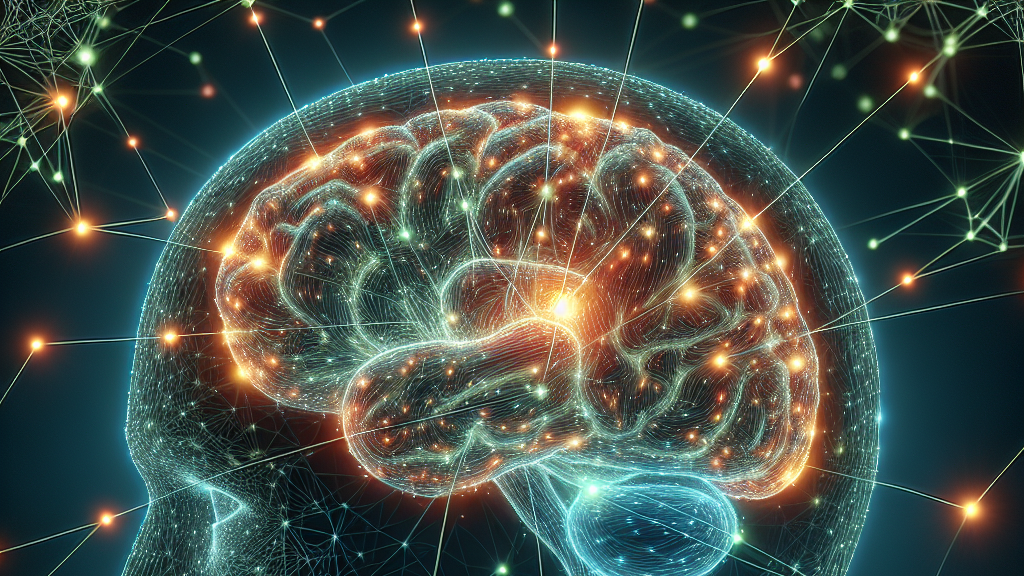
Have you ever wondered if we can truly understand how AI thinks? The latest research reveals that the methods we use to interpret an AI’s complex thought processes might not be as reliable as we once believed. Sparse autoencoders, a type of algorithm meant to explain internal AI workings, might crumble when faced with slight changes in input.

Understanding AI isn’t just about building algorithms; it’s about ensuring these complex systems are trustworthy and reliable. This study highlights a gap: existing methods like sparse autoencoders can fail when small, adversarial alterations are made to the input data. While the overall output of the language model remains unchanged, the internal interpretations — or concept representations — can be drastically skewed, leading to potential oversight issues in AI applications.

Imagine this in a real-world scenario: You’re using AI to monitor financial transactions for fraud. If the AI’s internal concepts can be easily manipulated, it might miss fraudulent activities even though the surface-level result seems correct. This research highlights the need for more resilient methods to ensure AI interprets and responds to data as intended, keeping our systems safe and reliable.

Did you know? Just a tiny tweak in input can drastically change how AI interprets information internally!

FAQs

How fragile are AI’s internal concept representations?

AI’s internal concept interpretations, often modeled with sparse autoencoders, can be easily manipulated by small input changes, revealing their fragility.

Why is robustness important in AI models?

Robustness ensures that AI systems remain reliable and accurate even when faced with slight disruptions, a crucial factor for applications requiring high trustworthiness.

What could happen if AI interpretations are manipulated?

If AI’s concept representations are manipulated, it could lead to oversight failures in critical tasks, like fraud detection, despite correct surface-level outputs.

Background

Sparse autoencoders are algorithms designed to map AI’s internal activations into concepts we can understand. They aim to make sense of how AI systems process information. However, the study focuses on how these representations can be fragile, meaning even minor changes in data can alter what the AI ‘believes’ internally without affecting its visible outputs.

History

This research builds upon earlier work in AI interpretability, where scientists aimed to decipher the ‘black box’ of AI thought processes. Past studies centered on decoding AI’s decision-making but often overlooked how resilient these interpretations are to external changes. This study seeks to address this gap by examining the robustness of internal concept representations.

Based on “Interpretability Illusions with Sparse Autoencoders: Evaluating Robustness of Concept Representations” by Aaron J. Li, Suraj Srinivas, Usha Bhalla, Himabindu Lakkaraju, available on arXiv (arxiv.org/abs/2505.16004), used under CC BY 4.0 (creativecommons.org/licenses/by/4.0/).

Trending

Latest

Can AI Save Water Discover How

Computers

AI is transforming the tech world, but it uses lots of water! A new tool, SCARF, helps us measure and reduce AI's water footprint,...

Whats a Forbush Decrease and Why Should We Care Whats a Forbush Decrease and Why Should We Care

Space

Scientists just observed the biggest solar storm event in years, revealing unexpected cosmic ray patterns. Understanding these changes could help us protect our technology...

Can Cars Spot Danger Faster Than Humans Can Cars Spot Danger Faster Than Humans

Computers

Think about how quickly you react when something unexpected happens on the road. This research brings us closer to creating self-driving cars that can...

Can Fear of the Other Stop Social Harmony Can Fear of the Other Stop Social Harmony

Physics

Fear of the unknown might make it harder for people to agree and get along. This study shows that when people have strong xenophobic...

Can AI Revolutionize Breast Cancer Diagnosis Can AI Revolutionize Breast Cancer Diagnosis

Electricity

This research introduces a groundbreaking AI model that can accurately assess HER2-positive breast cancer using widely accessible staining methods, potentially revolutionizing how we diagnose...

Can AI Transform Your Singing into a Choir Can AI Transform Your Singing into a Choir

Computers

Imagine singing solo and having AI turn you into a choir. This research unveils a groundbreaking AI tool that transforms your voice into rich...

You May Also Like

Computers

AI is transforming the tech world, but it uses lots of water! A new tool, SCARF, helps us measure and reduce AI's water footprint,...

Computers

Think about how quickly you react when something unexpected happens on the road. This research brings us closer to creating self-driving cars that can...

Electricity

This research introduces a groundbreaking AI model that can accurately assess HER2-positive breast cancer using widely accessible staining methods, potentially revolutionizing how we diagnose...

Computers

Imagine a machine capable of reading ancient books, deciphering complex pages with precision! This research is paving the way for AI to unlock the...

Economics

Discover how AI models can unknowingly favor certain races in mortgage decisions and how new methods could dramatically reduce these biases, fostering a fairer...

Computers

This research explores how AI models designed to understand both images and words might improve their performance simply by teaching themselves to think better....

Computers

Imagine if playing games could make a computer program better at understanding and creating text! This research suggests that by using creative tasks like...

Computers

Dive into the world of AI mistrust, where computers don't always know when they're wrong! Discover how teaching AI to see like us might...

Computers

What if talking to a robot could feel as comforting as a therapy session? This research uncovers the striking similarities between human therapists and...

Copyright © 2024 8ig8rain.

Disclaimer: The content on 8ig8rain.com consists of AI-generated summaries of scientific abstracts from arXiv. Please note that most arXiv abstracts are preprints and may not have undergone formal peer review. While these summaries aim to convey key ideas and potential applications, they are provided for informational purposes only and should not be interpreted as validated scientific findings or professional advice. The summaries are intended to educate, spark curiosity, and inspire further exploration of science.