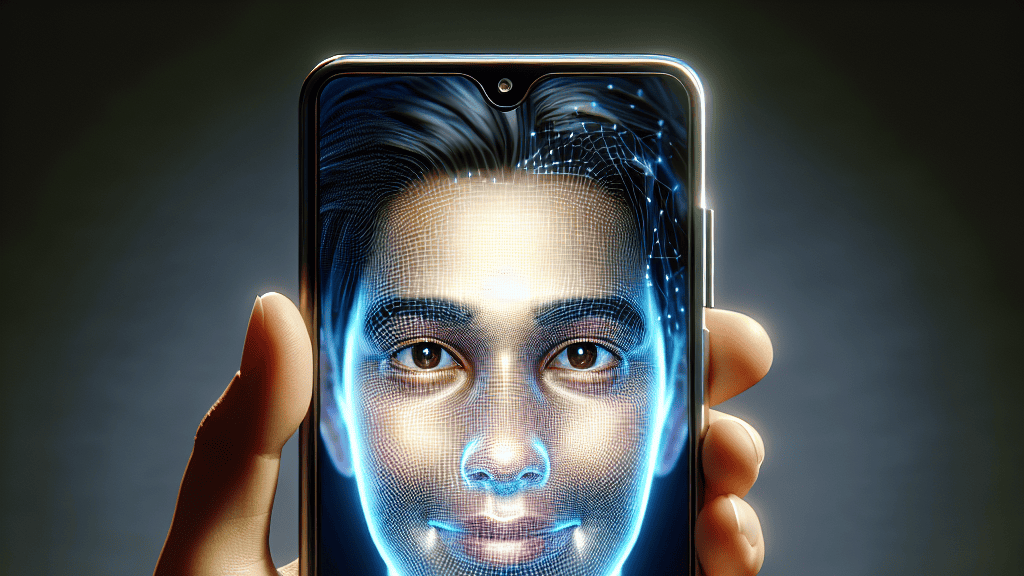
Have you ever wondered if your phone could recognize you, even when you’re pulling a funny face or looking at it from the side? Well, thanks to new research, AI might soon be able to do just that. This not only makes technology more fun but also more secure, as your phone learns to identify you in various moods and angles.
The secret behind this technology is a massive new dataset called CrossFaceID. It contains images of people showing off different expressions, angles, and even wearing different accessories. This range helps AI learn to tweak the way it recognizes faces, making it more flexible and personalized. By training the AI with these diverse images, it becomes skilled at keeping your identity consistent while adjusting minor details like a smile or a side glance.
Imagine a future where face recognition is so advanced it works even when you’re wearing those giant sunglasses or practicing your epic selfie angle. This technology isn’t just about cool selfies, though. It could also enhance security systems, ensuring that only you can unlock your phone, any time of day, in any mood. This exciting advancement could make technology feel a little more human.
Did you know that AI can now recognize faces with different moods and angles, just like humans do?
FAQs
How does the CrossFaceID dataset improve face recognition technology?
The CrossFaceID dataset helps AI learn to recognize the same face with variations like different expressions and angles, making face recognition more flexible and personalized.
Why is facial recognition important in everyday technology?
Facial recognition adds a layer of security and convenience in technology, allowing devices to identify users quickly and with ease, even when in different situations or moods.
How does the AI adapt to different facial expressions?
By training on a variety of images with different expressions and angles, AI learns to recognize consistent identity markers while adapting to changes in facial features.
What makes CrossFaceID different from other datasets?
CrossFaceID is designed specifically for variation in facial attributes, providing a broader range of expressions, angles, and adornments not commonly found in other datasets.
Can my phone recognize me if I change my hairstyle or wear glasses?
With advancements like those in the CrossFaceID dataset, AI is getting better at recognizing faces despite minor changes like hairstyles or wearing glasses.
Background
Face recognition technology relies heavily on datasets that teach AI to understand and identify facial features. These datasets help AI learn patterns and distinguish between different faces by being exposed to a variety of images. The more diverse the dataset, the better the technology can adapt to real-world scenarios where people might look different depending on their expressions or angles.
History
Facial recognition has evolved significantly over the years. Early systems required consistent lighting and angles to work effectively. As technology advanced, researchers developed more sophisticated datasets and algorithms that improved accuracy and flexibility. Now, with datasets like CrossFaceID, AI is able to recognize faces with a wide range of expressions and angles, marking a new era in personalized facial recognition technology.
Based on “Turn That Frown Upside Down: FaceID Customization via Cross-Training Data” by Shuhe Wang, Xiaoya Li, Xiaofei Sun, Guoyin Wang, Tianwei Zhang, Jiwei Li, Eduard Hovy, available on arXiv (arxiv.org/abs/2501.15407), used under CC BY 4.0 (creativecommons.org/licenses/by/4.0/).