Connect with us

Search by keyword

Computers

Could AI Teams Revolutionize Everyday Tasks?

Imagine AI models learning to work together like a team, adapting to their environment and tasks as they go. This innovation could lead to smarter tech in our everyday gadgets, from personal assistants to automated vehicles.

Could AI Teams Revolutionize Everyday Tasks
✨Researched by humans. Explained by robots. Learn more.

Imagine a world where AI models can work together like a basketball team, each player (or AI) knowing their role but also adapting to the game as it unfolds. That’s the future of technology being explored by researchers who are teaching AI models to learn and work together more effectively. Instead of acting individually, these AI ‘teammates’ share their knowledge and decisions, leading to smarter and more efficient outcomes.

The research focuses on something called ‘Learn as Individuals, Evolve as a Team’ (or LIET for short). In simple terms, it means each AI model learns on its own first and then shares its learning with others to improve teamwork. Just like each player in a team knows their strengths, these AI models become better at understanding the environment they’re in. They can then communicate better with each other, leading to more coordinated actions and decisions, which is a huge leap forward from what we’ve seen so far.

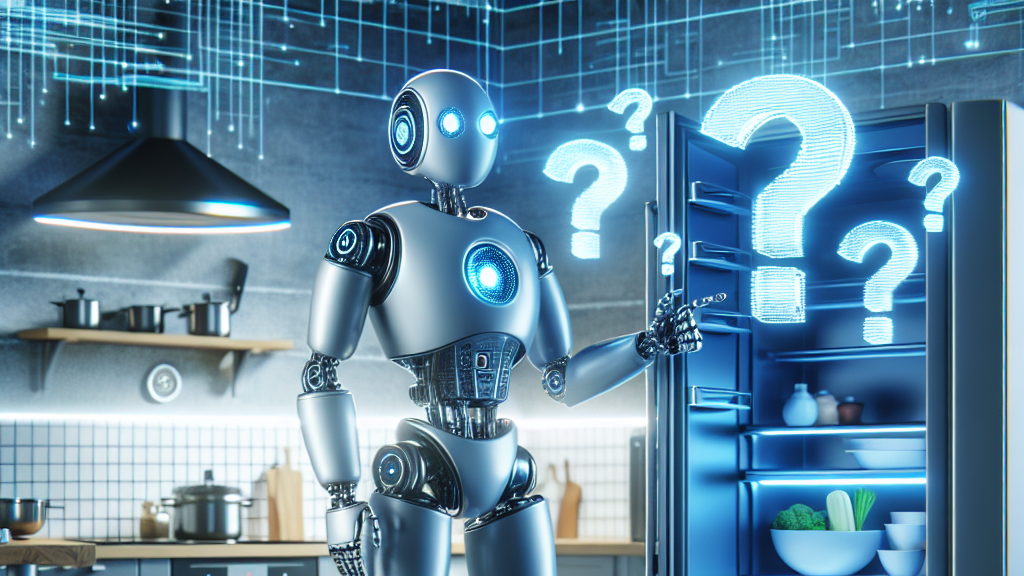
In practical terms, imagine your smart home devices not only doing their usual tasks but also working together intelligently. Your smart fridge, for example, could communicate with the grocery delivery service and your calendar to ensure you never run out of essentials, all while saving you time and effort. This research sets the stage for AI that is smarter, more adaptable, and capable of changing how we live our daily lives.

Did you know? AI models can now work together and adapt their behavior in real-time, just like a team of humans!

FAQs

How do AI language models learn to cooperate in complex tasks?

AI language models learn to cooperate by using a framework called ‘Learn as Individuals, Evolve as a Team,’ which allows them to adapt to their environment and work together in real-time.

What makes this AI teamwork approach different from previous methods?

This AI teamwork approach is unique because it combines individual learning with team evolution, improving their cooperation and communication abilities for better decision-making.

How could AI teamwork impact everyday technology use?

AI teamwork could significantly enhance everyday technology by making devices smarter and more responsive, leading to better home automation, efficient transportation, and improved personal assistants.

What real-world applications can benefit from AI cooperation?

Real-world applications such as smart home systems, automated vehicles, and even complex industrial operations could benefit from AI cooperation, leading to more efficient and intelligent systems.

Why is enhanced communication important in AI teamwork?

Enhanced communication is vital in AI teamwork as it allows AI models to share their experiences and knowledge in real-time, resulting in smarter decision-making and more coordinated actions.

Background

In multi-agent systems, where different AI models interact, it’s crucial for them to communicate and adapt to their environment. This is similar to how humans collaborate, requiring a blend of individual skills and teamwork. The LIET framework achieves this by allowing AI models to learn individually and then combine their knowledge to make better decisions collectively.

History

The idea of multi-agent cooperation in AI has evolved over time. Initially, AI models worked independently, much like individuals in a solo sport. Over the years, research focused on improving communication between these models, leading to frameworks like centralized training with decentralized execution. The LIET approach builds on these ideas, offering a refined method where AI models can learn and grow both individually and as a team.

Based on “Learn as Individuals, Evolve as a Team: Multi-agent LLMs Adaptation in Embodied Environments” by Xinran Li, Chenjia Bai, Zijian Li, Jiakun Zheng, Ting Xiao, Jun Zhang, available on arXiv (arxiv.org/abs/2506.07232), used under CC BY 4.0 (creativecommons.org/licenses/by/4.0/).


Trending

Latest

Can AI Save Water Discover How

Computers

AI is transforming the tech world, but it uses lots of water! A new tool, SCARF, helps us measure and reduce AI's water footprint,...

Whats a Forbush Decrease and Why Should We Care Whats a Forbush Decrease and Why Should We Care

Space

Scientists just observed the biggest solar storm event in years, revealing unexpected cosmic ray patterns. Understanding these changes could help us protect our technology...

Can Cars Spot Danger Faster Than Humans Can Cars Spot Danger Faster Than Humans

Computers

Think about how quickly you react when something unexpected happens on the road. This research brings us closer to creating self-driving cars that can...

Can Fear of the Other Stop Social Harmony Can Fear of the Other Stop Social Harmony

Physics

Fear of the unknown might make it harder for people to agree and get along. This study shows that when people have strong xenophobic...

Can AI Revolutionize Breast Cancer Diagnosis Can AI Revolutionize Breast Cancer Diagnosis

Electricity

This research introduces a groundbreaking AI model that can accurately assess HER2-positive breast cancer using widely accessible staining methods, potentially revolutionizing how we diagnose...

Can AI Transform Your Singing into a Choir Can AI Transform Your Singing into a Choir

Computers

Imagine singing solo and having AI turn you into a choir. This research unveils a groundbreaking AI tool that transforms your voice into rich...

You May Also Like

Computers

This research explores how AI models designed to understand both images and words might improve their performance simply by teaching themselves to think better....

Computers

Imagine if playing games could make a computer program better at understanding and creating text! This research suggests that by using creative tasks like...

Computers

Imagine a super-smart AI that can watch your daily life in real-time and remember everything without taking up much space. This research shows how...

Computers

This research explores how artificial intelligence language-powered robots might think they're seeing things that aren't actually there. Investigating this quirk could lead to more...

Computers

This exciting study reveals that just like us, AI has its own biases that can skew its thinking, especially when solving problems. Understanding and...

Computers

This research uncovers vulnerabilities in AI that could expose private and sensitive data while fine-tuning these models for specific fields like healthcare. By understanding...

Computers

Discover how language models might not be as random as we thought! By examining their decision-making processes, researchers found that these models can sometimes...

Computers

Understanding how small changes in computer settings can lead to big differences in AI performance has huge implications for reliability in AI applications. This...

Computers

Imagine teaching artificial intelligence to truly get the physical world by using sound! This research shows it's possible by equipping AI with nifty tricks...

Copyright © 2024 8ig8rain.

Disclaimer: The content on 8ig8rain.com consists of AI-generated summaries of scientific abstracts from arXiv. Please note that most arXiv abstracts are preprints and may not have undergone formal peer review. While these summaries aim to convey key ideas and potential applications, they are provided for informational purposes only and should not be interpreted as validated scientific findings or professional advice. The summaries are intended to educate, spark curiosity, and inspire further exploration of science.