Connect with us

Search by keyword

Computers

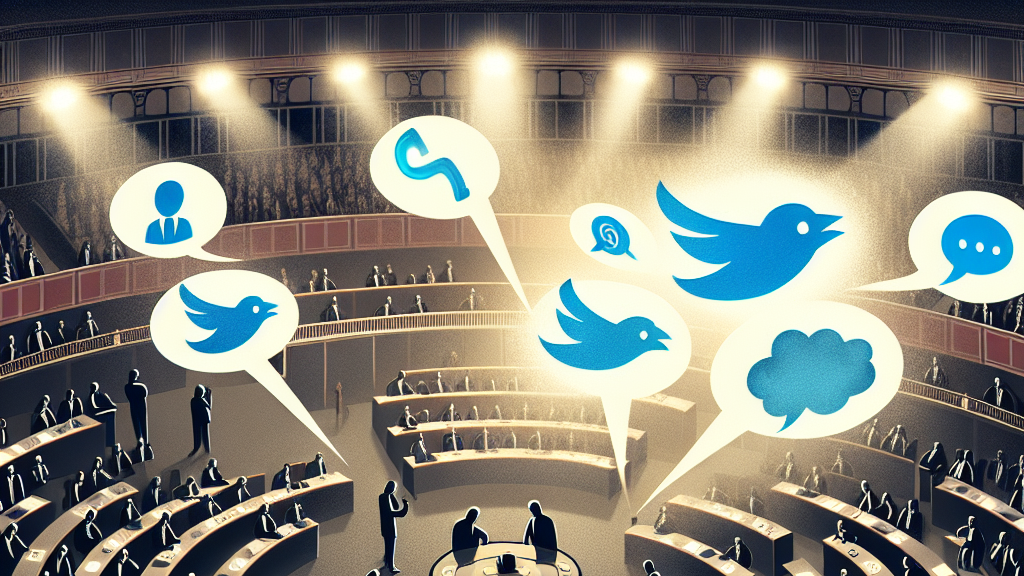
Could Bots Trick Your Tweets?

New research shows how sneaky tricks could fool Twitter sentiment models, potentially altering how emotions are perceived on social media. This could impact what you see online.

Could Bots Trick Your Tweets
✨Researched by humans. Explained by robots. Learn more.

Imagine posting a tweet about your favorite movie and having a machine misinterpret your enthusiasm as negativity. That’s what researchers are finding with some of the most cutting-edge language processing models like BERT. These models are supposed to understand sentiment in text, but they can be easily fooled by cleverly crafted messages.

The issue lies in how these models, especially when used by platforms like Twitter, assess the importance of every word. Researchers discovered they could manipulate words in tweets just slightly, tricking the model into seeing a completely different emotion than intended. This is similar to giving a perfectly executed magic trick where the audience sees one thing while the magician does another.

In practical terms, this could mean that sentiment analysis models might not always accurately represent how people feel in their posts, leading to inaccurate data used by companies or researchers. But with this new understanding, developers can work to make these systems more robust, ensuring what we see and feel in digital spaces is accurately reflected.

Did you know? A single word swap in a social media post might trick AI into thinking ‘love’ means ‘hate’!

FAQs

How can Twitter sentiment analysis models be tricked?

Researchers found that by changing specific words in a tweet, the sentiment analysis models, like BERT, can be deceived into interpreting the message inaccurately.

What is the significance of this Twitter sentiment analysis vulnerability?

This vulnerability can result in social media platforms displaying skewed analytics or insights, potentially affecting user experience and data-driven decisions.

How does the adversarial attack work on models like BERT?

The attack exploits how models prioritize word importance, using gradients to identify which words influence sentiment most, then changing them slightly to alter the sentiment perceived by the model.

Background

Natural Language Processing (NLP) is a technology used to help computers understand human language. BERT, a state-of-the-art NLP model, uses vast amounts of data to learn how language works. It’s commonly used to determine whether a tweet is positive or negative by analyzing the words in the text. However, this technology can be vulnerable to adversarial attacks, where small tweaks to text can lead to incorrect sentiment interpretation.

History

The concept of adversarial attacks in AI has been around for a while, primarily in image recognition. BERT is a model that’s been around since 2018 and revolutionized the field of NLP with its ability to understand context. This study builds on prior findings by focusing on how text-based models can be as vulnerable as image models, pushing the boundaries of what’s considered secure in NLP.

Based on “Breaking BERT: Gradient Attack on Twitter Sentiment Analysis for Targeted Misclassification” by Akil Raj Subedi, Taniya Shah, Aswani Kumar Cherukuri, Thanos Vasilakos, available on arXiv (arxiv.org/abs/2504.01345), used under CC BY 4.0 (creativecommons.org/licenses/by/4.0/).

Trending

Latest

Can AI Save Water Discover How

Computers

AI is transforming the tech world, but it uses lots of water! A new tool, SCARF, helps us measure and reduce AI's water footprint,...

Whats a Forbush Decrease and Why Should We Care Whats a Forbush Decrease and Why Should We Care

Space

Scientists just observed the biggest solar storm event in years, revealing unexpected cosmic ray patterns. Understanding these changes could help us protect our technology...

Can Cars Spot Danger Faster Than Humans Can Cars Spot Danger Faster Than Humans

Computers

Think about how quickly you react when something unexpected happens on the road. This research brings us closer to creating self-driving cars that can...

Can Fear of the Other Stop Social Harmony Can Fear of the Other Stop Social Harmony

Physics

Fear of the unknown might make it harder for people to agree and get along. This study shows that when people have strong xenophobic...

Can AI Revolutionize Breast Cancer Diagnosis Can AI Revolutionize Breast Cancer Diagnosis

Electricity

This research introduces a groundbreaking AI model that can accurately assess HER2-positive breast cancer using widely accessible staining methods, potentially revolutionizing how we diagnose...

Can AI Transform Your Singing into a Choir Can AI Transform Your Singing into a Choir

Computers

Imagine singing solo and having AI turn you into a choir. This research unveils a groundbreaking AI tool that transforms your voice into rich...

You May Also Like

Computers

Discover potential dangers in using artificial intelligence to count votes and how even a small error could change election outcomes.

Quantitative Finance

Discover how the Hype Index uses media buzz to predict stock market movements, offering investors a new tool for smarter trading.

Computers

Imagine using tools meant for decoding languages to unlock secrets in our DNA! That's what scientists are doing by applying Natural Language Processing techniques...

Computers

Imagine if computers could read DNA like a book, uncovering secrets of life through technology. This research explores how AI models, taking cues from...

Physics

Ever wondered why some words are harder to remember? This study reveals that our brains shape language, forcing it to bend and twist around...

Economics

This study shows how analyzing social media chatter can help investors and companies see what the public really thinks about big brands in real...

Computers

Unlocking secret insights hidden in cryptocurrency transactions could help predict Bitcoin prices and transform market strategies.

Economics

Politicians have started pointing fingers more post-2016, focusing on blame rather than praise. This shift has caused a drop in public trust and made...

Economics

Politicians increasingly focus on blaming others rather than praising achievements, especially after 2016, affecting public trust and spreading more widely online.

Copyright © 2024 8ig8rain.

Disclaimer: The content on 8ig8rain.com consists of AI-generated summaries of scientific abstracts from arXiv. Please note that most arXiv abstracts are preprints and may not have undergone formal peer review. While these summaries aim to convey key ideas and potential applications, they are provided for informational purposes only and should not be interpreted as validated scientific findings or professional advice. The summaries are intended to educate, spark curiosity, and inspire further exploration of science.