





































































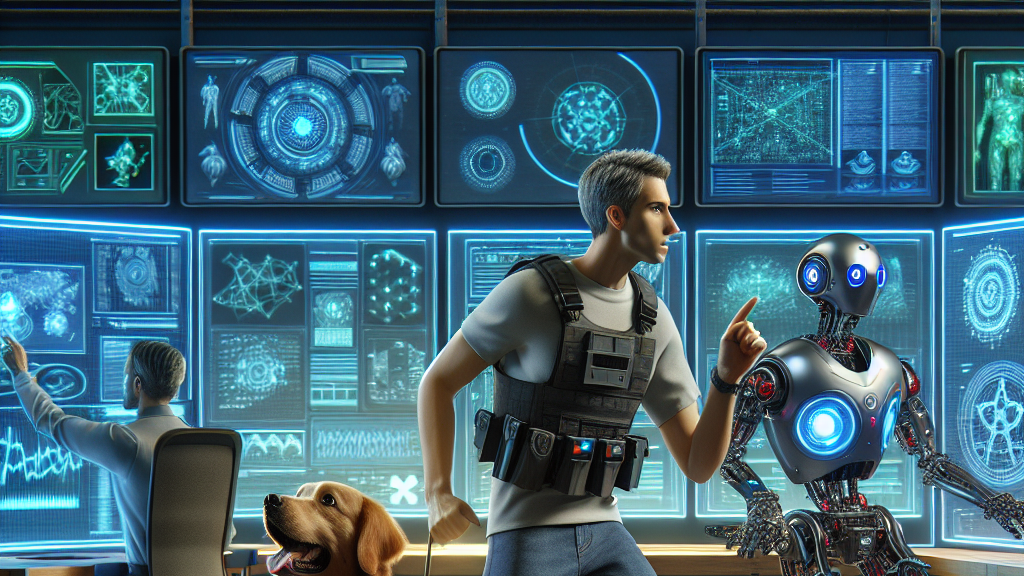
Imagine a world where humans, animals, and machines team up to solve problems that each can’t tackle alone. This is the exciting potential of Animal-Human-Machine (AHM) teams, where the unique skills of each player combine to achieve greater things. It’s like the ultimate teamwork dream—where guide dogs help the visually impaired navigate, machines handle data crunching, and humans make the life-saving decisions in search-and-rescue missions.
This research takes a deep dive into how these mixed teams can work together effectively. By finding the right balance and structure, teams of humans, animals, and machines can perform complex tasks more efficiently. From the nose of a trained security dog detecting threats to a machine analyzing piles of information in a split second, the possibilities are endless. The study lays out challenges and opportunities, emphasizing the need for a systematic approach to optimize these interactions.
In the future, this could mean advanced rescue operations during disasters where humans and machines can’t go, or even more efficient security checks in airports, making travel safer and faster. By leveraging the strengths of animals, machines, and humans, we could drastically improve efficiency in various fields and solve problems that seem unsolvable today.
Did you know? Dogs’ sense of smell is so sensitive they can even detect diseases like cancer in humans.
FAQs
What are Animal-Human-Machine teams?
Animal-Human-Machine teams are groups made up of humans, animals, and machines working together to tackle complex tasks by combining their unique strengths. These teams can handle jobs like security screenings, search-and-rescue operations, and guiding the visually impaired.
How do Animal-Human-Machine teams work?
Animal-Human-Machine teams work by leveraging the unique capabilities of each member. For example, animals like dogs use their keen senses, machines use their data processing power, and humans use their decision-making skills.
What challenges do Animal-Human-Machine teams face?
A major challenge is finding the optimal way to balance and integrate each member’s strengths while compensating for their weaknesses. This requires careful planning and design of the team structure.
How might Animal-Human-Machine teams impact everyday life?
Such teams could revolutionize fields like security, by making screenings more efficient, or improve disaster response times in search-and-rescue missions, ultimately making our world safer and more efficient.
Why is research on Animal-Human-Machine teams important?
Research is crucial for understanding how these teams can be optimized to work together seamlessly. By studying them, we can uncover new possibilities and create innovative solutions for complex problems.
Background
In Animal-Human-Machine teams, each member brings strengths that complement the others. Humans provide decision-making and emotional intelligence, animals offer sensory capabilities beyond human reach, and machines contribute precision and computational power. Together, these elements create a synergy that can surpass individual abilities.
History
The concept of hybrid intelligence isn’t new. Earlier studies explored human-machine collaboration, and animals have long been partners in human tasks like navigation and hunting. This new research brings these elements together, building on these existing studies to create a unified approach for overcoming complex challenges with integrated team dynamics.
Based on “Birds of a Different Feather Flock Together: Exploring Opportunities and Challenges in Animal-Human-Machine Teaming” by Myke C. Cohen, David A. Grimm, Reuth Mirsky, Xiaoyun Yin, available on arXiv (arxiv.org/abs/2504.13973), used under CC BY 4.0 (creativecommons.org/licenses/by/4.0/).
