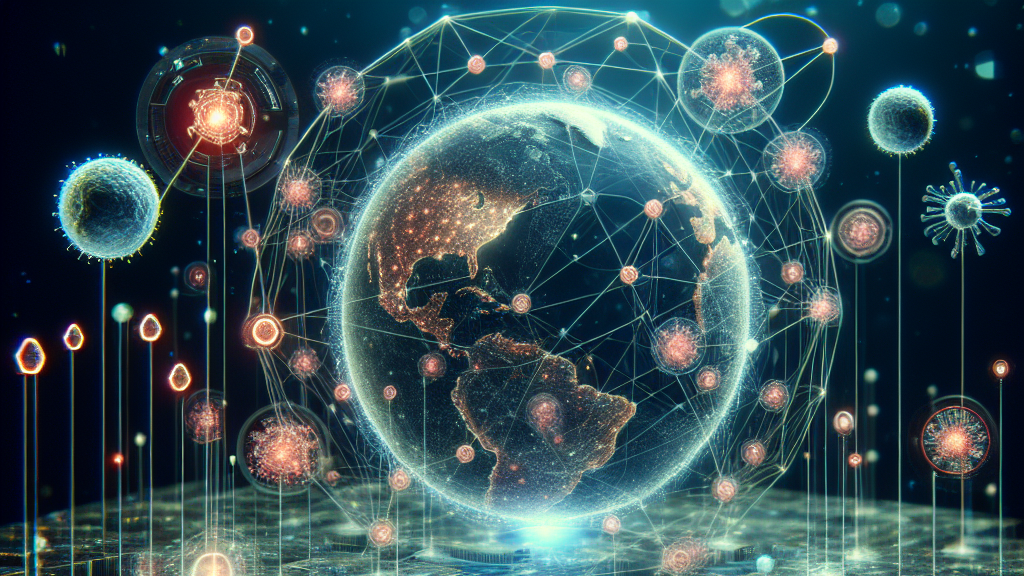
**Did you know the Internet could have its very own immune system?** As we surf the web, the Internet is rapidly expanding towards incorporating trillions of connected devices. This vast growth, however, is not without its challenges. Just like our bodies need an immune system to fend off viruses and harmful bacteria, the Internet requires protection from new threats, like fake data floods and artificial intelligence-powered malware. Centralization has made this more challenging, as surveillance-driven business models predominate and disrupt the harmony initially intended for online communication. But imagine if the Internet could evolve to protect itself, similar to how nature defends living organisms.
**Researchers are now taking cues from biology to cultivate a more resilient Internet.** This includes developing digital immune systems that would function much like our biological immune systems. The idea is to design software that can automatically adapt and mutate, creating a diverse architectural framework capable of resisting attacks. The key to achieving this lies in decentralizing the Internet once again, encouraging more mutual, cooperative forms of digital interaction rather than centralized control. The concept is to develop a network that isn’t just interconnected but smart, self-adaptive, and perpetually vigilant.
**Imagine the impact on your daily life if the Internet could automatically fend off digital threats.** You’d enjoy a safer online experience without constantly worrying about the next cyber-attack or data breach. Emails, banking, and social media interactions could all become more secure. Accessing information and sharing content could become more reliable and private, with your data safeguarded by an Internet immune system working tirelessly to keep threats at bay. By encouraging a decentralized framework, not only would individual privacy be enhanced, but the overall trust and efficiency of online communications could see remarkable improvements.
Just like human cells can mutate to fend off new viruses, researchers believe software could similarly ‘mutate’ to fight digital threats.
FAQs
Why does the Internet need a digital immune system?
As the Internet grows to include more devices, it faces more threats like AI-driven malware. A digital immune system could help protect against these dangers, much like how a biological immune system defends the human body from disease.
What role does decentralization play in Internet security?
Decentralization can reduce reliance on central points of control, which are susceptible to attacks. It promotes more secure, mutual forms of communication, which can enhance privacy and make the Internet more resilient to threats.
How can software mutation improve Internet security?
Software mutation can allow Internet systems to adapt automatically to new threats. By creating a diverse range of software architectures, it becomes harder for attackers to exploit vulnerabilities, much like how genetic diversity helps populations survive in nature.
Background
The Internet was initially designed as a decentralized network to facilitate end-to-end connectivity. Over time, however, centralization has increased, often prioritizing surveillance capitalism over user privacy and mutual collaboration. This has left the Internet vulnerable to concentrated attacks that exploit centralized control points. Mimicking biological systems’ resilience—such as the human immune system, which autonomously adapts to fight off pathogens—can inspire solutions to these vulnerabilities.
History
Decades ago, the Internet was a decentralized platform meant to connect people without intermediaries. Over time, centralization grew with major corporations dominating digital interaction spaces. This shift diminished collaborative peer-to-peer networking. Recent research is now focusing on returning to and improving upon those foundational decentralized principles, offering greater resilience and security to users. This study proposes borrowing evolutionary biology concepts to shape a future Internet that can adaptively defend itself, leveraging diverse architectural configurations.
Based on “Steps towards an Ecology for the Internet” by Anil Madhavapeddy, Sam Reynolds, Alec P. Christie, David A. Coomes, Michael W. Dales, Patrick Ferris, Ryan Gibb, Hamed Haddadi, Sadiq Jaffer, Josh Millar, Cyrus Omar, William J. Sutherland, Jon Crowcroft, available on arXiv (arxiv.org/abs/2506.06469), used under CC BY 4.0 (creativecommons.org/licenses/by/4.0/).