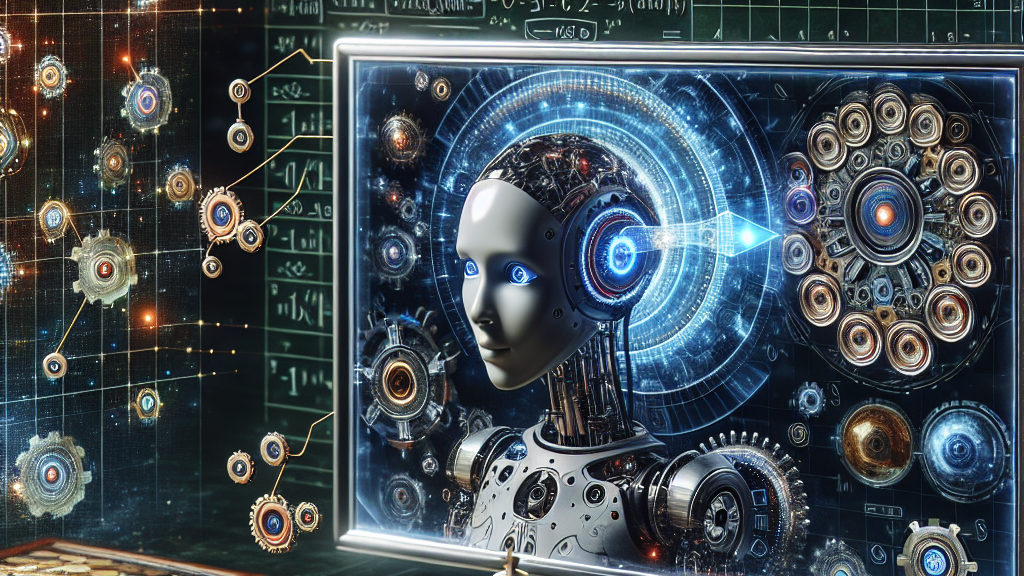
Did you know that the way computers learn from pictures and words is about to get a major upgrade? It’s called UniME, and it’s like giving your computer superpowers to understand images and text better than ever before. Imagine the possibilities: smarter apps, more intuitive photo searches, and even better AI conversations. We’re talking about a whole new way for technology to learn and think, inspired by how you use photos and captions on social media every day.
UniME stands out because it tackles some tough challenges that current models face, like understanding complex combinations of images and words without losing important details. The approach uses two clever steps to boost the AI’s brainpower. First, it learns from a really smart language model—kind of like getting tips from a top student. Then, it uses something called ‘hard negative enhanced instruction tuning.’ This means it forces the AI to pay attention to tricky examples, making it better at picking out what’s important from a sea of information.
Imagine you’re searching for images online or trying to find the perfect emoji to match your message. With UniME’s capabilities, these tasks could become more seamless and accurate. Think about how much easier it would be to find that specific picture among your countless gallery photos, or how an app could suggest the perfect caption for your Instagram post. This isn’t just about tech; it’s about making your digital life smoother and more intuitive. The future of AI looks brighter, and it’s starting with innovations like UniME.
Did you know? With over a billion photos shared online daily, training AI to comprehend images and text together could revolutionize how we interact with technology.
FAQs
What is UniME and how does it enhance AI learning?
UniME is a new framework designed to improve AI’s ability to understand and process images and text together. It enhances AI learning by using advanced language models for teaching and refining its focus on tricky examples, resulting in better understanding and task performance.
How could UniME impact my daily tech use?
UniME could make photo searches more accurate, suggest better captions, and enhance interactive AI applications, making your digital interactions smoother and more intuitive.
Why is it important for AI to understand images and text together?
Many real-world applications rely on the combination of images and text, like social media, search engines, and content management. By improving AI’s ability to process both simultaneously, we can create smarter and more efficient digital tools.
What are some practical uses of UniME?
UniME could be used in various applications like improving search engines, suggesting better social media captions, and enhancing AI-driven customer service, leading to a more efficient digital experience.
How does UniME handle complex data differently than existing models?
UniME uses a unique two-stage process to refine its understanding by learning from advanced language models and focusing on challenging examples, allowing it to process complex combinations of data more effectively than current models.
Background
The study delves into how AI processes images and text together. Current models often struggle with complex combinations, missing out on crucial details. UniME aims to improve this by employing a smarter, more refined learning process. This involves two stages: learning from an advanced language model and honing its focus on challenging data samples, which enhances the AI’s ability to differentiate and understand various inputs better.
History
Previously, models like CLIP paved the way by linking images and text to teach AI about multimodal representation. However, it faced limitations in processing complex combinations. Recent advances in Multimodal Large Language Models have shown promise but are yet to fully harness this potential. UniME builds on these innovations, offering enhancements that promise to elevate how technology comprehends both images and words together.
Based on “Breaking the Modality Barrier: Universal Embedding Learning with Multimodal LLMs” by Tiancheng Gu, Kaicheng Yang, Ziyong Feng, Xingjun Wang, Yanzhao Zhang, Dingkun Long, Yingda Chen, Weidong Cai, Jiankang Deng, available on arXiv (arxiv.org/abs/2504.17432), used under CC BY 4.0 (creativecommons.org/licenses/by/4.0/).