





































































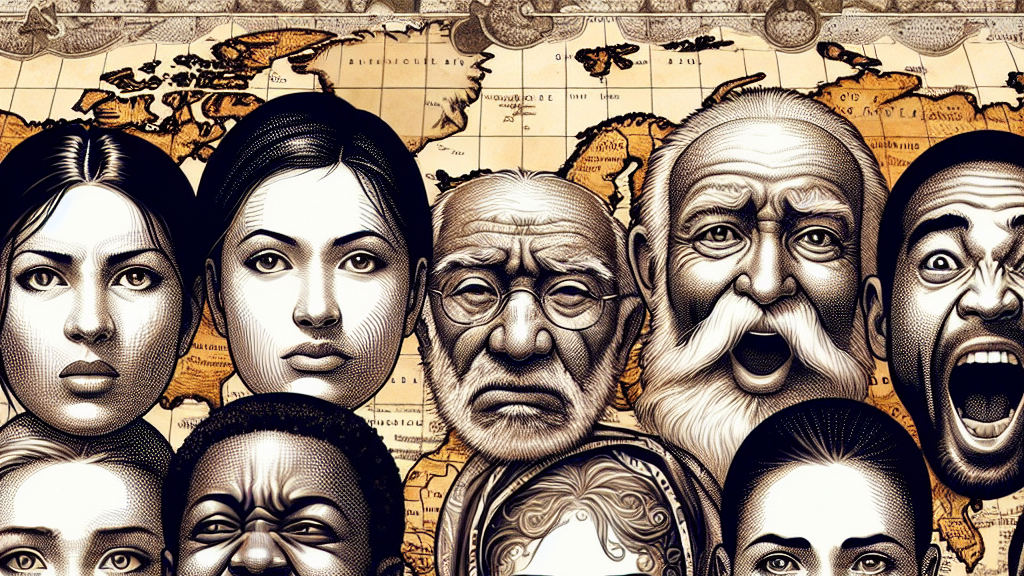
Ever wondered what political leaders are really feeling when they speak? Turns out, a lot more than you might think! This fascinating research dives into YouTube videos of leaders from around the world, using cutting-edge artificial intelligence to decode their emotions. Imagine finding out if that fiery speech is fueled by genuine passion or something else entirely. The implications are game-changing, offering a peek behind the diplomatic curtain.
The study breaks down the facial expressions of leaders into six emotions: anger, disgust, fear, happiness, sadness, and surprise, plus a neutral state. Using 220 videos, artificial intelligence was able to capture the subtle changes in these expressions. The result? Leaders who use more populist rhetoric tend to show higher levels of negative emotions. This is a mind-bending look at how political discourse is more than just words—it’s deeply emotional.
Picture this: you’re watching a political debate, and suddenly, you get real-time insights into how the candidates truly feel. This research isn’t just about theory; it’s paving the way for practical applications that could revolutionize how we consume political media. AI-driven emotion analysis could inform voters, shape media coverage, or even guide political strategies. Imagine an election where you know the emotions behind the promises—now that’s a game-changer!
Did you know? AI analyzed emotions in political speeches with up to 60% accuracy compared to human observers!
FAQs
What does the research on political leaders’ emotions reveal?
This research reveals statistically significant differences in emotions like anger, fear, and sadness among political leaders, especially those using populist rhetoric. The study uses AI to analyze 220 videos from leaders across 15 countries.
How accurate is the AI in detecting emotions compared to humans?
The AI has a 53-60% agreement with human labels, making it a reliable tool for capturing nonverbal emotional cues in political leaders.
How might the findings on emotions in political rhetoric be practically applied?
This research could revolutionize political media by offering real-time emotional insights for voters and shaping media coverage, ultimately making political discourse more transparent.
Why focus on populist rhetoric for emotional analysis?
Populist rhetoric is often highly charged and emotional, making it a prime area for studying the emotional appeal and how leaders’ expressions reflect or amplify their spoken words.
Can AI really capture the full range of human emotions in videos?
While not perfect, AI can significantly capture the range of emotions expressed in facial expressions, providing a new dimension to analyzing political speeches and rhetoric.
Background
Nonverbal communication is a crucial part of how we understand and interpret what people mean beyond their spoken words. Facial expressions are among the most powerful ways we convey emotions. Artificial intelligence can analyze these subtle expressions, quantifying the presence of emotions like anger, happiness, or surprise. This allows researchers to decode the emotional undercurrents of speeches, offering insights into the true feelings of political leaders.
History
Understanding emotions in political speeches isn’t new, but traditionally it relied on human interpretation. Recent advancements in artificial intelligence have allowed for more objective and scalable analysis. Previous studies have focused on text, analyzing the language for emotional cues, while this research uniquely focuses on visual data from video to capture nonverbal emotions.
Based on “The Face of Populism: Examining Differences in Facial Emotional Expressions of Political Leaders Using Machine Learning” by Sara Major, Aleksandar Tomašević, available on arXiv (arxiv.org/abs/2304.09914), used under CC BY 4.0 (creativecommons.org/licenses/by/4.0/).
