Imagine asking a powerful AI to answer a question or solve a problem, and its answer varies just because of the order in which it receives clues. Fascinating, right? This is exactly what’s happening with advanced AI systems that need to comb through lots of information to give you an answer. These systems, called Retrieval-Augmented Generation systems, can sometimes be thrown off by something as simple as the sequence of evidence they consider, affecting the quality of their responses.
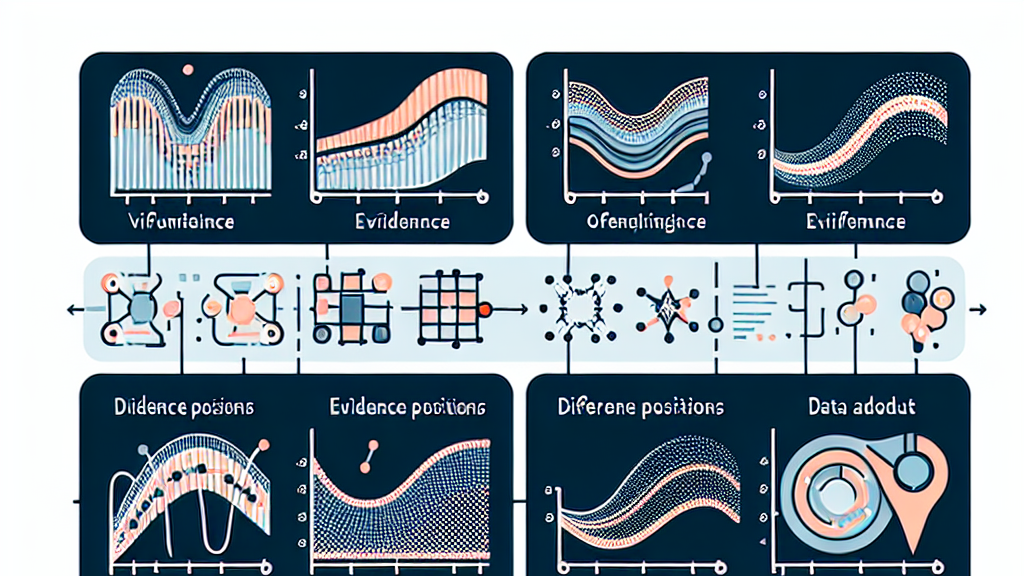
Researchers have delved into this phenomenon to understand how evidence order can create a ‘U-shaped’ accuracy curve. What does that mean? Well, think of it like this: if the evidence comes to the AI system in a particular sequence, its performance can either soar, crash, or stay in the middle, forming a U-shape when you graph accuracy against the evidence position. They even created a special index called the Position Sensitivity Index to measure this effect. Their findings show that when a mix of different types of information — like text and images — are used, the position bias becomes even more pronounced.
So, why does this matter to us? Imagine AI systems that are fair and robust, not swayed by the order of their clues. This research points towards creating smarter systems that reorder evidence logically or mitigate bias. In the future, this could lead to more reliable AI technologies in various fields, from healthcare diagnostics to personalized recommendations, and even smarter AI assistants that understand you better every day.
Did you know that the sequence in which an AI receives information can actually change the answers it generates? It’s true—just like how the order of ingredients affects the taste of a recipe!
FAQs
How does evidence order affect AI performance?
AI performance, particularly in Retrieval-Augmented Generation systems, can be sensitive to the sequence of evidence it uses. This can cause accuracy to vary significantly, forming a ‘U-shaped’ curve when graphed.
What is a Multimodal Retrieval-Augmented Generation system?
A Multimodal Retrieval-Augmented Generation system is an advanced AI that combines different types of data like text and images to generate responses or solutions for complex tasks. These systems can be affected by how evidence is ordered.
Why is position bias important in AI research?
Understanding position bias is crucial because it helps in creating AI systems that provide consistent and fair results regardless of the sequence of evidence, leading to more reliable and unbiased AI applications.
What is the Position Sensitivity Index?
The Position Sensitivity Index is a measure developed to quantify how sensitive an AI system’s performance is to the order of the evidence it processes. It’s a tool to better understand and address position bias.
How can this research improve AI technologies?
This research can lead to the development of strategies that reorder evidence logically or reduce bias, enhancing AI technologies to be more accurate, fair, and reliable in fields like healthcare, technology, and more.
Background
The core of this research lies in understanding how AI systems that generate answers or content from various sources work. These systems, known as Retrieval-Augmented Generation systems, gather ‘clues’ or evidence from different types of data—like text, images, or a mix—and create responses. However, the sequence in which these clues are arranged can affect the AI’s performance due to a phenomenon called position bias.
History
The concept of using multiple types of data to create more robust AI systems emerged as a way to handle complex, open-ended tasks that require diverse information. Over time, researchers observed that the order in which information was presented could affect how these systems formed their conclusions. This study represents a significant advancement in understanding and addressing this order’s impact, building on previous studies that highlighted similar issues in unimodal, or single-type, data systems.
Based on “Who is in the Spotlight: The Hidden Bias Undermining Multimodal Retrieval-Augmented Generation” by Jiayu Yao, Shenghua Liu, Yiwei Wang, Lingrui Mei, Baolong Bi, Yuyao Ge, Zhecheng Li, Xueqi Cheng, available on arXiv (arxiv.org/abs/2506.11063), used under CC BY 4.0 (creativecommons.org/licenses/by/4.0/).