


























































Connect with us

Search by keyword

Computers

Getting Domain Experts to Help AI Be Fair to All

This research introduces guidelines to improve AI fairness by involving experts from relevant fields to reduce biases, especially in critical areas like healthcare, aiming to make AI more reliable and accurate.

Getting Domain Experts to Help AI Be Fair to All

AI systems, while incredibly smart, sometimes overlook small but important details, leading to what’s called ‘representation bias.’ This means the AI may not work equally well for everyone, especially for groups that were less represented in the data it was trained on. Imagine using a healthcare app that gives great advice to some people, but not others. That’s a big deal and something we need to fix!

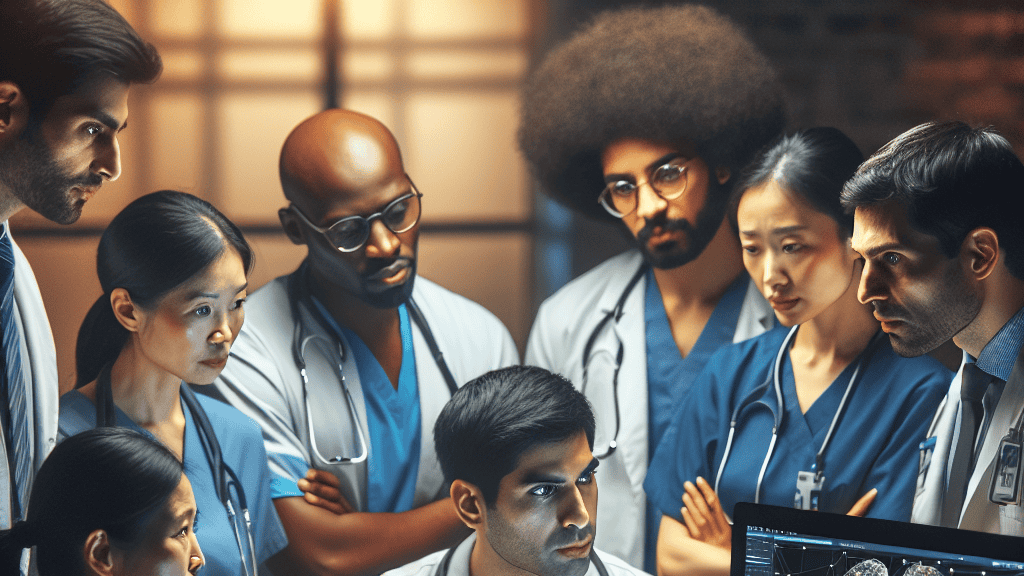
The researchers here provide us with a new strategy: get domain experts—people who know their field inside out—to share their insights during the AI development process. By doing so, AI systems can be tuned to recognize and include underrepresented data segments. To test this, they asked 35 healthcare experts to try out their method. The results were promising; they could tackle biases without making the AI less accurate. It’s a win-win!

Imagine using this approach for things you rely on daily, like your smartphone’s voice assistant or even navigation apps. If domain experts contribute their specific knowledge, every tool could become more inclusive and less biased, making tech fairer and more useful for everyone. This is just the beginning of how we can use expert knowledge to build more balanced AI that works well for all people, not just some.

Representation bias in AI refers to the technology performing unequally across different data segments, which could lead to unfair outcomes in applications like healthcare.

FAQs

What unexpected discovery did scientists make?

They found that involving domain experts in the AI development process can significantly reduce representation bias without impacting model accuracy negatively.

How could this research change AI in healthcare?

By integrating domain experts’ insights, AI systems in healthcare can be more accurate and fair, ensuring that underrepresented groups receive better care and recommendations.

What are representation biases?

Representation biases occur when AI systems perform unequally because they were trained on data that didn’t include all relevant segments equally.

How do domain experts reduce biases?

Domain experts provide crucial insights and data understanding that can guide AI developers in recognizing and correcting underrepresented data areas, improving AI fairness.

Why is it important to correct representation bias?

Correcting representation bias ensures technologies are inclusive and equitable, offering fair treatment and benefits to all users, regardless of their background.

Background

Representation bias in AI occurs when models are trained on datasets that do not equally represent all potential users. This can lead to the AI making errors or providing inadequate service to underrepresented groups. In healthcare, this is particularly concerning since biased AI could lead to unequal treatment or misdiagnoses. Addressing this involves having enough domain knowledge to identify gaps in representation and correct them.

History

The issue of representation bias has been recognized as a major challenge as AI technologies spread into various domains like healthcare, finance, and law. Initial solutions focused on collecting more balanced datasets, but this has proven insufficient without a nuanced understanding of the domain itself. Past research emphasized the need for extensive domain knowledge to guide the debiasing process, which paved the way for the approach of actively involving domain experts.

Based on “Explanatory Debiasing: Involving Domain Experts in the Data Generation Process to Mitigate Representation Bias in AI Systems” by Aditya Bhattacharya, Simone Stumpf, Robin De Croon, Katrien Verbert, available on arXiv (arxiv.org/abs/2501.01441), used under CC BY 4.0 (creativecommons.org/licenses/by/4.0/).


Trending

Latest

Can AI Save Water Discover How

Computers

AI is transforming the tech world, but it uses lots of water! A new tool, SCARF, helps us measure and reduce AI's water footprint,...

Whats a Forbush Decrease and Why Should We Care Whats a Forbush Decrease and Why Should We Care

Space

Scientists just observed the biggest solar storm event in years, revealing unexpected cosmic ray patterns. Understanding these changes could help us protect our technology...

Can Cars Spot Danger Faster Than Humans Can Cars Spot Danger Faster Than Humans

Computers

Think about how quickly you react when something unexpected happens on the road. This research brings us closer to creating self-driving cars that can...

Can Fear of the Other Stop Social Harmony Can Fear of the Other Stop Social Harmony

Physics

Fear of the unknown might make it harder for people to agree and get along. This study shows that when people have strong xenophobic...

Can AI Revolutionize Breast Cancer Diagnosis Can AI Revolutionize Breast Cancer Diagnosis

Electricity

This research introduces a groundbreaking AI model that can accurately assess HER2-positive breast cancer using widely accessible staining methods, potentially revolutionizing how we diagnose...

Can AI Transform Your Singing into a Choir Can AI Transform Your Singing into a Choir

Computers

Imagine singing solo and having AI turn you into a choir. This research unveils a groundbreaking AI tool that transforms your voice into rich...

You May Also Like

Computers

AI is transforming the tech world, but it uses lots of water! A new tool, SCARF, helps us measure and reduce AI's water footprint,...

Computers

Think about how quickly you react when something unexpected happens on the road. This research brings us closer to creating self-driving cars that can...

Electricity

This research introduces a groundbreaking AI model that can accurately assess HER2-positive breast cancer using widely accessible staining methods, potentially revolutionizing how we diagnose...

Computers

Imagine a machine capable of reading ancient books, deciphering complex pages with precision! This research is paving the way for AI to unlock the...

Economics

Discover how AI models can unknowingly favor certain races in mortgage decisions and how new methods could dramatically reduce these biases, fostering a fairer...

Computers

This research explores how AI models designed to understand both images and words might improve their performance simply by teaching themselves to think better....

Computers

Imagine if playing games could make a computer program better at understanding and creating text! This research suggests that by using creative tasks like...

Computers

Dive into the world of AI mistrust, where computers don't always know when they're wrong! Discover how teaching AI to see like us might...

Computers

What if talking to a robot could feel as comforting as a therapy session? This research uncovers the striking similarities between human therapists and...

Copyright © 2024 8ig8rain.

Disclaimer: The content on 8ig8rain.com consists of AI-generated summaries of scientific abstracts from arXiv. Please note that most arXiv abstracts are preprints and may not have undergone formal peer review. While these summaries aim to convey key ideas and potential applications, they are provided for informational purposes only and should not be interpreted as validated scientific findings or professional advice. The summaries are intended to educate, spark curiosity, and inspire further exploration of science.

