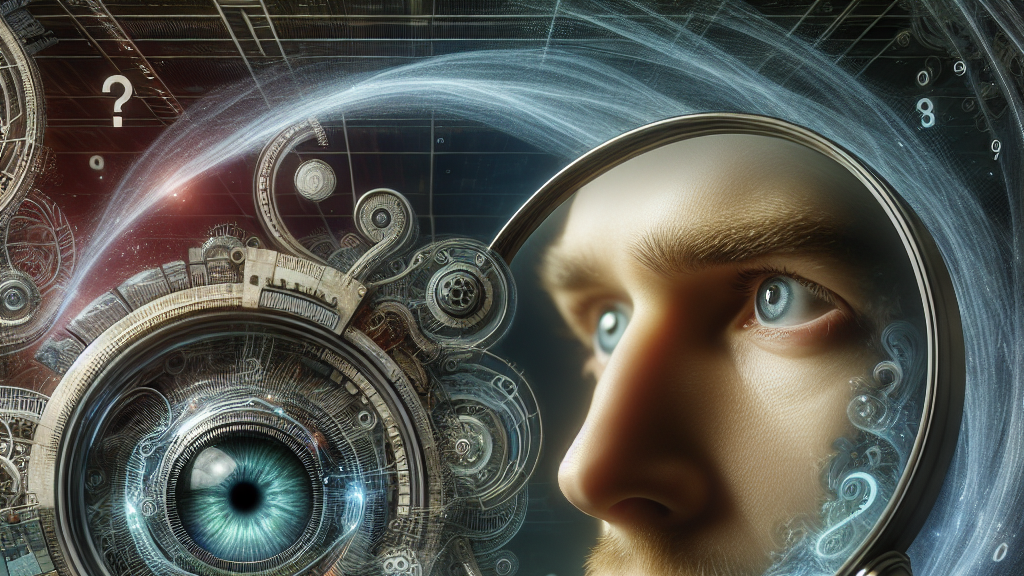
Imagine if technology could fundamentally change the way we think, learn, and process information. That’s exactly what’s happening with Generative Artificial Intelligence (AI). It’s not just a cool gadget or a fancy tool; it’s slowly becoming a springboard for our minds, altering our cognitive abilities and the way we approach problem-solving. But what does it mean for our everyday lives, especially in education? Are teachers about to become obsolete? Not quite, but they will certainly have to rethink how they educate the geniuses of tomorrow.
This research dives into how Generative AI, the kind that can create everything from art to conversations, is subtly rewiring our brains. Drawing from Krathwohl’s revised Bloom’s Taxonomy and Dewey’s theories on reflection, the researchers explored how these AI systems are influencing how we think, reason, and learn. Essentially, Generative AI challenges the traditional routes of acquiring knowledge, pushing us to engage more critically and reflectively with information.
So, how could this play out in real life? Picture a future classroom where students use AI as a co-teacher, guiding them through complex concepts by sparking discussion and reflection. Instead of rote learning, these AI tools can help students develop critical thinking skills, prepping them for a world where adaptability is key. The bottom line? This AI revolution in thought might just put the power of education back into the hands of the learner, making learning not just about absorbing facts, but about truly understanding and applying them.
Did you know? Generative AI can produce music, write stories, and even create artworks, all through mimicking human creativity!
FAQs
How is Generative AI influencing human cognition?
Generative AI reshapes human cognition by changing how we engage with, process, and reflect on information, encouraging deeper and more critical thinking.
What are the potential educational implications of Generative AI’s impact on cognition?
Educators might need to redesign learning experiences to foster critical thinking and reflection, utilizing Generative AI as a tool for enhancing cognitive abilities in students.
How does Generative AI differ from traditional learning aids in influencing cognition?
Unlike traditional aids that offer static information, Generative AI interacts, creates, and adapts in real-time, challenging learners to think critically and reflectively while engaging with content.
What role does Krathwohl’s revised Bloom’s Taxonomy play in this research on Generative AI?
Krathwohl’s framework helps the researchers assess how Generative AI influences different levels of cognitive skills, from remembering to creating, reshaping our approach to learning and understanding.
How might Generative AI be used in a future classroom setting?
Generative AI could be implemented as a co-teacher, using its interactive capabilities to foster discussion, reflection, and critical thinking, enhancing the overall learning process for students.
Background
Generative AI refers to any form of Artificial Intelligence that can create new content, like text, images, music, etc., by learning patterns from vast datasets. It mimics human creativity and is increasingly being used in various fields, including education. Krathwohl’s revised Bloom’s Taxonomy is a framework used to understand different learning objectives and cognitive skills, like analyzing and creating. Dewey’s reflective thought emphasizes the importance of reflecting on experiences to learn from them. Together, these concepts help researchers analyze how generative AI impacts our thinking processes.
History
The study of AI’s impact on human cognition has roots in earlier research on AI’s capabilities to perform tasks traditionally requiring human intelligence. Bloom’s Taxonomy, developed in the mid-20th century, has been a significant tool in education to categorize learning objectives. Krathwohl revised it to address educational goals more effectively. Dewey’s concepts of reflective thought have long emphasized the necessity of reflection in learning. This study builds on these foundations, aiming to understand how the rise of generative AI might transform cognitive functions in the modern world.
Based on “Protecting Human Cognition in the Age of AI” by Anjali Singh, Karan Taneja, Zhitong Guan, Avijit Ghosh, available on arXiv (arxiv.org/abs/2502.12447), used under CC BY 4.0 (creativecommons.org/licenses/by/4.0/).