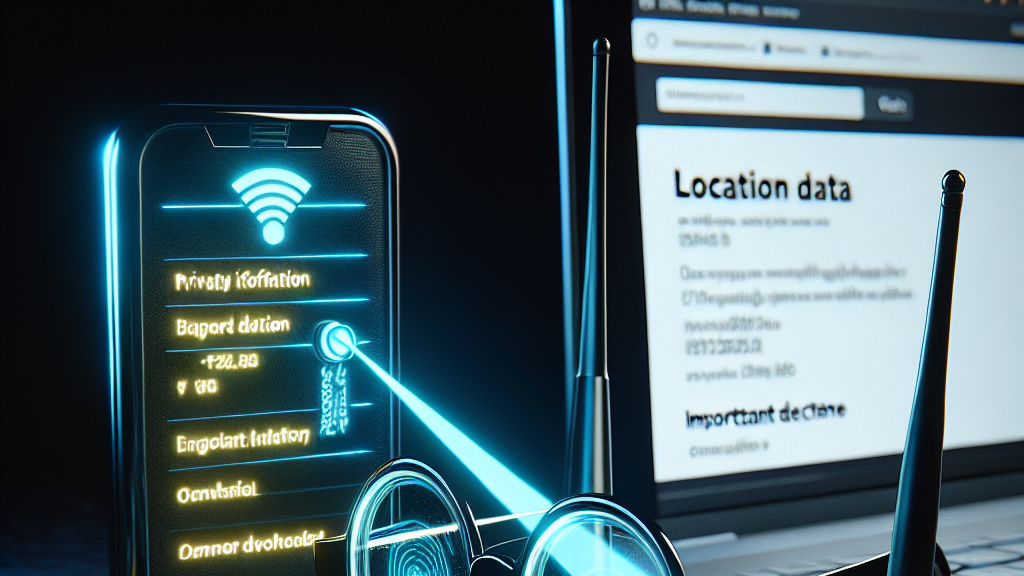
Imagine if selling your old Wi-Fi router online could expose your current location and even track your router’s journey to its new home. That’s exactly what researchers have uncovered, revealing a surprising privacy gap in our online marketplace habits. By simply analyzing photos of Wi-Fi devices posted on sites like eBay, clever computer programs can extract key identifiers that reveal where the device was used and where it’s likely headed.
This research highlights the sophisticated method behind this privacy breach. By using advanced computer vision technology, the researchers managed to programmatically scan images of routers available on eBay. They picked out hidden Wi-Fi identifiers, called BSSIDs, from the images. These BSSIDs are like street addresses for your devices, showing exactly where they connect to the internet. By connecting these identifiers with a global positioning system, the researchers could trace the movement of these devices, unlocking a wealth of personal location data.
Consider the implications of this discovery: a person buying a secondhand Wi-Fi device could unknowingly share their home’s location with others. Likewise, if you sell your Wi-Fi hardware, your former and current locations might be exposed. There’s an urgent need for better privacy protections to prevent such data from falling into the wrong hands. This research not only unveils a new privacy threat but also serves as a wake-up call for individuals to reconsider how they protect their personal data when engaging in online transactions.
Wi-Fi identifiers from a photo can reveal the exact location where the device is used.
FAQs
How can Wi-Fi identifiers expose device locations?
Wi-Fi identifiers, known as BSSIDs, are unique codes that work like home addresses for your Wi-Fi network. They can be used with systems that map physical locations to reveal where the device has been used, from past owners to current locations.
What technology allows researchers to extract Wi-Fi identifiers from photos?
Researchers use advanced computer vision techniques. This technology scans images for specific details, like a device’s Wi-Fi identifier, that aren’t immediately visible to the naked eye.
What are the risks of buying or selling Wi-Fi hardware online?
When Wi-Fi devices are sold or bought online, their identifiers can be exposed. These identifiers can be used to track the locations of devices, posing a significant privacy risk if the data is misused.
How can individuals protect their Wi-Fi privacy when selling routers?
Before selling, ensure that images of your devices do not display identifiable information. Consider resetting the device to factory settings to remove any stored data and avoid disclosing personal information in product descriptions.
Why does this research emphasize the need to protect layer-two network identifiers?
Layer-two network identifiers, like BSSIDs, are integral to how devices connect to networks. Protecting them is crucial as they can expose sensitive location data, thus safeguarding against potential privacy invasions.
Background
Layer-two network identifiers are part of the data that helps devices communicate over a network, like a home Wi-Fi connection. These identifiers, such as BSSIDs, are used to ensure your gadgets can talk to the internet. However, because they can be linked to specific locations, if someone accesses these identifiers, they might figure out where the device is or has been located.
History
The study of Wi-Fi privacy has evolved significantly with growing concerns over data privacy. Initially, researchers focused on securing communications; now, attention has expanded to the identifiers themselves. This research is groundbreaking as it uncovers a novel method by which these identifiers can be extracted from images, a technique not fully explored in previous studies.
Based on “Buy it Now, Track Me Later: Attacking User Privacy via Wi-Fi AP Online Auctions” by Steven Su, Erik Rye, Robert Beverly, Dave Levin, available on arXiv (arxiv.org/abs/2506.13052), used under CC BY 4.0 (creativecommons.org/licenses/by/4.0/).