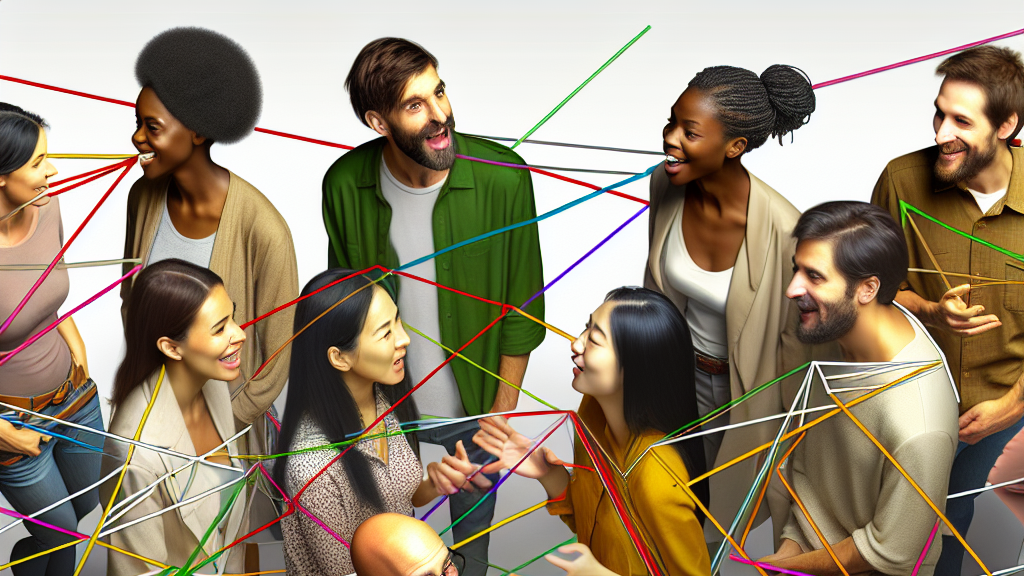
Have you ever wondered how our society reaches decisions on big issues like vaccination, abortion, or gay marriage? It all comes down to the different social groups we belong to and how they influence our opinions. Different groups hold various beliefs, and through discussions, these opinions merge to form a consensus that can shape public policy and societal norms. But not all groups have the same influence, which is where the magic happens.
This study dives into two models of opinion dynamics, the DeGroot and the Friedkin-Johnsen models, to figure out how to balance the power each group has in shaping the consensus. By using smart algorithms, researchers can see who has the most sway and why. Then, with a few strategic tweaks—like connecting more ideas or listening to quieter voices—it’s possible to make the overall opinion more balanced and fair.
Imagine if we could fine-tune these interactions just like adjusting the ingredients in a recipe, making sure no single group dominates the flavor. This research isn’t just about theory; it’s about creating practical methods for encouraging dialogue and reducing polarization. Whether it’s in a corporate boardroom, a community meeting, or online discussions, these insights could lead to more cooperative and harmonious decisions, benefiting everyone involved.
Did you know algorithms can now optimize how social groups’ opinions blend into a consensus?
FAQs
What is opinion dynamics and how does it influence public discourse?
Opinion dynamics is the study of how individual opinions interact and evolve to shape collective decisions. It influences public discourse by determining which social groups have more sway in forming the consensus views that can affect policies and social norms.
How do the DeGroot and Friedkin-Johnsen models help in understanding opinion dynamics?
The DeGroot and Friedkin-Johnsen models provide frameworks for analyzing how group opinions merge over time. By using these models, researchers can identify which groups have more influence and how adjustments can create a more balanced consensus.
What are the practical applications of optimizing opinion dynamics in society?
Optimizing opinion dynamics can lead to more inclusive discussions, reduce polarization, and ensure a fairer representation of diverse views in decision-making processes, benefiting areas like governance, business, and community relations.
Can algorithms really change how opinions are formed in society?
Yes, by simulating different scenarios and interventions, algorithms can highlight which strategies are most effective for balancing influence among social groups, potentially leading to more equitable consensus-building processes.
Why is understanding group influence important for shaping society’s decisions?
Understanding group influence helps reveal which voices are heard and which are not, allowing for more informed strategies to ensure all perspectives are considered in shaping society’s decisions, leading to fairer outcomes.
Background
Opinion dynamics is a fascinating field of study that examines how people’s beliefs change through interaction with others. Two prominent models in this area, the DeGroot and Friedkin-Johnsen models, help to understand how consensus is reached in a society by considering the influence of multiple social groups. These models simulate the flow and modification of opinions to identify which groups hold more sway in the eventual common view.
History
Opinion dynamics has its roots in the mathematical and social sciences, where researchers seek to quantify and predict changes in public opinion. The DeGroot and Friedkin-Johnsen models have been instrumental in advancing this field, enabling the analysis of complex interactions in vast social networks. This study builds on years of research, bringing new tools and insights to optimize the influence dynamics for fairer consensus-building.
Based on “Echoes of Disagreement: Measuring Disparity in Social Consensus” by Marios Papachristou, Jon Kleinberg, available on arXiv (arxiv.org/abs/2504.07480), used under CC BY 4.0 (creativecommons.org/licenses/by/4.0/).