Did you know that beautiful solar panels aren’t just perched on roofs to save the planet—they could also be a tool for fairness? Right now, they’re mostly found in wealthier neighborhoods, leaving some places that could really benefit from them in the dark. Imagine if everyone could have access to solar power, regardless of where they live or how much they make.
Researchers found that neighborhoods with higher potential for reducing carbon emissions often have fewer solar panels. This means we’re missing out on a huge opportunity to make a real impact on the environment. Luckily, they aren’t just pointing out the problem; they have a solution too! By using data and simulation tools, they propose strategies to fairly distribute solar installations in ways that could boost both fairness and environmental benefits.
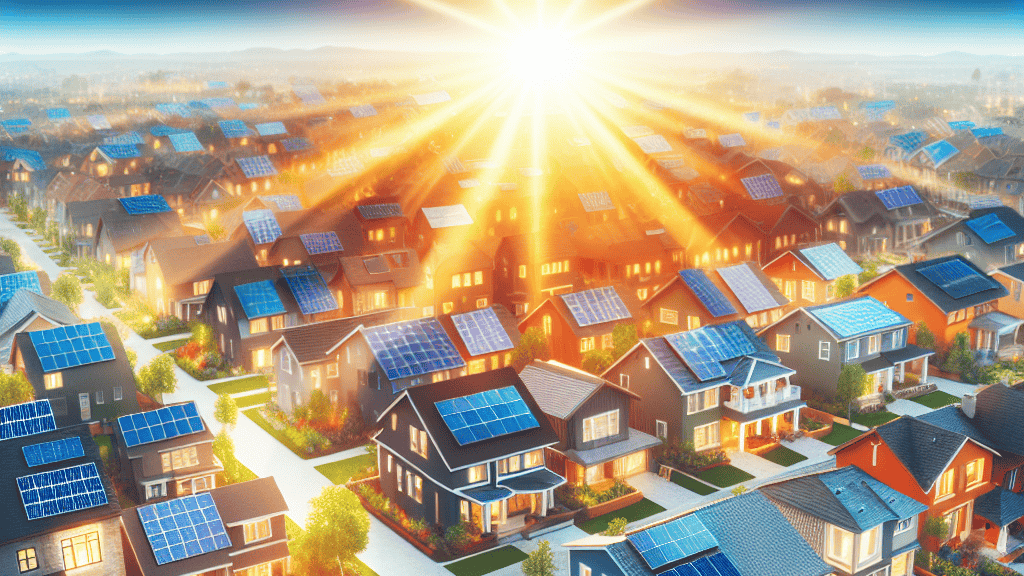
Picture a future where solar panels are popping up on roofs in all sorts of neighborhoods, from downtown districts to rural areas. This isn’t just about cutting carbon emissions; it’s about making sure everyone shares in the benefits of solar energy. It could mean cleaner air, lower energy bills, and a healthier planet for all—quite literally shining a light on areas that need it most.
Neighborhoods with higher potential for cutting carbon emissions often have fewer solar installations. That’s a major missed opportunity!
FAQs
Why are solar panels concentrated in wealthier neighborhoods?
Wealthier neighborhoods often have more resources and incentives to install solar panels, leaving out many areas that could significantly benefit the environment by reducing carbon emissions.
What did researchers uncover about solar installation distribution?
Researchers found that areas with a high carbon offset potential tend to have fewer solar installations, suggesting a missed opportunity for environmental impact.
How can solar energy be distributed more equitably?
By using multi-objective strategies that combine data and simulations, we can identify neighborhoods where solar panels would be most impactful and install them there to improve both fairness and carbon efficiency.
What is the carbon offset potential?
Carbon offset potential refers to the amount of carbon emissions a neighborhood could reduce by using solar energy instead of grid electricity.
How can solar panels impact low-income areas?
Installing solar panels in low-income areas can reduce energy bills, improve air quality, and provide a source of clean, renewable energy that benefits the community and environment.
Background
Solar photovoltaics (PV) capture sunlight and convert it into electricity, representing a clean, renewable source of energy. As their costs have decreased and incentives have increased, more households in the US are installing them. However, these installations are not evenly spread, often missing areas that would benefit most in terms of reducing carbon footprints. This research aims to understand and address those inequities.
History
Solar technology has been around for decades but has become more affordable and widespread in recent years. Early installations were primarily in sunny, affluent areas. Previous studies have mostly focused on the benefits of solar technology and its growth, but few have addressed the equity and carbon efficiency of their distribution.
Based on “Lost in Siting: The Hidden Carbon Cost of Inequitable Residential Solar Installations” by Cooper Sigrist, Adam Lechowicz, Jovan Champ, Noman Bashir, Mohammad Hajiesmaili, available on arXiv (arxiv.org/abs/2501.13868), used under CC BY 4.0 (creativecommons.org/licenses/by/4.0/).