





































































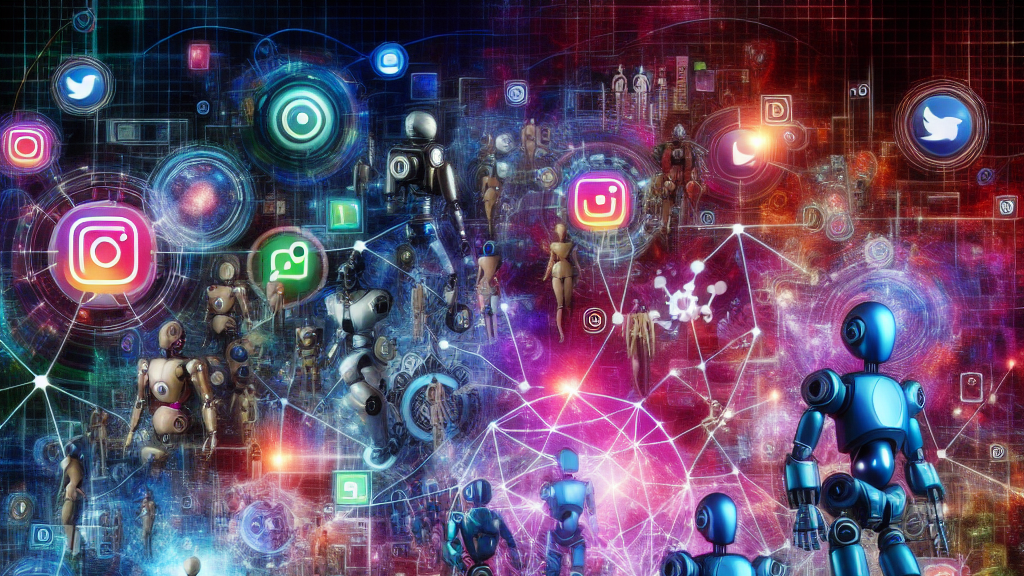
Imagine scrolling through your social media feed, only to realize that most of the content you’re seeing wasn’t crafted by human hands. This is the idea behind the Dead Internet Theory or DIT. The theory suggests that the internet, especially social media, is no longer the realm of authentic human interaction. Instead, it’s dominated by AI-generated content and bots that prioritize engagement metrics over genuine connection, making the online experience feel less human and more like a well-engineered machine designed to captivate and manipulate.
This study looks into the origins and implications of DIT, highlighting how algorithms have taken over our online spaces. These algorithms, powered by AI, are used by social media platforms to curate your content, deciding what you see based on what will keep you scrolling and clicking. The result? A homogenized internet experience where genuine interactions take a backseat to viral content and advertising revenue. This shift not only affects how we connect but also undermines the diversity of content, eroding trust and making online spaces feel less like communities and more like marketing platforms.
So, why should you care? Well, the way we interact online has a profound impact on our sense of community and belonging. If platforms could prioritize genuine human engagement over profit-driven metrics, we could see a revival of authentic relationships and diverse content online. This research suggests that such a shift could lead to online spaces where people feel more connected, fostering a digital environment that truly reflects the richness of human experience and interaction.
Did you know that some estimates suggest over 50% of web traffic is generated by bots rather than humans?
FAQs
What is the Dead Internet Theory?
The Dead Internet Theory suggests that much of the internet, particularly on social media, is filled with AI-generated content and bot activity, which reduces genuine human interaction.
Why does the Dead Internet Theory matter?
It matters because it highlights how algorithms and AI can create artificial online environments, reducing the diversity of content and trust in social media platforms.
How could this theory affect my social media experience?
If true, it means the content you encounter might be tailored more by machines than by people, impacting how you perceive information and interact online.
Are all bots bad on the internet?
Not all bots are bad; some are helpful, like customer service bots. However, when bots dominate content creation and curation, it can lead to a less genuine online experience.
Can anything be done to improve online authenticity?
Yes, platforms can focus on human-centric approaches that value genuine interactions and diverse content over just engagement metrics.
Background
The Dead Internet Theory revolves around the idea that AI and bots have taken over much of the internet, especially social media, sidelining genuine human interactions. This is largely due to algorithms that prioritize content that drives engagement—clicks, shares, likes—over authentic conversations. These algorithms use machine learning to curate a user’s feed based on what keeps them online longer, often leading to a less diverse and less trustworthy internet experience.
History
The concept of non-human internet activity has been discussed for years, with evolving concerns about how algorithms and AI interact with users. Earlier studies focused on how bots were used to spread misinformation or influence public opinion, but the focus has since shifted to the idea that they dominate much of the internet. The evolution of AI technology, coupled with the rise of social media platforms prioritizing profit and engagement over user interaction, has fueled the development of the Dead Internet Theory.
Based on “The Dead Internet Theory: A Survey on Artificial Interactions and the Future of Social Media” by Prathamesh Muzumdar, Sumanth Cheemalapati, Srikanth Reddy RamiReddy, Kuldeep Singh, George Kurian, Apoorva Muley, available on arXiv (arxiv.org/abs/2502.00007), used under CC BY 4.0 (creativecommons.org/licenses/by/4.0/).
