Connect with us

Search by keyword

Computers

Is Your Chatbot Keeping Secrets?

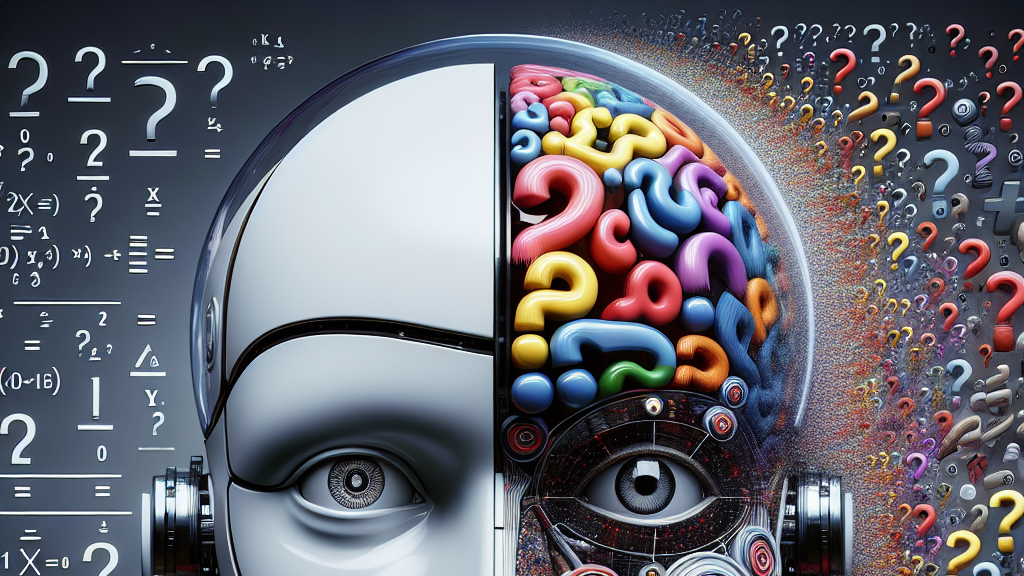
Ever wondered if your favorite chatbot is accidentally spilling secrets? New research shows these AI helpers might be revealing the instructions we give them, posing a risk to privacy and security. But don’t worry, scientists are developing ways to keep them tight-lipped and safe!

Is Your Chatbot Keeping Secrets
✨Researched by humans. Explained by robots. Learn more.

Imagine if your favorite chatbot, the one that helps you draft emails, plan your day, or even crack jokes, was accidentally revealing its own secrets. Not just any secrets, but the very instructions or ‘prompts’ that guide its responses. This is more than just an intriguing question—it’s a real concern in the world of artificial intelligence today.

Recent research has found that as these large language models, like those behind powerful chatbots, get bigger and more sophisticated, they might also become peep-holes into their own coding. These prompts are essentially task descriptions that help the AI understand what to do, but if someone figures them out, they could exploit them or undermine the service. The study delves into how these prompts become vulnerable and what makes certain models spill these secrets.

The good news? Researchers are not just sitting on this info—they’re actively coming up with ways to plug these leaks. By understanding precisely how these language models give away prompts, they’ve developed strategies to make them much less prone to such attacks. It’s like giving your AI a safe vault to keep all its instructions secure, ensuring that when you’re using AI technologies, your information is protected and your chatbot remains a trusty digital assistant.

Did you know? Some AI models can unintentionally reveal their own secret instructions, just like how a magician might accidentally drop their trick cards!

FAQs

What is prompt leakage in language models?

Prompt leakage occurs when the instructions guiding an AI’s response, known as prompts, can be extracted or revealed by outsiders, potentially leading to privacy and security issues.

How do language models accidentally reveal prompts?

Language models might reveal prompts due to their complexity and various factors like model size, familiarity with certain texts, and direct paths in their attention matrices that can expose these instructions.

Are current chatbots at risk of prompt leakage?

Yes, even leading models like GPT-4 show vulnerabilities to prompt leakage, meaning they could unintentionally reveal the prompts used to guide their responses.

What are researchers doing to prevent prompt leakage?

Researchers are developing defense strategies to significantly reduce the extraction of prompts, ensuring that chatbots keep their instructions secure and enhance user safety.

Why is preventing prompt leakage important?

Preventing prompt leakage is crucial for maintaining the security and intellectual property of AI services, protecting them from potential misuse and ensuring users’ data privacy.

Background

Large language models, such as those developed by companies like OpenAI, are advanced AI systems designed to understand and generate human-like text. They achieve this through the use of prompts—carefully crafted instructions that guide the model’s responses to various tasks. As these models grow in size and capability, they can unintentionally memorize and reveal these prompts, creating a need for security measures to protect privacy and intellectual property.

History

The evolution of large language models has been rapid, starting with simpler AI designed for text generation and leading to today’s sophisticated systems capable of imitating human conversation and understanding complex tasks. Initial models were small, with few parameters, but as capabilities expanded, so did concerns about privacy and security. This study builds on ongoing efforts to safeguard AI systems by addressing the relatively new issue of prompt leakage.

Based on “Why Are My Prompts Leaked? Unraveling Prompt Extraction Threats in Customized Large Language Models” by Zi Liang, Haibo Hu, Qingqing Ye, Yaxin Xiao, Haoyang Li, available on arXiv (arxiv.org/abs/2408.02416), used under CC BY 4.0 (creativecommons.org/licenses/by/4.0/).


Trending

Latest

Can AI Save Water Discover How

Computers

AI is transforming the tech world, but it uses lots of water! A new tool, SCARF, helps us measure and reduce AI's water footprint,...

Whats a Forbush Decrease and Why Should We Care Whats a Forbush Decrease and Why Should We Care

Space

Scientists just observed the biggest solar storm event in years, revealing unexpected cosmic ray patterns. Understanding these changes could help us protect our technology...

Can Cars Spot Danger Faster Than Humans Can Cars Spot Danger Faster Than Humans

Computers

Think about how quickly you react when something unexpected happens on the road. This research brings us closer to creating self-driving cars that can...

Can Fear of the Other Stop Social Harmony Can Fear of the Other Stop Social Harmony

Physics

Fear of the unknown might make it harder for people to agree and get along. This study shows that when people have strong xenophobic...

Can AI Revolutionize Breast Cancer Diagnosis Can AI Revolutionize Breast Cancer Diagnosis

Electricity

This research introduces a groundbreaking AI model that can accurately assess HER2-positive breast cancer using widely accessible staining methods, potentially revolutionizing how we diagnose...

Can AI Transform Your Singing into a Choir Can AI Transform Your Singing into a Choir

Computers

Imagine singing solo and having AI turn you into a choir. This research unveils a groundbreaking AI tool that transforms your voice into rich...

You May Also Like

Computers

This research explores how AI models designed to understand both images and words might improve their performance simply by teaching themselves to think better....

Computers

Imagine if playing games could make a computer program better at understanding and creating text! This research suggests that by using creative tasks like...

Computers

Imagine a super-smart AI that can watch your daily life in real-time and remember everything without taking up much space. This research shows how...

Computers

This research explores how artificial intelligence language-powered robots might think they're seeing things that aren't actually there. Investigating this quirk could lead to more...

Computers

This exciting study reveals that just like us, AI has its own biases that can skew its thinking, especially when solving problems. Understanding and...

Computers

This research uncovers vulnerabilities in AI that could expose private and sensitive data while fine-tuning these models for specific fields like healthcare. By understanding...

Computers

Discover how language models might not be as random as we thought! By examining their decision-making processes, researchers found that these models can sometimes...

Computers

Imagine a computer model surpassing university students in a tough exam! OpenAI's model just did, raising big questions about AI's role in education and...

Computers

Understanding how small changes in computer settings can lead to big differences in AI performance has huge implications for reliability in AI applications. This...

Copyright © 2024 8ig8rain.

Disclaimer: The content on 8ig8rain.com consists of AI-generated summaries of scientific abstracts from arXiv. Please note that most arXiv abstracts are preprints and may not have undergone formal peer review. While these summaries aim to convey key ideas and potential applications, they are provided for informational purposes only and should not be interpreted as validated scientific findings or professional advice. The summaries are intended to educate, spark curiosity, and inspire further exploration of science.