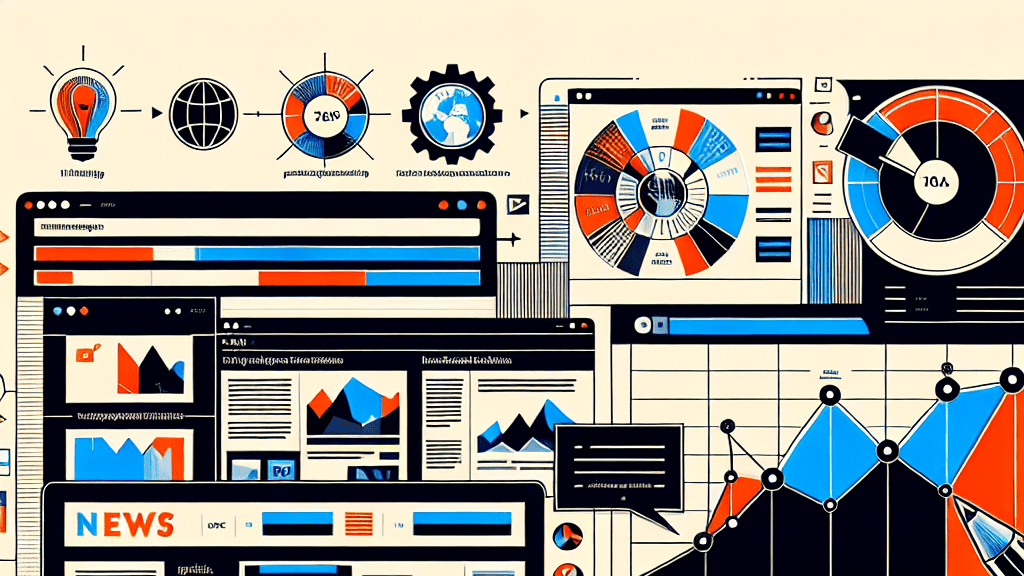
Every day, we skim through news websites, often not realizing there’s a hidden system determining which stories we see first. This system is called information prioritization, and it’s the secret sauce behind how news gets served to us. By studying this process, researchers are unraveling the clues that news homepages offer about what’s deemed important, subtly guiding our focus and discussions online and offline.
Researchers created a giant collection of more than 3,000 website homepages, capturing their layouts twice daily over three years. By comparing news stories side-by-side, they figured out which were prioritized and why. This study isn’t just about news websites; it has broader implications, like analyzing local city council policies in San Francisco. By understanding how these homepages work, researchers can rank past policies to understand their perceived importance or ‘newsworthiness’. This method offers a unique glimpse into how we naturally prioritize information without even realizing it.
Imagine using this insight to apply on the local scale, like knowing which city council issue might be the next big headline. It could change how we interact with local government decisions or even influence our social media feeds. This prioritization map could shape our communities by highlighting what truly matters, making us more informed citizens in our day-to-day lives.
Did you know? More than 3,000 website homepages were studied twice each day for three years to understand how news is prioritized.
FAQs
How do news websites determine which stories are important?
News websites use information prioritization, which organizes stories in a way that suggests their relative importance, typically guided by organizational cues and underlying editorial decisions.
What was the surprising discovery in this research?
Researchers found that by examining homepage layouts, we can discern hidden patterns that show how stories are ranked in terms of newsworthiness, offering insights into how we perceive and prioritize information.
Can this research affect how we engage with news and policies?
Absolutely! Understanding these organizational cues can empower us to question why certain news is prioritized, possibly influencing our views on local policies as seen in their analysis of San Francisco’s city council decisions.
Background
In the world of news, information prioritization is the process of deciding which stories are deemed most important. It shapes how information is presented on homepages, using cues like story placement, headlines, and images, which influence readers’ perceptions and understanding of what’s important. This research uses data-driven models to analyze these cues and discern patterns of perceived significance in content.
History
The study of information prioritization has its roots in media analysis, where scholars examine how news organizations decide which stories to highlight. Previous research has focused on editorial processes, but this study takes a new approach by analyzing digital homepages, offering a more comprehensive look at how these decisions translate into digital design and consumption patterns.
Based on “NewsHomepages: Homepage Layouts Capture Information Prioritization Decisions” by Ben Welsh, Naitian Zhou, Arda Kaz, Michael Vu, Alexander Spangher, available on arXiv (arxiv.org/abs/2501.00004), used under CC BY 4.0 (creativecommons.org/licenses/by/4.0/).