





































































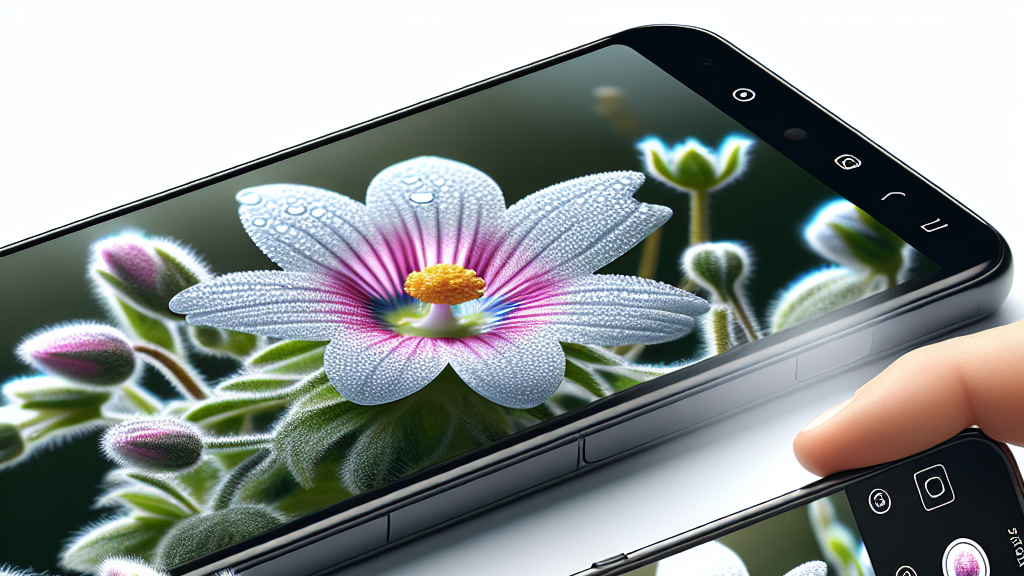
Have you ever wished you could zoom into your photos and see every detail with crystal clarity? Imagine taking a quick snap with your phone of a stunning view or a cherished memory and then being able to explore it in incredible detail, as if you were right there again. That’s what UltraZoom promises to do—turning your casual clicks into high-resolution wonders.
UltraZoom takes a full-shot image from your phone and one or more close-ups, and it uses them to create a gigapixel recreation of the scene. By matching the detail in the close-ups to the larger image, it scales the full image to amazing details that were previously only possible with professional equipment. The magic happens through a clever system that registers the details in close-ups and maps them seamlessly onto the broader picture, ensuring that everything looks photorealistic and cohesive.
Imagine being at a concert and capturing the whole stage with your phone, then later being able to zoom in to see the musician’s expression without any loss of quality. UltraZoom could make this possible, revolutionizing personal and professional photography. It’s a step towards making cutting-edge tech accessible to everyone, letting your phone be a window to the incredible details of the world around you.
Did you know? A gigapixel image is so detailed that it would take over 1000 high-resolution smartphone photos to create just one!
FAQs
How does UltraZoom turn phone photos into gigapixel images?
UltraZoom uses close-up phone photos to enhance the details of a broader scene, creating a highly detailed gigapixel image. By adapting a generative model to learn from specific image details, it seamlessly merges these details into the full image.
What makes UltraZoom’s method unique?
UltraZoom uniquely registers close-up shots within a full image to accurately estimate scale and align details, allowing for consistent and photorealistic upscaling even on casual, in-the-wild shots.
Can I use UltraZoom with any type of photo?
Yes! UltraZoom is designed to work with a variety of materials and settings, making it versatile for casual photography anywhere you capture your images.
What potential does UltraZoom have for artistic projects?
UltraZoom opens up new possibilities for artists and creatives by allowing them to explore and showcase intricate details in their works through ultra-high resolution imagery.
How does UltraZoom help with preserving memories?
UltraZoom enhances everyday photos to unprecedented detail levels, making cherished memories clearer and more vivid than ever before, allowing you to relive them with true-to-life clarity.
Background
The concept behind UltraZoom involves enhancing and upscaling images using state-of-the-art techniques, such as generative models and image registration. The goal is to bridge the gap between detailed close-up images and broader, less detailed full-images, using a method that adapts to the specific object and scene to ensure realistic upscaling. This process requires precise matching and scaling of details, which is achieved through innovative pairing and registration techniques.
History
Image enhancement has come a long way from basic upscaling methods. The evolution includes breakthroughs in image recognition and AI-driven enhancements, which allow for more accurate and realistic rendering of image details. Previously, enhancing a photo to gigapixel quality required sophisticated equipment. UltraZoom builds on, and diverges from, these past methods by using everyday devices like smartphones combined with advanced AI to achieve similar results.
Based on “UltraZoom: Generating Gigapixel Images from Regular Photos” by Jingwei Ma, Vivek Jayaram, Brian Curless, Ira Kemelmacher-Shlizerman, Steven M. Seitz, available on arXiv (arxiv.org/abs/2506.13756), used under CC BY 4.0 (creativecommons.org/licenses/by/4.0/).
