Connect with us

Search by keyword

Computers

Why Do AI Systems Act Differently?

Ever wondered why two smart AI systems might give different results even if they seem similar? This research highlights the importance of digging deeper into how AI thinks, ensuring we can trust it in real-world applications!

Why Do AI Systems Act Differently
✨Researched by humans. Explained by robots. Learn more.

Artificial Intelligence is a bit like a magic trick. You see two magicians pull out the same card, but you have no idea how they did it. Similarly, two intelligent systems might give the same answer, but arrive there in completely different ways. This could mean a lot when we rely on these systems in our everyday lives, like for navigation or stock recommendations.

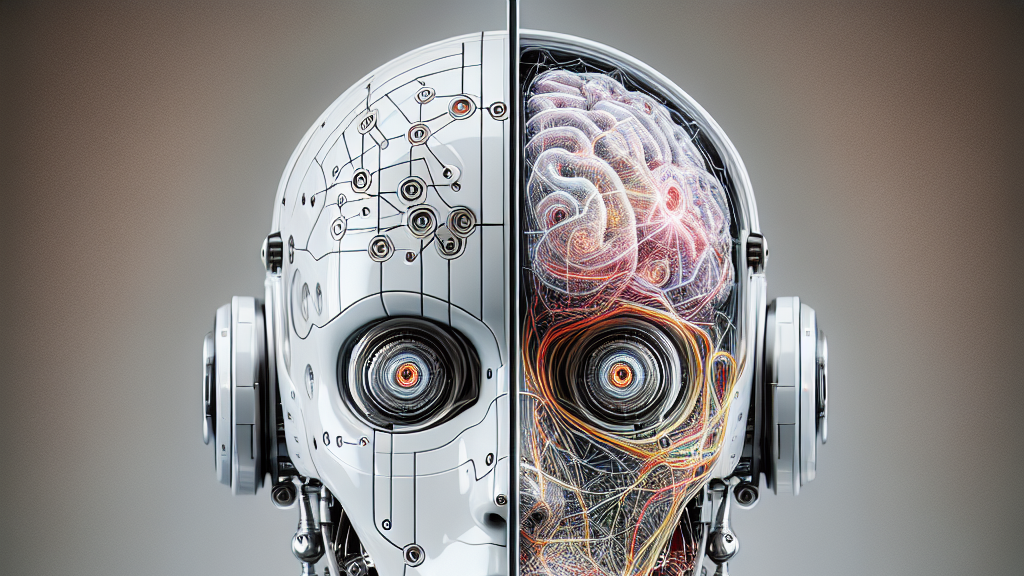
This research is all about that hidden magic. It looks into how AI systems, even when trained on the exact same data, can develop entirely different ways of thinking or ‘internal structures.’ Imagine two students who studied from the same textbook, but one thinks creatively while the other just memorizes facts. Same information, different outcomes!

Understanding these differences is crucial. If we can map out and predict how systems interpret data, we can make them more reliable and safer. For instance, by knowing an AI used in self-driving cars operates with the most dependable internal structure, we guarantee fewer accidents and more secure travel options for everyone. It’s not just about what they do, but how they think!

Did you know? Even if two neural networks score the same on tests, they might think and solve problems entirely differently!

FAQs

Why is understanding AI’s internal structure important?

Understanding AI’s internal structure is crucial because two AI systems might give the same answer but do so through different reasoning paths. It ensures AI systems are predictable and safe for applications like self-driving cars or medical diagnosis.

What could happen if we ignore AI’s internal structure differences?

Ignoring AI’s internal structure could lead to unexpected behaviors, making them unreliable or even dangerous in critical situations like autonomous vehicles or robotics.

How does this research impact users directly?

This research can lead to more reliable and trustworthy AI systems, improving user safety and experience in everyday applications such as navigation, online recommendations, and automated customer support.

Do all neural networks behave differently, even with the same data?

Yes, each neural network can develop unique internal patterns and structures, leading to different behaviors or generalization in real-world scenarios, even if trained on the same data.

Can this research help improve AI trustworthiness?

Absolutely, by understanding and predicting AI behavior through internal structures, we can make AI systems more reliable and trustworthy for critical and everyday applications.

Background

Artificial Intelligence (AI) operates using neural networks that ‘learn’ from data. These networks try to mimic the brain’s way of processing information. When trained with data, they create internal pathways or patterns to make decisions. However, since these pathways can vary, the same input might lead to different decisions. Understanding these structures is key to making AI safer and more reliable.

History

The study of neural networks dates back decades, with significant advances in understanding how machines can mimic human cognition. Early models focused on simple pattern recognition. However, as the complexity of tasks increased, so did the need to understand internal workings, leading to the current focus on AI alignment, or how AI’s decision-making processes align with human needs and intentions.

Based on “You Are What You Eat — AI Alignment Requires Understanding How Data Shapes Structure and Generalisation” by Simon Pepin Lehalleur, Jesse Hoogland, Matthew Farrugia-Roberts, Susan Wei, Alexander Gietelink Oldenziel, George Wang, Liam Carroll, Daniel Murfet, available on arXiv (arxiv.org/abs/2502.05475), used under CC BY 4.0 (creativecommons.org/licenses/by/4.0/).


Trending

Latest

Can AI Save Water Discover How

Computers

AI is transforming the tech world, but it uses lots of water! A new tool, SCARF, helps us measure and reduce AI's water footprint,...

Whats a Forbush Decrease and Why Should We Care Whats a Forbush Decrease and Why Should We Care

Space

Scientists just observed the biggest solar storm event in years, revealing unexpected cosmic ray patterns. Understanding these changes could help us protect our technology...

Can Cars Spot Danger Faster Than Humans Can Cars Spot Danger Faster Than Humans

Computers

Think about how quickly you react when something unexpected happens on the road. This research brings us closer to creating self-driving cars that can...

Can Fear of the Other Stop Social Harmony Can Fear of the Other Stop Social Harmony

Physics

Fear of the unknown might make it harder for people to agree and get along. This study shows that when people have strong xenophobic...

Can AI Revolutionize Breast Cancer Diagnosis Can AI Revolutionize Breast Cancer Diagnosis

Electricity

This research introduces a groundbreaking AI model that can accurately assess HER2-positive breast cancer using widely accessible staining methods, potentially revolutionizing how we diagnose...

Can AI Transform Your Singing into a Choir Can AI Transform Your Singing into a Choir

Computers

Imagine singing solo and having AI turn you into a choir. This research unveils a groundbreaking AI tool that transforms your voice into rich...

You May Also Like

Computers

AI is transforming the tech world, but it uses lots of water! A new tool, SCARF, helps us measure and reduce AI's water footprint,...

Computers

Think about how quickly you react when something unexpected happens on the road. This research brings us closer to creating self-driving cars that can...

Electricity

This research introduces a groundbreaking AI model that can accurately assess HER2-positive breast cancer using widely accessible staining methods, potentially revolutionizing how we diagnose...

Computers

Imagine a machine capable of reading ancient books, deciphering complex pages with precision! This research is paving the way for AI to unlock the...

Economics

Discover how AI models can unknowingly favor certain races in mortgage decisions and how new methods could dramatically reduce these biases, fostering a fairer...

Computers

This research explores how AI models designed to understand both images and words might improve their performance simply by teaching themselves to think better....

Computers

Imagine if playing games could make a computer program better at understanding and creating text! This research suggests that by using creative tasks like...

Computers

Dive into the world of AI mistrust, where computers don't always know when they're wrong! Discover how teaching AI to see like us might...

Computers

What if talking to a robot could feel as comforting as a therapy session? This research uncovers the striking similarities between human therapists and...

Copyright © 2024 8ig8rain.

Disclaimer: The content on 8ig8rain.com consists of AI-generated summaries of scientific abstracts from arXiv. Please note that most arXiv abstracts are preprints and may not have undergone formal peer review. While these summaries aim to convey key ideas and potential applications, they are provided for informational purposes only and should not be interpreted as validated scientific findings or professional advice. The summaries are intended to educate, spark curiosity, and inspire further exploration of science.