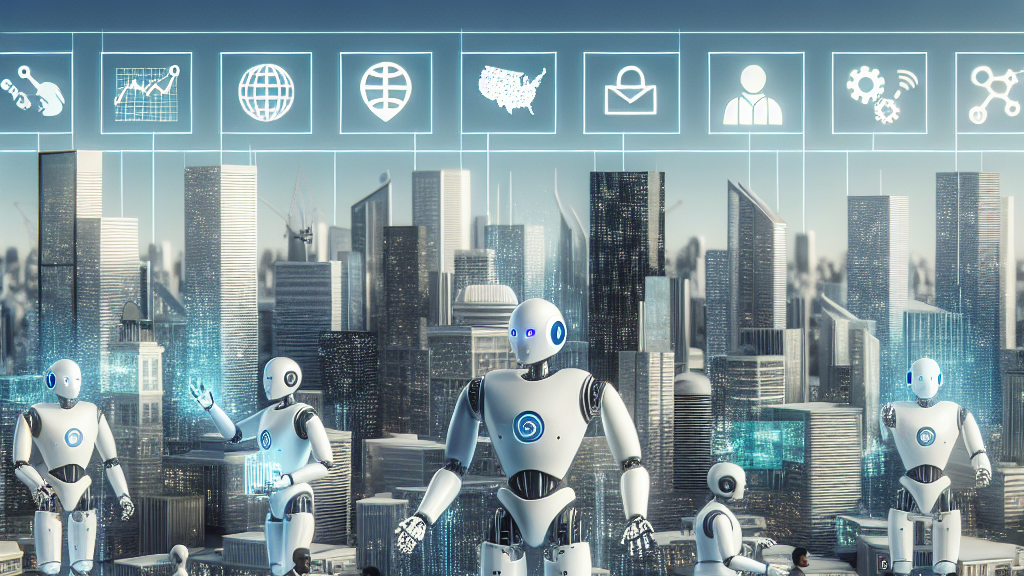
Imagine a world where intelligent machines handle your finances, manage organizations, and make important decisions that impact our daily lives. Sounds like science fiction, right? But it’s not. As AI technology evolves, the possibility of artificial intelligence agents managing critical economic tasks becomes increasingly plausible. This is a vision of the future that many experts are starting to seriously consider. However, this raises an important question: how will humans ensure these machines are working in our best interests?
The latest research investigates how cryptocurrencies and decentralized systems might serve as a backbone for this new economy. By using these technologies, AI agents could seamlessly collaborate and exchange value without much human intervention. The philosophical exploration discussed in this study highlights these emerging trends and suggests that while AI might soon operate much of the economy, human oversight and control must still be central to prevent any risks or misuse.
Imagine, for example, an advanced AI managing your bank account, automatically paying your bills, making investments, and even negotiating contracts. While this could free up our time, it also begs the question of how we can guarantee that these AI systems remain secure and tamper-proof. The implications of such a shift are massive, making it essential to find solutions that balance efficiency with safety and control, ensuring a future where AI economic agents work harmoniously with humans.
Did you know? It’s predicted that AI could handle over 50% of business tasks by 2030!
FAQs
What is AI governance, and why is it important for the future economy?
AI governance involves setting rules and standards to ensure artificial intelligence systems operate safely and ethically as they take on important economic roles. It’s crucial for maintaining control and oversight as AI systems continue to evolve.
How might cryptocurrencies be involved in a future AI-driven economy?
Cryptocurrencies could serve as the foundation for value exchange among AI agents, allowing them to collaborate and transact easily without needing direct human intervention. This could streamline operations but also necessitate careful oversight.
What are the potential risks if AI agents manage critical economic tasks?
If not properly controlled, AI systems taking over economic tasks could lead to security issues, loss of human oversight, and ethical concerns. Ensuring meaningful human intervention is crucial to prevent these risks.
How can we ensure oversight when AI agents handle significant economic roles?
Research suggests that developing robust governance frameworks and utilizing decentralized systems can help maintain control. It’s about finding a balance between efficient AI operations and essential human oversight.
What could happen if AI takes over our economy?
While it might lead to increased efficiency and innovation, it also poses challenges in ensuring that AI systems act in our best interests, maintaining security and ethical standards as they handle significant tasks.
Background
Artificial intelligence governance refers to the creation of policies and frameworks that ensure AI systems operate in a safe, ethical, and controlled manner. As AI becomes more integral to the economy, governance is crucial to ensure these systems remain beneficial to society. The study also explores decentralized systems, such as cryptocurrencies, which could facilitate seamless transactions and interactions between AI agents.
History
AI governance emerged as a field due to rapid technological advancements and the realization of both potential and risks associated with AI. The concept of decentralized systems has its roots in cryptocurrency, which started with Bitcoin in 2009 as a way to enable secure, peer-to-peer transactions. This study combines both fields, exploring how they might shape the future economy.
Based on “Can We Govern the Agent-to-Agent Economy?” by Tomer Jordi Chaffer, available on arXiv (arxiv.org/abs/2501.16606), used under CC BY 4.0 (creativecommons.org/licenses/by/4.0/).