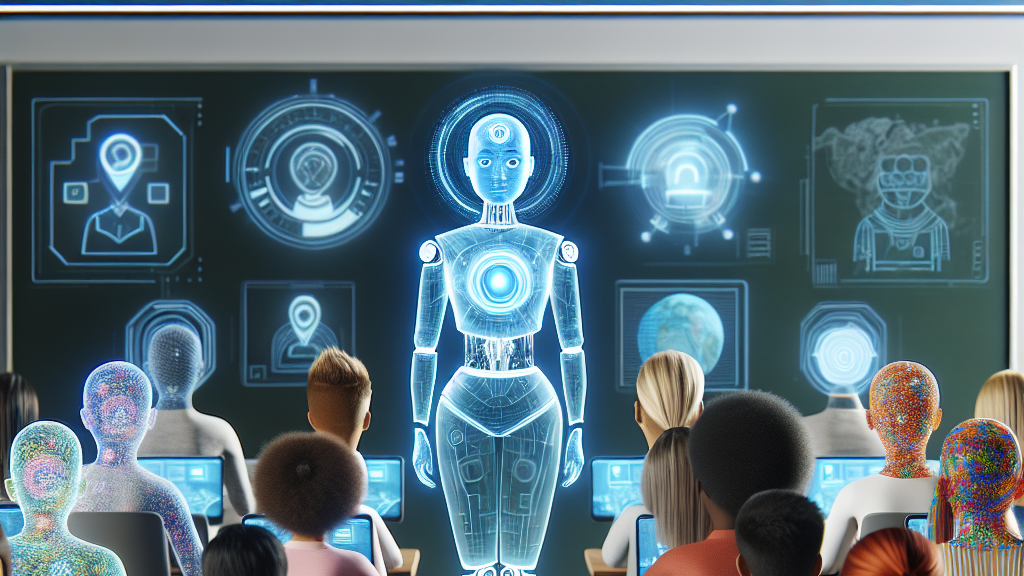
Imagine a world where your teacher isn’t a person, but an Artificial Intelligence program! This isn’t a sci-fi plot, but a real possibility as AI continues to embed itself into the fabric of our everyday lives. Over the past decade, AI has slipped into various parts of our daily routines, and now it’s poised to reshape how we learn. It could be designing courses, setting assignments, grading papers, and even providing feedback—all at speeds that would leave human teachers in the dust. How cool is that?
This research zeroes in on ChatGPT, a powerful AI tool, and explores how it could fundamentally shift our education system. Imagine the computer science class of the future, equipped with course materials that adapt overnight to the latest tech trends. AI isn’t just a passive participant; it’s a dynamic tool that could continuously improve educational content, personalize learning experiences, and potentially replace entire degree programs. Plus, it can help develop new disciplines that don’t even exist yet!
Imagine waking up and checking your AI-updated syllabus, ready to tackle fresh challenges specifically tailored to meet your interests and strengths. Or consider how education could become accessible to remote areas, thanks to AI platforms like ChatGPT offering top-tier education right from your living room. While AI sparks the thrill of futuristic classrooms, it also questions traditional education models, inviting us to reimagine what learning could be in this digitized age.
Did you know AI can grade assignments faster than a human teacher can even finish reading them?
FAQs
How will AI, like ChatGPT, change education?
AI could reshape education by designing courses, grading assignments, and offering personalized feedback, faster and more accurately than humans. It may lead to more dynamic and relevant course material, with the potential to replace traditional degree programs.
Is AI in education a threat to teachers?
While AI might handle tasks like grading, it complements teachers rather than replacing them, freeing educators to focus on more personal, creative, and human-centered teaching approaches.
Could AI make education more accessible?
Yes, AI platforms can extend high-quality education to remote and underserved areas, providing learning opportunities to students globally, regardless of their location.
What potential new disciplines might emerge because of AI?
As AI continues to evolve, new fields of study—like AI ethics, AI-driven design, and AI psychology—may develop, offering fresh academic paths and career opportunities.
Will AI improve students’ problem-solving skills?
AI could enhance cognitive abilities by offering personalized problem-solving exercises and instant feedback, helping students develop critical thinking and adaptability.
Background
Artificial Intelligence, or AI, refers to machines being programmed to think and learn like humans. One recent advancement is ChatGPT, an AI software that can understand and generate human-like text. This system can assist with learning tasks by crafting courses and assignments, grading them, and even providing feedback, thanks to its ability to adapt and learn from vast data.
History
The journey of AI in education has been brewing for decades. Early forms of AI provided basic computer-based training. Over time, AI capabilities have expanded, leading to modern applications like ChatGPT, developed by OpenAI. This evolution has transformed AI from a tool for simple tasks to a powerful entity that can handle complex roles, such as personalized learning and course creation.
Based on “Chat-GPT: An AI Based Educational Revolution” by Sasa Maric, Sonja Maric, Lana Maric, available on arXiv (arxiv.org/abs/2503.04758), used under CC BY 4.0 (creativecommons.org/licenses/by/4.0/).