Connect with us

Search by keyword

Electricity

Can AI Tell If That Voice Is Fake and Emotional?

AI struggles to detect fake emotional speech, risking new types of voice-based cyber attacks. This research proposes an innovative solution with emotion-focused models to better spot these deepfakes, making our digital world safer.

Can AI Tell If That Voice Is Fake and Emotional
✨Researched by humans. Explained by robots. Learn more.

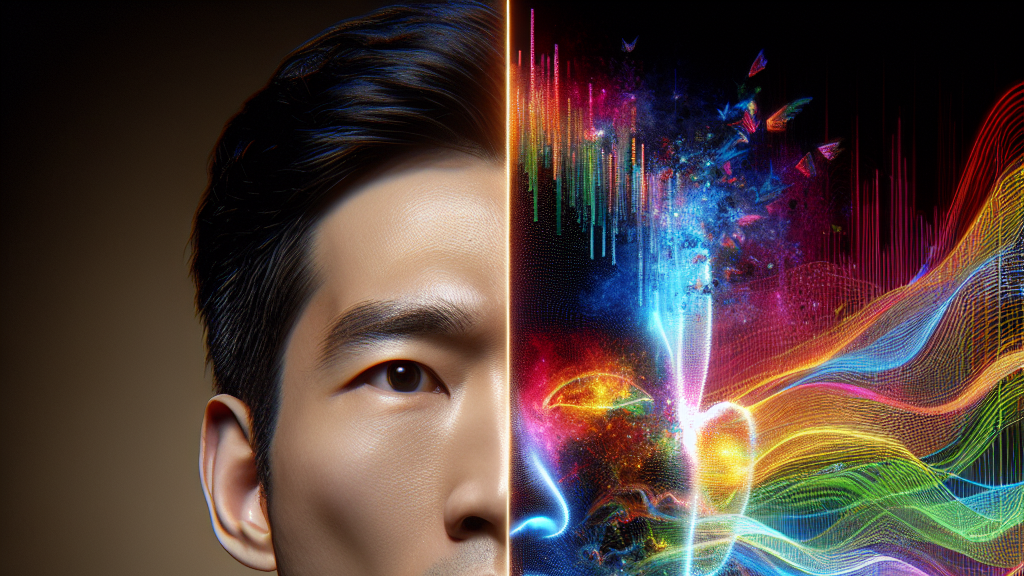
Did you know that AI can be tricked by emotional fake voices? As voice technology advances, our gadgets could be fooled by sophisticated emotional deepfakes, which could pose a risk to voice-enabled security features. Imagine someone easily mimicking your emotional tone to unlock your phone or access sensitive information.

Researchers found that most current systems focusing on stopping these tricks aren’t great at recognizing emotional variations in synthetic speech. The usual models were built with neutral or emotionless voices, making it easier for deepfakes to slip by when emotional tones are added. To tackle this, a new approach called GEM, which uses a mix of emotion-specialist models, is showing promise in identifying fake emotional speech.

Picture the future where every virtual assistant or security system can easily catch even the slyest attempt to mimic an emotional voice. This research is pushing us towards smarter systems that understand not just the words we say but the emotions behind them, keeping our digital lives more secure and personalized.

Up to now, many AI systems could be tricked by simply adding emotions to synthetic speech to bypass security measures.

FAQs

Why is emotional speech hard for AI to detect?

Emotional speech poses a challenge because most AI models are trained on emotionally neutral data. When emotional variations are introduced, these models struggle to identify the nuances, making it easier for deepfakes to bypass detection.

How does GEM improve fake emotional speech detection?

GEM uses a mix of emotion-focused models and a speech emotion recognition gating network to better differentiate real emotional speech from synthetic ones. This approach allows it to perform effectively across various emotions and the neutral state.

What risks do emotional deepfakes pose?

Emotional deepfakes could manipulate voice authentication systems, making it easier for unauthorized individuals to gain access to secure systems by mimicking someone’s emotional voice patterns.

Could this research help in stopping voice phishing attacks?

Yes, improving the detection of emotional synthetic voices could help in identifying and preventing voice phishing attacks where the attacker uses a faked voice to deceive their target.

What is the EmoSpoof-TTS Dataset?

The EmoSpoof-TTS Dataset is a collection of emotional synthetic speech samples created for research and development of more robust anti-spoofing models.

Background

The problem with current anti-spoofing models arises because they are primarily built using datasets of neutral, synthetic speech. These models lack the ability to effectively recognize the emotional cues in synthetic speech, which deepfakes can manipulate to bypass security mechanisms. Emotional speech involves variations in tone and pitch that standard datasets don’t adequately capture, making it a tricky challenge for AI models to tackle.

History

The evolution of synthetic speech detection has primarily focused on neutral voices, ignoring the full range of human emotional expression. This oversight stems from the early days of voice synthesis and recognition when the technology was limited and synthetic voices were easily detectable. However, as technology advanced, synthetic voices became more realistic, including emotional aspects. This research builds upon those developments by recognizing the need for emotion-focused approaches, thus closing gaps that earlier studies left open.

Based on “Can Emotion Fool Anti-spoofing?” by Aurosweta Mahapatra, Ismail Rasim Ulgen, Abinay Reddy Naini, Carlos Busso, Berrak Sisman, available on arXiv (arxiv.org/abs/2505.23962), used under CC BY 4.0 (creativecommons.org/licenses/by/4.0/).


Trending

Latest

Can AI Save Water Discover How

Computers

AI is transforming the tech world, but it uses lots of water! A new tool, SCARF, helps us measure and reduce AI's water footprint,...

Whats a Forbush Decrease and Why Should We Care Whats a Forbush Decrease and Why Should We Care

Space

Scientists just observed the biggest solar storm event in years, revealing unexpected cosmic ray patterns. Understanding these changes could help us protect our technology...

Can Cars Spot Danger Faster Than Humans Can Cars Spot Danger Faster Than Humans

Computers

Think about how quickly you react when something unexpected happens on the road. This research brings us closer to creating self-driving cars that can...

Can Fear of the Other Stop Social Harmony Can Fear of the Other Stop Social Harmony

Physics

Fear of the unknown might make it harder for people to agree and get along. This study shows that when people have strong xenophobic...

Can AI Revolutionize Breast Cancer Diagnosis Can AI Revolutionize Breast Cancer Diagnosis

Electricity

This research introduces a groundbreaking AI model that can accurately assess HER2-positive breast cancer using widely accessible staining methods, potentially revolutionizing how we diagnose...

Can AI Transform Your Singing into a Choir Can AI Transform Your Singing into a Choir

Computers

Imagine singing solo and having AI turn you into a choir. This research unveils a groundbreaking AI tool that transforms your voice into rich...

You May Also Like

Computers

AI is transforming the tech world, but it uses lots of water! A new tool, SCARF, helps us measure and reduce AI's water footprint,...

Computers

Think about how quickly you react when something unexpected happens on the road. This research brings us closer to creating self-driving cars that can...

Electricity

This research introduces a groundbreaking AI model that can accurately assess HER2-positive breast cancer using widely accessible staining methods, potentially revolutionizing how we diagnose...

Computers

Imagine a machine capable of reading ancient books, deciphering complex pages with precision! This research is paving the way for AI to unlock the...

Economics

Discover how AI models can unknowingly favor certain races in mortgage decisions and how new methods could dramatically reduce these biases, fostering a fairer...

Computers

This research explores how AI models designed to understand both images and words might improve their performance simply by teaching themselves to think better....

Computers

Imagine if playing games could make a computer program better at understanding and creating text! This research suggests that by using creative tasks like...

Computers

Dive into the world of AI mistrust, where computers don't always know when they're wrong! Discover how teaching AI to see like us might...

Computers

What if talking to a robot could feel as comforting as a therapy session? This research uncovers the striking similarities between human therapists and...

Copyright © 2024 8ig8rain.

Disclaimer: The content on 8ig8rain.com consists of AI-generated summaries of scientific abstracts from arXiv. Please note that most arXiv abstracts are preprints and may not have undergone formal peer review. While these summaries aim to convey key ideas and potential applications, they are provided for informational purposes only and should not be interpreted as validated scientific findings or professional advice. The summaries are intended to educate, spark curiosity, and inspire further exploration of science.