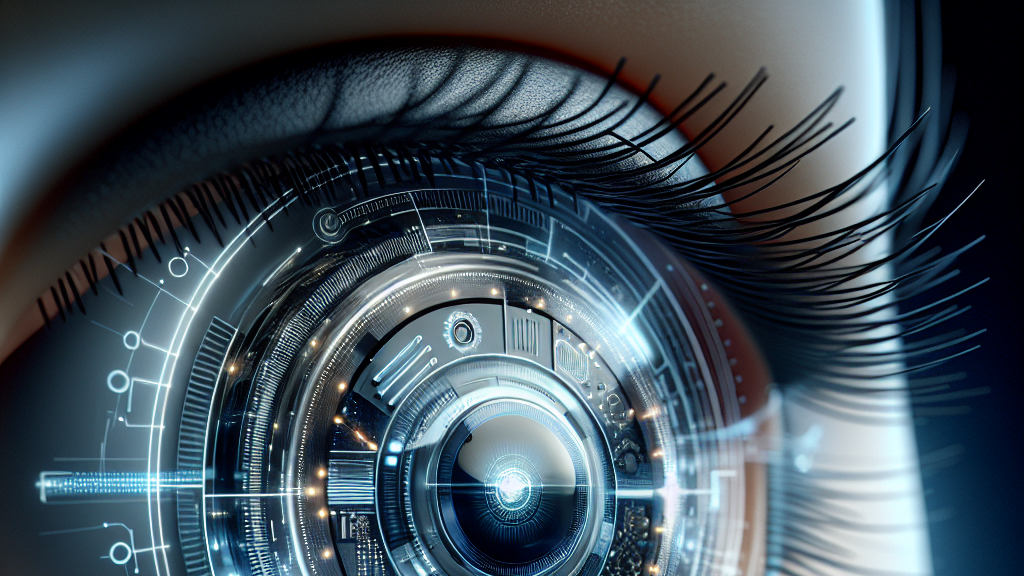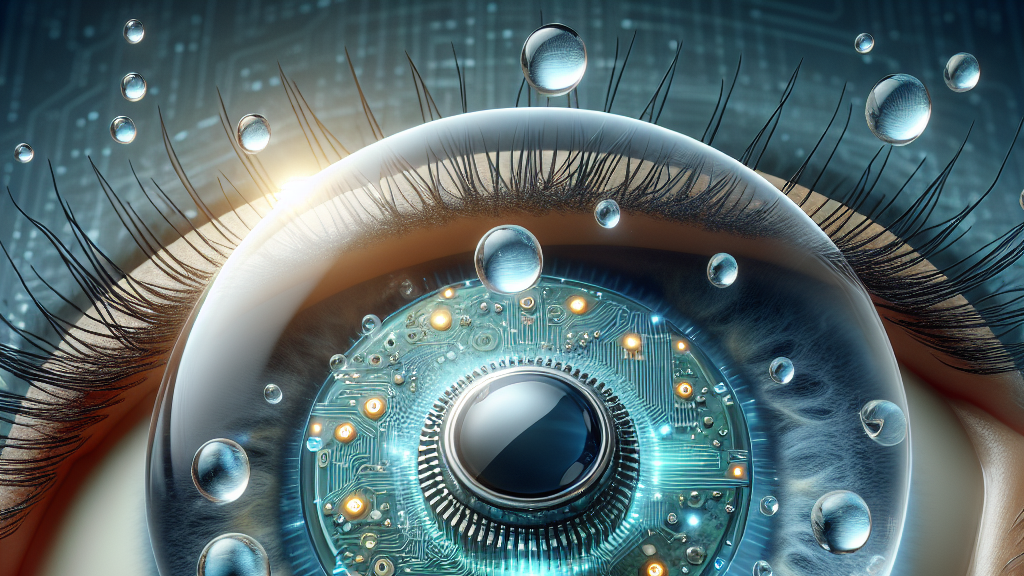
Imagine if your contact lenses could power themselves using just your tears or the blink of an eye. That’s not a scene from a science fiction movie; it’s the future of smart contact lenses. These tiny devices are set to revolutionize how we monitor our health and view the world, using our own bodies as a power source. No more pesky batteries or charging, just seamless integration into our daily lives.
Researchers are exploring how to harness energy from natural ocular sources like tear salinity and eyelid movement to make this a reality. They’re developing compact loop antennas that work within specific frequencies for efficient wireless data transmission, all while keeping the lenses comfortable and safe to wear. The materials used need to be biocompatible, ensuring they work harmoniously with the delicate tissues of the eye, and advancements in 3D-printing technology are paving the way for integrating these high-tech components into the lenses.
Think about how this could change everyday life: a self-powered lens could offer real-time health monitoring, alerting you to changes in your body’s condition before you even feel them. It could even enhance your eyesight, adapting to different lighting conditions automatically. This isn’t just a leap in eyewear, it’s a potential giant step for personal health management.
Did you know that tear fluid contains enough salt to potentially power tiny electronic devices?
FAQs
How do smart lenses get power from tear fluid?
Smart contact lenses use the salt in your tears as a power source by converting the salinity into energy, much like how a battery works.
What is the role of eyelid motion in powering smart lenses?
Eyelid motion can generate mechanical energy, which can be converted into electrical energy to help power the smart lenses autonomously.
Are these smart lenses safe to use?
Materials for smart lenses are chosen for biocompatibility, ensuring they are safe and comfortable for prolonged wear without irritating the eye.
How do compact loop antennas function in these lenses?
These antennas are designed to operate at specific frequencies to ensure efficient data transmission and energy management, crucial for the effective functioning of smart lenses.
What advancements are being made in 3D-printing for smart lenses?
3D-printing technology allows for precise integration of electronic components into the lenses, creating a seamless and compact device that can perform complex tasks without compromising comfort.
Background
Smart contact lenses are emerging as a novel wearable technology integrating electronics, medical engineering, and optics. A significant hurdle in the development of these lenses is finding a way to power them autonomously, without relying on bulky, external batteries. This involves developing innovative systems that make use of natural energy sources available within the eye, such as tear salinity and the mechanical energy generated by eyelid movements.
History
Wearable technology has evolved significantly from simple fitness trackers to complex devices capable of monitoring a range of health indicators. Recent developments in smart contact lenses began with efforts to integrate tiny sensors for eye health monitoring. Earlier research focused on the miniaturization of electronics and integrating them into soft, flexible materials like those used in contact lenses. This new study builds on these advances by exploring self-powering mechanisms, marking a shift towards fully autonomous wearable devices.
Based on “Self-powered smart contact lenses: a multidisciplinary approach to micro-scale energy and 900 MHz – 1.1 GHz bandwidth microfabricated loop antennas communication systems” by Patrice Salzenstein (Centre National de la Recherche Scientifique), Blandine Guichardaz (Centre National de la Recherche Scientifique), Aya Maroua Bessou (Centre National de la Recherche Scientifique), Ekaterina Pavlyuchenko (Centre National de la Recherche Scientifique), Martine Comte (Consultant, La Chaux-de-Fonds, Switzerland), Maxim V. Pogumirsky (ITMO, Saint Petersburg, Russia, FAREXPORT Ltd., Saint Petersburg, Russia), available on arXiv (arxiv.org/abs/2505.15593), used under CC BY 4.0 (creativecommons.org/licenses/by/4.0/).