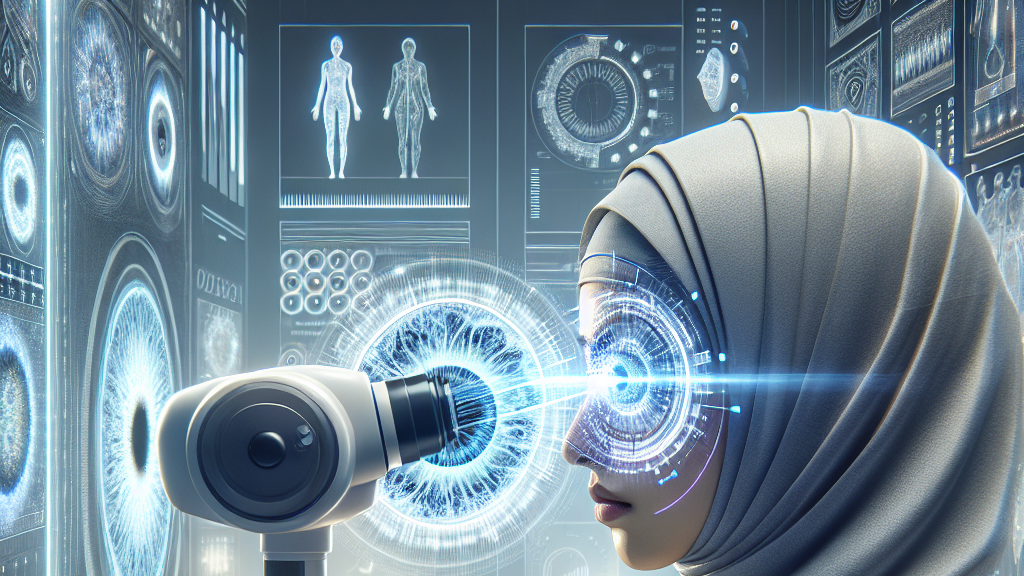
Imagine being able to catch a disease before it changes your life forever. That’s what this new technology aims to do for diabetic retinopathy, a condition that can lead to blindness if not caught early. This innovative approach could make eye screenings more effective, potentially saving vision for millions around the world.
The secret sauce in this breakthrough is an advanced AI model that enhances image quality and processes them smartly. By cleaning up images and using sophisticated algorithms, it identifies potential problems in eye health with impressive accuracy. This means doctors can detect eye issues early, giving them the opportunity to take action before it’s too late.
Picture a future where a quick eye scan could prevent you from ever needing glasses or surgery due to diabetic retinopathy. This research not only advances medical screenings but also hints at a future where automated systems help keep our health in check, leading to faster, more reliable healthcare that could be a standard part of regular doctor visits.
Diabetic retinopathy affects over 93 million people worldwide, and early detection could prevent a significant number of blindness cases.
FAQs
What is diabetic retinopathy and why is early detection important?
Diabetic retinopathy is a diabetes-related eye condition that can cause blindness. Early detection is crucial because it allows for timely treatment that can prevent vision loss.
How does this new AI technology help in detecting diabetic retinopathy?
This technology uses advanced image processing and AI models to enhance the quality of eye images, making it easier to spot abnormalities that indicate the early stages of diabetic retinopathy.
What are Swin Transformers and how do they assist in eye health screenings?
Swin Transformers are a type of AI model that processes image data hierarchically and efficiently. They help in eye health screenings by capturing intricate details in eye images, improving the accuracy of early disease detection.
How accurate is the AI method in predicting diabetic retinopathy?
The AI method demonstrated remarkable accuracy rates of 89.65% and 97.40% on different datasets, making it highly effective in identifying diabetic retinopathy, especially in its early stages.
Can this AI approach make a difference in regular healthcare settings?
Absolutely! By improving the accuracy and efficiency of eye screenings, this AI approach can be integrated into routine healthcare check-ups, making early detection more accessible and widespread.
Background
Diabetic retinopathy is a progressive eye disease caused by damage to the blood vessels in the retina due to high blood sugar levels in diabetes patients. It can lead to severe vision impairment or blindness if not diagnosed and treated early. Classifying the severity of this condition is crucial for effective intervention, but it is challenging due to the complexity and variability in retinal images.
History
In the past, detecting eye diseases relied heavily on manual examinations and subjective judgments, leading to variations in diagnosis. Recent advancements in AI have introduced automated systems that analyze images with improved consistency and speed. This study builds on those developments by addressing specific challenges related to image quality and processing speed using innovative techniques like the Swin Transformer.
Based on “Enhancing DR Classification with Swin Transformer and Shifted Window Attention” by Meher Boulaabi, Takwa Ben Aïcha Gader, Afef Kacem Echi, Zied Bouraoui, available on arXiv (arxiv.org/abs/2504.15317), used under CC BY 4.0 (creativecommons.org/licenses/by/4.0/).