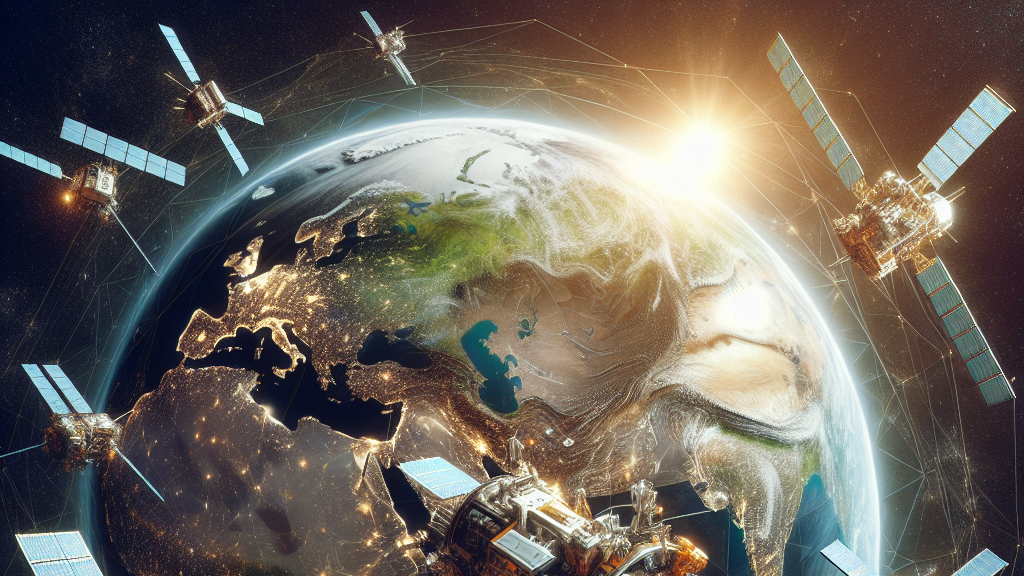
Our planet is heating up, and methane, a potent greenhouse gas, is a big part of the problem. Methane traps heat in the atmosphere, making it more than 25 times as effective as carbon dioxide over 100 years. That’s why finding and fixing methane leaks is crucial for our climate. But with methane sources scattered all over the world, it’s no easy task.
Researchers have been working on improving how we detect methane using sensors on airplanes and satellites. They’re using powerful tools like convolutional neural networks, a kind of artificial intelligence, to filter out the noise and find real methane leaks. Now, this study has taken it a step further by aligning different sensor data—like from the sky-high AVIRIS-NG and space-based sensors—so they work together seamlessly. By training AI to understand and bridge the gap between different sensor data, they make it easier to spot methane plumes wherever they occur.
Imagine satellites working in harmony with airplane sensors to pinpoint methane leaks the moment they happen. This means we could act quicker, fixing leaks before they do too much damage. The potential for this technology is huge; it could revolutionize how we tackle climate change and keep our air cleaner. By honing in on methane, we can make a big dent in the fight against global warming, making our world a safer, healthier place.
Methane is over 80 times more potent than carbon dioxide in the first 20 years after it reaches the atmosphere.
FAQs
How do methane sensors help fight climate change?
Methane sensors, especially when enhanced by AI, detect leaks in real-time, allowing for rapid intervention and reduction of this potent greenhouse gas.
Why is cross-platform alignment important in methane detection?
Cross-platform alignment ensures that data from different sources, like satellites and airborne instruments, is consistent, improving the accuracy and reliability of methane leak detection.
What role does machine learning play in methane plume detection?
Machine learning, particularly techniques like convolutional neural networks, helps differentiate real methane plumes from false positives, improving detection accuracy.
Could these technologies be used for other greenhouse gases?
Yes, while currently focused on methane, these techniques could potentially be adapted for detecting other gases, broadening their impact on climate action.
How quickly can these sensors detect methane leaks?
With real-time capabilities, sensors using AI can detect leaks almost instantaneously, providing quicker response times to mitigate their effects.
Background
Methane is a greenhouse gas significantly more potent than carbon dioxide in trapping heat in the atmosphere. Identifying its sources is crucial for mitigating climate change impacts. Remote sensing technologies, like those on aircraft and satellites, provide vital tools for observing Earth and detecting environmental changes. Machine learning, including convolutional neural networks, enhances these tools by processing large datasets to improve detection accuracy.
History
The detection of methane from various sources has long been a challenge. In the past, methodologies relied heavily on ground-based measurements. With technological advancements, airborne sensors like AVIRIS-NG started being used, providing crucial data but with limitations in scope and precision. As satellite technology developed, the integration of spaceborne sensors expanded coverage, but aligning data across platforms became necessary for enhanced accuracy. This study builds upon earlier innovations by using machine learning to fuse data from different platforms for more precise methane detection.
Based on “Multi-Platform Methane Plume Detection via Model and Domain Adaptation” by Vassiliki Mancoridis, Brian Bue, Jake H. Lee, Andrew K. Thorpe, Daniel Cusworth, Alana Ayasse, Philip G. Brodrick, Riley Duren, available on arXiv (arxiv.org/abs/2506.06348), used under CC BY 4.0 (creativecommons.org/licenses/by/4.0/).