
Connect with us

Search by keyword

Electricity

Is 6G the Future of Smart Tech?

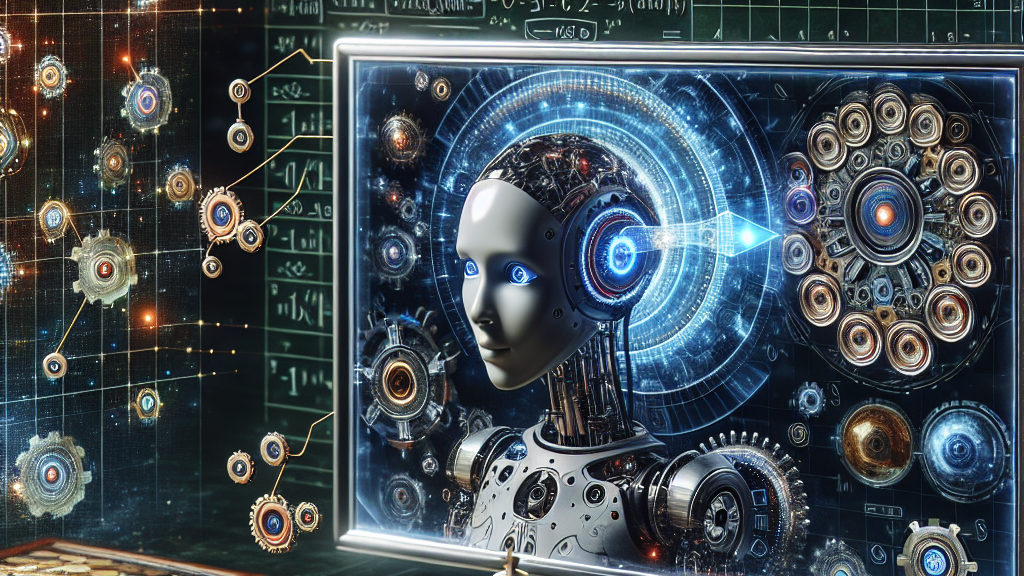
Imagine super-smart networks that think on their own! 6G could revolutionize how we connect devices, making technology more efficient and smarter than ever, paving the way for incredible innovations in industry and everyday life.

Is 6G the Future of Smart Tech
✨Researched by humans. Explained by robots. Learn more.

Can you imagine a world where our internet not only connects devices but also thinks and evolves on its own? That’s the fascinating vision behind 6G, the next step in telecommunications. This isn’t just about faster internet—6G aims to create smart systems that learn and adapt, changing how we interact with technology in everyday life.

This research dives into the exciting world of 6G as a dynamic telecom ecosystem powered by artificial intelligence. Unlike static networks, 6G is all about evolution and adaptability. With AI driving the show, everything from infrastructure to network functions can adjust in real-time, ensuring seamless integration with industrial Internet of Things frameworks. Imagine factories making smarter decisions, improving efficiency, and minimizing delays across the board.

The real-world impact of 6G is huge. Picture a future where self-driving cars communicate effortlessly with traffic systems, making roads safer and reducing congestion. Or think about medical devices that can instantly update patient data for doctors’ review, without any lag. By addressing ethical concerns and setting a clear technology roadmap, this research doesn’t just ponder the what-ifs but lays the groundwork for making 6G a reality that bridges today’s innovations with tomorrow’s breakthroughs.

6G could lead to networks that make decisions without needing human input, thanks to AI.

FAQs

What potential does 6G have for future technology?

6G aims to create intelligent systems that can self-evolve, leading to more efficient and adaptable networks. This could revolutionize industries by enabling smarter interaction between devices and improving decision-making processes.

How will 6G improve industrial IoT systems?

With 6G, industrial Internet of Things frameworks can experience seamless integration, allowing for real-time data processing and enhanced decision-making, ultimately optimizing efficiency and reducing latency.

What ethical challenges does 6G face?

The development of AI-driven 6G networks raises concerns about data privacy, decision-making transparency, and potential job displacement, necessitating careful consideration and standardization efforts.

What are the main components of the 6G technology roadmap?

The roadmap includes reconfigurable infrastructure, adaptive middleware, intelligent network functions, and multi-agent collaboration, all contributing to a cohesive drive towards future telecom innovations.

Background

At its core, 6G envisions a network that goes beyond just connecting devices. It aims to employ artificial intelligence to allow the network itself to adapt and evolve. Think of it as a dynamic, self-optimizing system much like a smart organism, intelligently processing data and making decisions on its own. This involves the seamless integration of new technologies, such as reconfigurable infrastructure and advanced networking functions, to support the emerging needs of industrial IoT and digital manufacturing.

History

Telecommunications started with basic analog systems that evolved into the more sophisticated digital networks we use today. With each generation, from 1G to 5G, we’ve seen jumps in speed, data capacity, and connectivity. 6G continues this trajectory but shifts the paradigm towards intelligent networking. Building upon the foundations of 5G’s real-time data handling, 6G is moving towards complete automation, leveraging AI to create more dynamic and adaptable networks, setting new standards for the intersection of telecommunications and AI-driven technology.

Based on “From Connectivity to Autonomy: The Dawn of Self-Evolving Communication Systems” by Zeinab Nezami, Syed Danial Ali Shah, Maryam Hafeez, Karim Djemame, Syed Ali Raza Zaidi, available on arXiv (arxiv.org/abs/2505.23710), used under CC BY 4.0 (creativecommons.org/licenses/by/4.0/).

Trending

Latest

Can AI Save Water Discover How

Computers

AI is transforming the tech world, but it uses lots of water! A new tool, SCARF, helps us measure and reduce AI's water footprint,...

Whats a Forbush Decrease and Why Should We Care Whats a Forbush Decrease and Why Should We Care

Space

Scientists just observed the biggest solar storm event in years, revealing unexpected cosmic ray patterns. Understanding these changes could help us protect our technology...

Can Cars Spot Danger Faster Than Humans Can Cars Spot Danger Faster Than Humans

Computers

Think about how quickly you react when something unexpected happens on the road. This research brings us closer to creating self-driving cars that can...

Can Fear of the Other Stop Social Harmony Can Fear of the Other Stop Social Harmony

Physics

Fear of the unknown might make it harder for people to agree and get along. This study shows that when people have strong xenophobic...

Can AI Revolutionize Breast Cancer Diagnosis Can AI Revolutionize Breast Cancer Diagnosis

Electricity

This research introduces a groundbreaking AI model that can accurately assess HER2-positive breast cancer using widely accessible staining methods, potentially revolutionizing how we diagnose...

Can AI Transform Your Singing into a Choir Can AI Transform Your Singing into a Choir

Computers

Imagine singing solo and having AI turn you into a choir. This research unveils a groundbreaking AI tool that transforms your voice into rich...

You May Also Like

Computers

AI is transforming the tech world, but it uses lots of water! A new tool, SCARF, helps us measure and reduce AI's water footprint,...

Computers

Think about how quickly you react when something unexpected happens on the road. This research brings us closer to creating self-driving cars that can...

Electricity

This research introduces a groundbreaking AI model that can accurately assess HER2-positive breast cancer using widely accessible staining methods, potentially revolutionizing how we diagnose...

Computers

Imagine a machine capable of reading ancient books, deciphering complex pages with precision! This research is paving the way for AI to unlock the...

Economics

Discover how AI models can unknowingly favor certain races in mortgage decisions and how new methods could dramatically reduce these biases, fostering a fairer...

Computers

This research explores how AI models designed to understand both images and words might improve their performance simply by teaching themselves to think better....

Computers

Imagine if playing games could make a computer program better at understanding and creating text! This research suggests that by using creative tasks like...

Computers

Dive into the world of AI mistrust, where computers don't always know when they're wrong! Discover how teaching AI to see like us might...

Computers

What if talking to a robot could feel as comforting as a therapy session? This research uncovers the striking similarities between human therapists and...

Copyright © 2024 8ig8rain.

Disclaimer: The content on 8ig8rain.com consists of AI-generated summaries of scientific abstracts from arXiv. Please note that most arXiv abstracts are preprints and may not have undergone formal peer review. While these summaries aim to convey key ideas and potential applications, they are provided for informational purposes only and should not be interpreted as validated scientific findings or professional advice. The summaries are intended to educate, spark curiosity, and inspire further exploration of science.