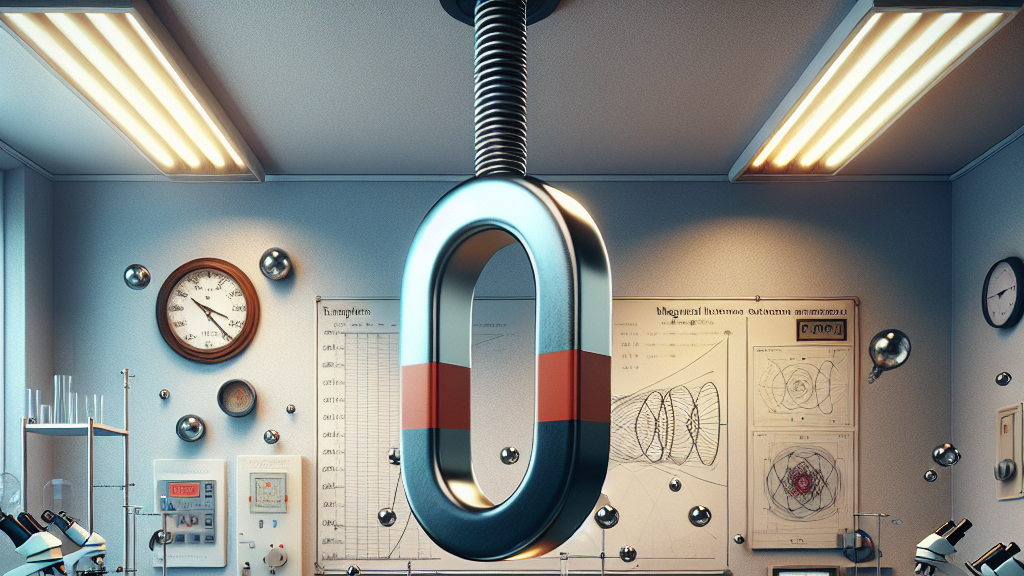
Imagine a future where your phone never dies, your electric bill is cut in half, and power lines never break. Sounds like science fiction, right? Well, scientists are actually working on making this possible with something called room-temperature superconductivity. This magical-sounding research could literally change the landscape of technology and energy as we know it.
So, what is superconductivity, and why does it matter? Superconductivity is a state where materials can conduct electricity without any loss of energy. Imagine a highway with zero traffic jams, and every car that starts the journey reaches its destination without losing fuel. Currently, superconductivity only happens at super cold temperatures, so scientists are on a mission to make it work at room temperature. They’ve come up with ten promising ways that might make these superpowers a part of our daily lives soon.
Picture this: your electric car charging super quickly, or your electric bill becoming a fraction of what it was. These are just some examples of what could happen if scientists crack the code to room-temperature superconductivity. This innovation could revolutionize everything from how we use gadgets to the way we power our homes and cities. Just think of a world where wasting energy is a thing of the past – it’s like living in a real-life superhero movie!
Some superconductors can make magnetic fields disappear, making them perfect for levitating trains!
FAQs
What is room-temperature superconductivity?
Room-temperature superconductivity is when materials can conduct electricity without any resistance at normal temperatures. This means no energy is lost during the process, unlike in traditional conductors that heat up and waste energy.
Why is achieving room-temperature superconductivity important?
Achieving room-temperature superconductivity is crucial as it could drastically reduce energy loss in power grids, make electronics more efficient, and even enable new technologies like super fast trains and more affordable, powerful devices.
How could room-temperature superconductivity change daily life?
Room-temperature superconductivity could revolutionize our daily lives by making technology more energy-efficient, reducing electric bills, speeding up electronics, and even advancing healthcare with better medical imaging technologies.
Are there any current uses for superconductors?
Yes, superconductors are currently used in applications like MRI machines, scientific research equipment, and magnetic levitation trains, but they need extremely cold environments to work effectively.
What challenges are there in developing room-temperature superconductors?
The main challenge is finding materials that can maintain superconductivity at room temperature, as most current superconductors function only at very low temperatures, requiring expensive cooling systems.
Background
Superconductivity is a state where particular materials can carry electricity without losing any energy. Normal wires heat up and waste energy, but superconductors don’t. Scientists want superconductors to work at room temperature, so they don’t need expensive cooling systems to maintain their superpowers.
History
The journey of superconductivity began in 1911 when scientists discovered materials that could conduct electricity perfectly at extremely low temperatures. Over the years, this field has seen multiple breakthroughs, like the discovery of high-temperature superconductors in the 1980s. This current study continues the quest to achieve this phenomenon at room temperature, a goal that has been elusive but holds incredible promise.
Based on “Hunting for Room Temperature Superconductors” by Huiqian Luo, available on arXiv (arxiv.org/abs/2503.02216), used under CC BY 4.0 (creativecommons.org/licenses/by/4.0/).