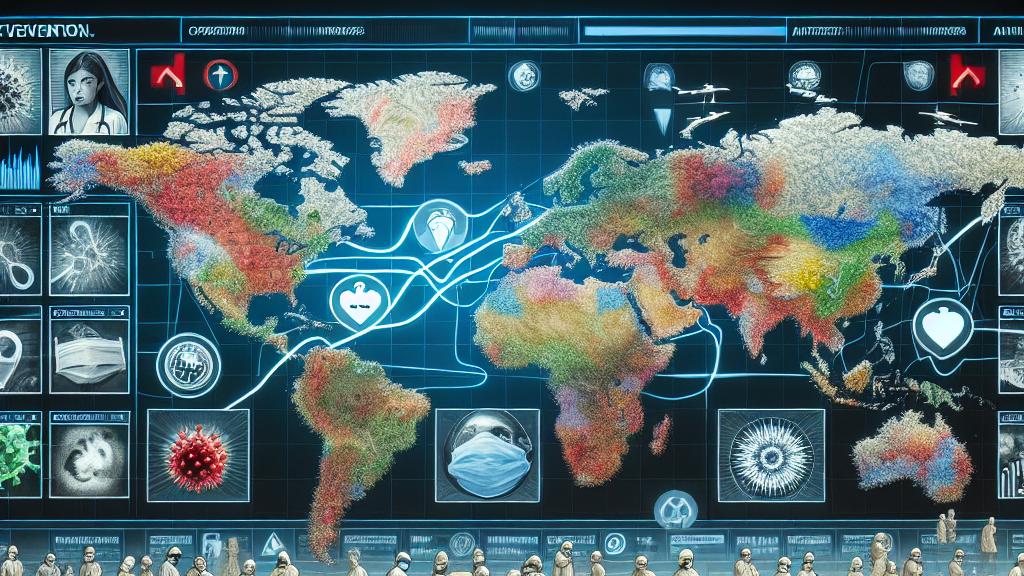
Have you ever wondered how quickly society reacts when a new disease starts spreading? It might seem like information comes out of nowhere, but there’s a fascinating system at work that can mean the difference between a small outbreak and a massive epidemic. The key lies in how rapidly a disease can be detected and how fast the information spreads to the public and authorities.
Research has dived deep into the dynamics between how we detect diseases and how that information impacts our behaviors. When something new is brewing, robust surveillance systems help identify and announce emergencies, leading to quick behavioral responses from the public. Imagine if the quicker we learn, the more effectively we can react. Speed here is not just a luxury; it’s a lifesaver.
Consider how fast alerts could help cities plan better responses, save more lives, and avoid massive outbreaks. This research shows that early detection and quick information dissemination are like superheroes of the health world. They strike a balance between educating people and slowing down disease spread, which in turn shapes how massive or manageable an epidemic can become. The next time you hear an alert, remember how crucial it is for our collective health response.
Did you know that faster disease alerts can reduce epidemic sizes by making people change their behaviors sooner?
FAQs
What role does disease detection play in managing epidemics?
Disease detection acts as a crucial ‘tipping point’ that influences when emergencies are declared and how quickly information is spread, triggering public and health authorities’ responses to control the spread.
How does quick information dissemination affect public health interventions?
Fast information sharing leads to quicker behavioral changes among people, such as social distancing or mask-wearing, and accelerates public health intervention deployment, which can significantly reduce the final size of an epidemic.
What is the impact of robust surveillance systems on epidemic control?
Robust surveillance systems enable faster detection of outbreaks, prompting early emergency responses which help manage and potentially minimize the spread of the disease.
What is a hysteresis-like effect in the context of epidemics?
This effect describes how past behaviors and responses during an epidemic can influence the current size of the epidemic, even when conditions change, due to delayed behavioral adaptation.
How does the trade-off between risk information and disease transmission work?
A balance is struck where disseminating risk information effectively slows the transmission, while robust surveillance systems mediate this balance, impacting how significant an epidemic becomes.
Background
This study explores how disease detection and information sharing influence people’s behaviors and the deployment of public health measures. The intricate relationship between these factors determines how large or small an epidemic could be. Disease detection involves identifying early signs of an outbreak, and effective surveillance systems help in making timely emergency declarations. These declarations lead to information spreading, which in turn prompts people and authorities to take preventive measures.
History
Historically, controlling epidemics relied heavily on responses after diseases reached significant levels. Early strategies focused more on curing rather than preventing. With advancements in technology and communication, the focus has shifted to early detection and prevention. Past research in epidemiology emphasized the need for timely information dissemination. This study builds on that foundation by examining the feedback loop between disease detection, information spread, and behavioral responses.
Based on “The nexus between disease surveillance, adaptive human behavior and epidemic containment” by Baltazar Espinoza, Roger Sanchez, Jimmy Calvo-Monge, Fabio Sanchez, available on arXiv (arxiv.org/abs/2503.04527), used under CC BY 4.0 (creativecommons.org/licenses/by/4.0/).