





































































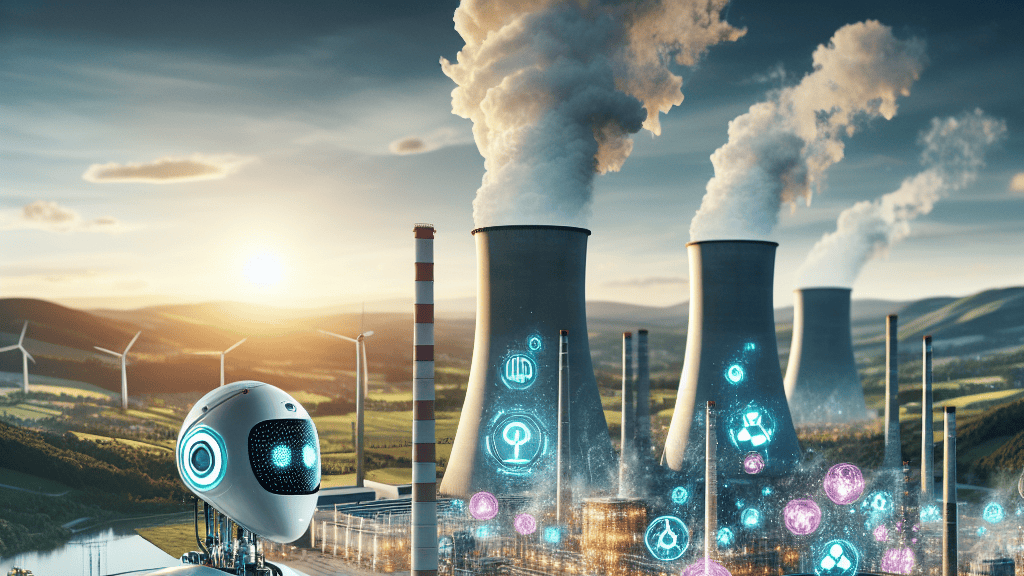
Ever thought AI could be our secret weapon against climate change? This might sound straight out of sci-fi, but it’s actually happening! Researchers discovered that when AI teams up with nuclear energy, it can significantly cut down carbon emissions. Imagine technology not just running our phones and smart homes but also helping to clean up our planet. Cool, right?
Here’s how it works: Traditional methods of understanding nuclear energy’s impact on carbon emissions often missed details. By using something called Quantile Regression, scientists could get a more accurate picture. They realized that while pumping money into nuclear might not directly reduce emissions, introducing AI did! It acts like a magic wand, enhancing how nuclear technology works and making it a cleaner option. So, AI doesn’t just work alone; it boosts nuclear energy’s power to cut back on those pesky CO2 emissions.
Why should we care? Because this fusion of AI and nuclear energy presents a realistic path to a sustainable future. Imagine replacing dirty fossil fuels with smart, AI-driven nuclear power—it’s like giving the planet a high-tech detox! As more countries adopt this combo, we’ll be stepping closer to a world less threatened by climate change. Remember, the future is not about choosing tech over the environment; it’s about smart tech saving the environment!
Fun fact: Artificial intelligence can make nuclear energy cleaner and more efficient, kind of like adding a turbo engine to a car—faster and better for the environment!
FAQs
How does artificial intelligence impact CO2 emissions in nuclear energy?
Artificial intelligence helps make nuclear energy more efficient by optimizing how it operates, which reduces CO2 emissions effectively.
Why isn’t nuclear energy budgeting directly reducing CO2 emissions?
Budgeting alone without AI does not significantly reduce CO2 emissions because it doesn’t optimize the process the way AI does.
Can artificial intelligence make nuclear energy a reliable climate solution?
Yes, by integrating AI, nuclear energy becomes more efficient and environmentally friendly, making it a strong candidate for a low-carbon future.
Why is this research focused on OECD countries?
OECD countries are major players in energy consumption and production, making them key to understanding global carbon emission trends and testing new solutions like AI in nuclear energy.
What is Method of Moment Quantile Regression?
It’s a statistical technique that provides detailed insights into data, helping researchers find specific patterns and relationships, like how AI impacts nuclear energy emissions, across different situations.
Background
This research dives into the intersection of nuclear energy technology and artificial intelligence (AI) and their combined effect on carbon dioxide (CO2) emissions. Nuclear energy has long been considered a cleaner alternative to fossil fuels, but its environmental impact still requires careful examination. AI is becoming an innovative tool in optimizing various systems; when applied to nuclear energy, it fine-tunes processes, improves efficiency, and potentially reduces emissions. To fully understand this interaction, researchers used an advanced statistical method that helps uncover detailed insights into the data, accounting for various influencing factors like endogeneity and heteroscedasticity. These are statistical terms that essentially mean handling unpredictable data patterns and ensuring precise analysis.
History
Traditionally, energy studies focused on basic statistical analyses to measure impacts on emissions. By using advanced quantile regression, this research takes a step beyond typical methods, offering a detailed look at how AI can influence the effectiveness of nuclear energy in reducing carbon emissions. This not only builds on previous studies about renewable energy but also introduces AI as a novel element in the equation. As energy policies increasingly target carbon reduction, recognizing the role of AI opens new possibilities in the energy sector and aligns with global climate goals set in previous international agreements.
Based on “Will artificial intelligence accelerate or delay the race between nuclear energy technology budgeting and net-zero emissions?” by Danish, Adnan Khan, available on arXiv (arxiv.org/abs/2501.17410), used under CC BY 4.0 (creativecommons.org/licenses/by/4.0/).


