





































































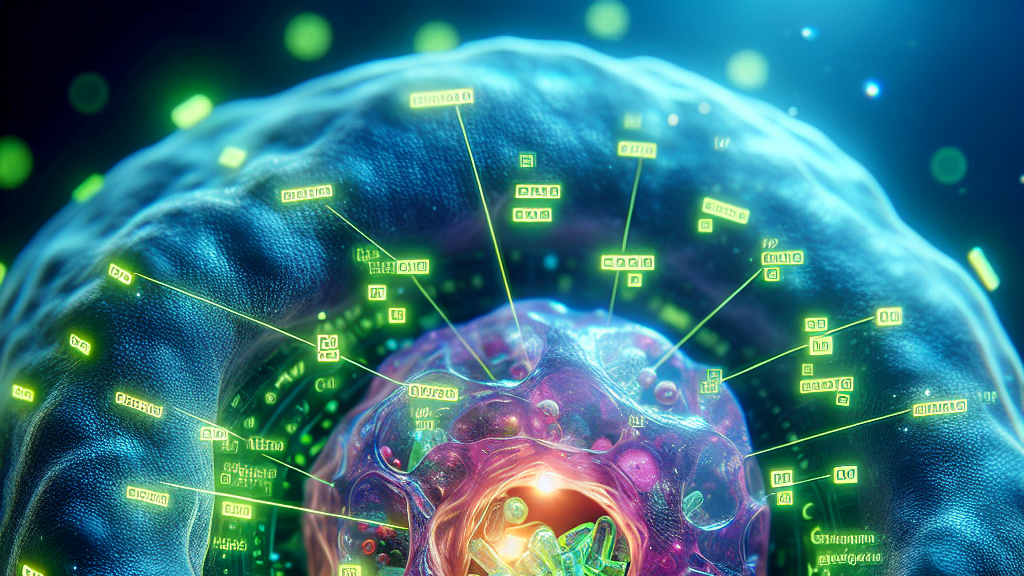
Imagine if we could better understand the very building blocks of life. Scientists are using an incredible tool called CRISPR to tag proteins inside their natural home, the cell. It’s like finding a way to light up parts of a dark room to see them clearly. This ability to spot proteins can help us learn more about how diseases develop at a molecular level, and imagine how transformative that could be for medical research!
The research introduces a clever hack to overcome the challenges of CRISPR protein tagging. By including antibiotic resistance genes in the editing process, scientists can quickly identify which cells are successfully edited. This means that they can not only tag proteins faster but also do it more accurately. It’s like having a shortcut to find the exact puzzle piece you need.
So, why should you care? These advancements are not just lab tricks; they could lead to breakthroughs in disease treatment. For instance, understanding proteins in diseases like cancer or Alzheimer’s can lead to better treatments. This research brings us closer to a future where our knowledge about health is as precise as a laser, opening doors to curing illnesses or preventing them altogether.
Did you know? Scientists can now tag specific proteins in cells using CRISPR to track them, like Google Maps for our bodies!
FAQs
How does CRISPR protein tagging work in cells?
CRISPR protein tagging uses a gene-editing tool to attach tags to proteins, allowing scientists to track them in their natural cellular environment and understand their functions better.
Why is antibiotic resistance used in CRISPR tagging?
Antibiotic resistance is used as a marker to select the cells that have been successfully edited, ensuring that only correctly modified cells are studied.
What impact does this research have on healthcare?
This research could lead to more targeted and effective treatments for diseases by improving our understanding of how proteins function in health and disease.
Background
CRISPR is a powerful gene-editing tool that allows scientists to make precise changes in DNA. Protein tagging is a technique where specific proteins are labeled with a ‘tag’ to study their position and role in living cells. This research uses CRISPR to tag proteins more efficiently, helping scientists observe how proteins operate in their natural setting.
History
The CRISPR-Cas9 technology was first discovered in the early 2000s, revolutionizing genetic research with its ability to make precise alterations in DNA sequences. Protein tagging has been around longer, but combining it with CRISPR has only become feasible in recent years. This study enhances the precision and efficiency of these combined techniques, overcoming previous limitations in homology-directed repair.
Based on “Fast Antibiotic resistance-Based gene editing of mammalian cells with CRISPR-Cas9 (FAB-CRISPR)” by Petia Adarska, Eleanor Fox, Joshua Heyza, Carlo Barnaba, Jens Schmidt, Francesca Bottanelli, available on arXiv (arxiv.org/abs/2502.12675), used under CC BY 4.0 (creativecommons.org/licenses/by/4.0/).
