





































































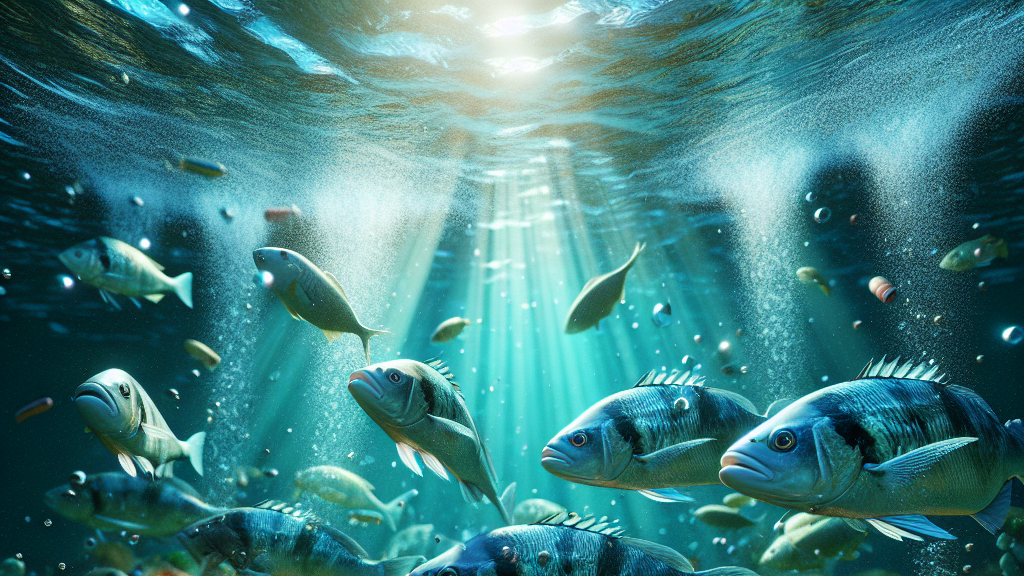
Can a simple compost turn into a superhero for fish health? In the quest for sustainable solutions, scientists have discovered that a special type of compost, made from marine waste, boosts the health of fish like seabream. This isn’t just about cleaning up the ocean’s leftovers, but transforming them into fish-friendly feed that’s making waves in the aquaculture world.
The research focused on a compost fermented by heat-loving bacteria using non-edible marine resources. When given to seabream for 70 days, these fish were able to fend off a harmful pathogen with much greater success. The death rate among fish exposed to the pathogen dropped significantly when this compost was part of their diet. Moreover, fish on this diet showed quicker recovery times after anesthesia and had smoother, glossier skin surfaces—all indicators of better overall health.
Imagine if salmon farms or other fish-raising operations could adopt this approach. By using this specialized compost, fish could grow stronger and healthier, leading to more resilient aquaculture practices. Not only does this make for happier fish, but it also supports the fishing industry in a more sustainable way, which is great news for everyone who enjoys seafood or relies on it for their livelihood. This innovative approach could be the wave of the future for fish health and sustainability.
Fish fed with compost-fermented feed had a survival rate 40% higher than others when exposed to a common pathogen!
FAQs
What are the anti-pathogenic properties of compost-fermented feed for fish?
This research shows that compost-fermented feed reduces fish mortality rates from pathogens, making them healthier and more resilient. By feeding fish this compost, their resistance to certain diseases improves significantly.
How does compost-fed fish compare in appearance to those on regular feed?
Fish on compost-fermented feed show a smoother and glossier body surface. This indicates better overall fish health, which can be visually assessed using texture and HSV analysis, providing a non-invasive diagnosis method.
Why is compost fermentation important for sustainable fishing?
Compost fermentation using marine waste creates an eco-friendly feed that enhances fish health, potentially reducing reliance on harmful chemicals and improving the sustainability of aquaculture practices.
How are thermophilic bacteria used in compost fermentation?
These heat-loving bacteria break down marine waste materials efficiently, producing a nutrient-rich compost that contains beneficial properties for fish health. Their role is crucial in creating an effective feed additive.
What is the future potential of using composted feed in aquaculture?
The potential is vast, as composted feed can lead to healthier fish, which means better yield for fish farms and reduced environmental impact, offering a sustainable solution for the fishing industry.
Background
The study revolves around the concept of using thermophilic bacteria to ferment marine waste into a compost that can be used as a feed additive for fish. Thermophiles thrive at high temperatures and are excellent at breaking down materials, making them ideal for this process. The goal is to create a sustainable feed option that enhances fish health without relying on synthetic chemicals.
History
Traditionally, fish farming has relied on synthetic diets and antibiotics to maintain fish health, but these can have negative environmental impacts and potential health risks. Earlier studies have explored natural alternatives, but this particular study is significant as it combines sustainable practices (using marine waste) with advanced fermentation techniques, setting a new standard for eco-friendly fish health solutions.
Based on “Anti-pathogenic property of thermophile-fermented compost as a feed additive and its in vivo external diagnostic imaging in a fish model” by Hirokuni Miyamoto, Shunsuke Ito, Kenta Suzuki, Singo Tamachi, Shion Yamada, Takayuki Nagatsuka, Takashi Satoh, Motoaki Udagawa, Hisashi Miyamoto, Hiroshi Ohno, Jun Kikuchi, available on arXiv (arxiv.org/abs/2503.22916), used under CC BY 4.0 (creativecommons.org/licenses/by/4.0/).
