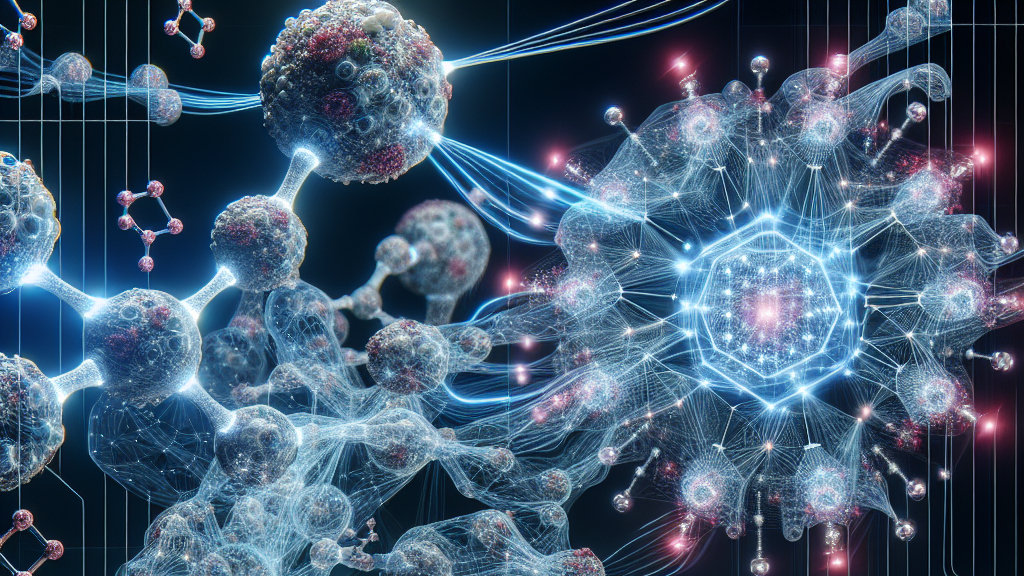
Imagine if computers could help discover medicines faster than ever before. We’re entering an age where artificial intelligence might do just that, especially in the fight against cancer. Researchers are using AI to sift through countless tiny proteins, known as peptides, which could potentially stop cancer cells in their tracks. This method could be a game-changer, especially as traditional ways of discovering new drugs can be slow and expensive.
The magic behind this lies in an approach called topology-enhanced machine learning. Essentially, scientists are using a computer model that looks at the ‘shape’ and ‘connections’ within peptides. By understanding these relationships, the AI can predict which peptides might be powerful against cancer. This prediction system is not just fast but also offers insights into why certain peptides work, making it easier to further refine and develop them into treatments. The results so far are promising, showing that this method outperforms many existing technologies in identifying the best candidates.
Think about a future where doctors could quickly find personalized treatments for cancer patients, drastically cutting down on time and cost compared to conventional methods. By using AI to rapidly pinpoint effective anticancer peptides, we might soon have more weapons in our medical arsenal to fight cancer. With this technology, a world where cancer is a bit less scary could be just around the corner.
Did you know? Peptides are tiny proteins made from just a few amino acids, but they can have huge impacts on health, even acting as disease-fighters in our bodies.
FAQs
What are therapeutic peptides and why are they important in cancer treatment?
Therapeutic peptides are small proteins that have the potential to target and disrupt cancer cells specifically. Unlike traditional drugs, they can be designed to minimize side effects and increase treatment efficiency.
How does artificial intelligence help in discovering anticancer peptides?
Artificial intelligence speeds up the process by analyzing patterns and features in peptides, using machine learning models to predict which ones might effectively target cancer cells. This can make the development of treatments faster and more accurate.
What is a topology-enhanced machine learning model?
A topology-enhanced machine learning model is a type of AI that focuses on the structural arrangement and connections within peptides to better understand and predict their potential effectiveness against cancer.
What advantages does this new AI method have over traditional drug discovery methods?
This AI method offers faster and more efficient peptide screening, greater interpretability of results, and cost-effectiveness. It provides a better understanding of why certain peptides can fight cancer, paving the way for personalized medicine.
Can AI replace other forms of cancer research?
While AI is a powerful tool in the discovery process, it complements rather than replaces other methods. It helps speed up discovery phases and can provide insights that guide traditional research efforts.
Background
In recent years, the focus has shifted towards using computer models to streamline complex processes in drug discovery. The study of peptides—short chains of amino acids—is crucial in this realm, as they can act as messengers in the body that influence biological processes. By analyzing ‘topological’ features, which refer to the structure and connection patterns of these peptides, machine learning can predict how they might interact with cancer cells and potentially halt their growth.
History
The journey of AI in healthcare has been a gradual one, with early efforts focusing on data analysis and simulations. Over time, the ability to model complex biological processes has improved, leading to AI tools that now assist in identifying viable drug candidates. Previous techniques focused on traditional data characteristics, but this study introduces a novel angle by analyzing the topological structure of molecules, offering a unique perspective and leading to potentially groundbreaking efficacy in anticancer research.
Based on “Topology-enhanced machine learning model (Top-ML) for anticancer peptide prediction” by Joshua Zhi En Tan, JunJie Wee, Xue Gong, Kelin Xia, available on arXiv (arxiv.org/abs/2407.08974), used under CC BY 4.0 (creativecommons.org/licenses/by/4.0/).