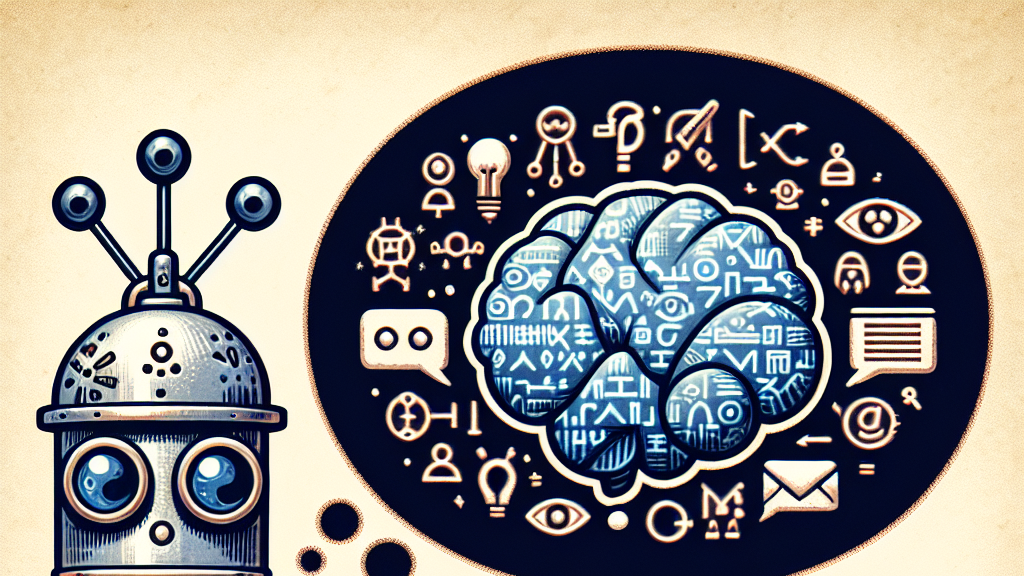
Have you ever wondered if your personal information is safe when AI learns new stuff? In today’s tech-savvy world, privacy is a big deal, and researchers are working hard to ensure our data doesn’t fall into the wrong hands. This study reveals an exciting breakthrough: a method that allows AI to learn new tasks at record speeds without sacrificing privacy. That’s right, your secrets are safe even while machines get smarter.
So, what’s behind this cool discovery? It all boils down to the way transformers, a kind of AI model, learn. Traditionally, when AI models crunch data, they expose some information, but thanks to a technique called differential privacy, this research introduces a smarter way. By training AI with linear attention heads and adding special algorithms, they found a balance between learning accuracy and privacy protection. Unlike older methods, this new technique is tougher against attacks that might try to mess with how the AI works.
Imagine using your smartphone without worrying if it’s eavesdropping on your every move. This research could soon make that possible, as it paves the way for AI systems that learn quickly while keeping your personal data locked tight. With these advancements, the future of AI might just be a safer and more private place for everyone.
Did you know? Differential privacy adds a little noise to data, which makes it hard for anyone to pinpoint individual details, keeping your personal info safe.
FAQs
What is in-context learning and why does it matter?
In-context learning refers to a powerful ability of AI models to learn new tasks by using examples given at the time of operation. This matters because it allows AI models to adapt and learn quickly without needing to be retrained from scratch for every new task.
How does differential privacy protect my data when using AI?
Differential privacy involves adding controlled noise to data used by AI models, making it hard to trace back any information to an individual, thus keeping your data private and protected.
Can this new AI learning technique withstand data attacks?
Yes, according to the research, this new training method is more robust against adversarial attacks that can target AI models, unlike older methods such as ridge regression.
Background
In-context learning is an amazing feature of modern AI models like transformers, which allows them to generalize from a few examples rather than needing huge amounts of data. This research focuses on improving the security aspect of this feature by using a method called differential privacy. Essentially, differential privacy helps keep data hidden by blending it with some randomness, ensuring that sensitive information remains confidential even while being used for training AI.
History
The concept of in-context learning has been around for some time; it gained prominence with the rise of transformer models that can perform diverse language tasks. However, privacy has been a longstanding concern when it comes to AI learning. Previous studies have developed various privacy techniques, but this research takes a novel step by devising a differentially private method specifically for enhancing the in-context learning of transformers, thus building a more secure foundation for future AI advancements.
Based on “How Private is Your Attention? Bridging Privacy with In-Context Learning” by Soham Bonnerjee (Kingsley), Zhen Wei (Kingsley), Yeon, Anna Asch, Sagnik Nandy, Promit Ghosal, available on arXiv (arxiv.org/abs/2504.16000), used under CC BY 4.0 (creativecommons.org/licenses/by/4.0/).