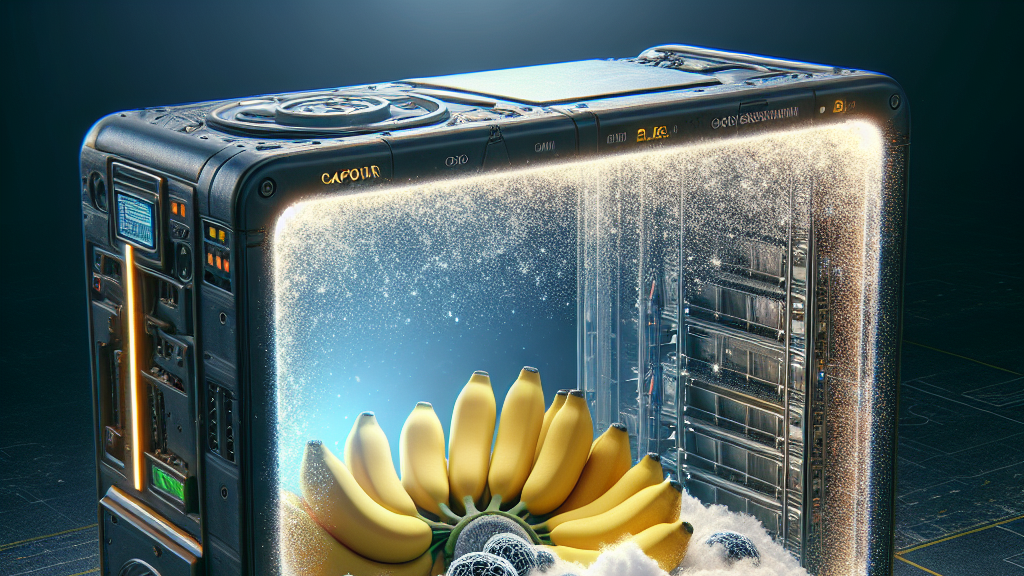
Imagine if outer space could help us catch smugglers right here on Earth! Scientists are now exploring the possibility of using cosmic-ray muons, tiny particles from the universe, to sniff out illegal drugs hidden deep within cargo shipments. This isn’t just sci-fi—it’s a safe, non-invasive way to peek inside without opening a thing. Sounds like magic, right?
Here’s how it works: when muons zip through objects, they scatter and absorb in unique ways. By tracking these patterns, researchers can spot anomalies that might indicate hidden contraband. This study used simulations to test this method on cargo scenarios including drugs concealed within legitimate goods. They found that a quick 60-second scan can flag suspicious areas, while a more detailed 30-minute scan can precisely locate and identify the hidden loot.
If this technique becomes widespread, it could revolutionize how we check for smuggling at borders and ports. Imagine speeding through airport security, knowing that high-tech cosmic-ray detectors are keeping everyone safe without slowing us down. In the future, outer space might just be our new ally in the fight against illegal trade!
Muon tomography uses particles that travel from outer space to Earth, passing through everything—making them perfect for looking inside objects without touching them.
FAQs
How does muon tomography help in detecting hidden drugs in cargo?
Muon tomography uses cosmic-ray particles that can pass through solid objects. When they do, they scatter and absorb differently depending on the material. By analyzing these patterns, researchers can identify hidden materials like drugs within cargo.
What makes muon tomography different from other scanning techniques?
Unlike traditional x-rays, muon tomography is non-invasive and doesn’t require opening shipments. It’s a passive technique that safely uses natural cosmic rays, making it suitable for large-scale cargo inspection without the need for harmful radiation.
How effective is muon tomography in detecting concealed drugs?
In simulations, this method was able to detect drugs with a high level of confidence, even when concealed within legitimate goods such as banana boxes. The rapid scan identifies anomalies quickly, while an extended scan provides detailed imaging to pinpoint exactly what’s hidden.
Can muon tomography speed up cargo inspections?
Yes, the initial 60-second scan can quickly flag suspicious areas, potentially speeding up the inspection process compared to more traditional methods. This could lead to faster, yet reliable, security checks at borders and entry points.
Is cosmic-ray muon tomography safe for regular use?
Absolutely! Cosmic-ray muons are naturally occurring and pass through us all the time without harm. The technology capitalizes on this harmless process, making it incredibly safe for regular cargo inspections.
Background
Muon tomography is based on measuring how cosmic-ray muons—tiny, high-energy particles from space—interact with different materials. These interactions cause the muons to scatter or be absorbed, and analyzing these patterns can help identify what’s inside an object without needing to physically open or disturb it. This technique is well-suited for applications like cargo inspection.
History
Cosmic-ray muons have fascinated scientists for years, leading to their use in various imaging techniques. Before this study, muon tomography has been explored for tasks like archaeology and checking nuclear reactors. This research builds on that legacy, applying the method to combat smuggling by innovatively separating drugs from other materials based on how they interact with muons.
Based on “Muon Imaging for Illicit Cargo Detection: A Simulation-Based Study” by Anzori Sh. Georgadze, available on arXiv (arxiv.org/abs/2505.18851), used under CC BY 4.0 (creativecommons.org/licenses/by/4.0/).