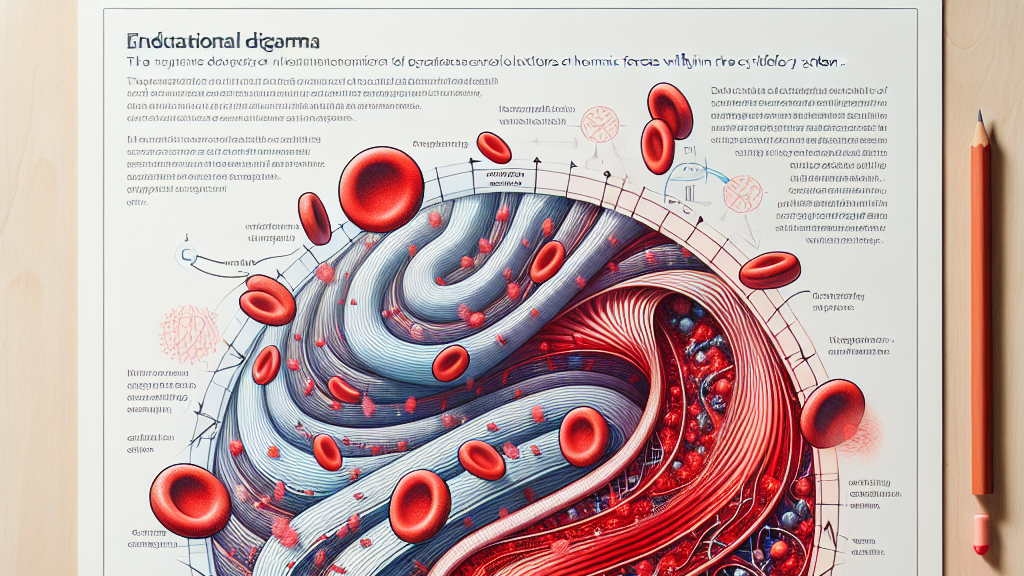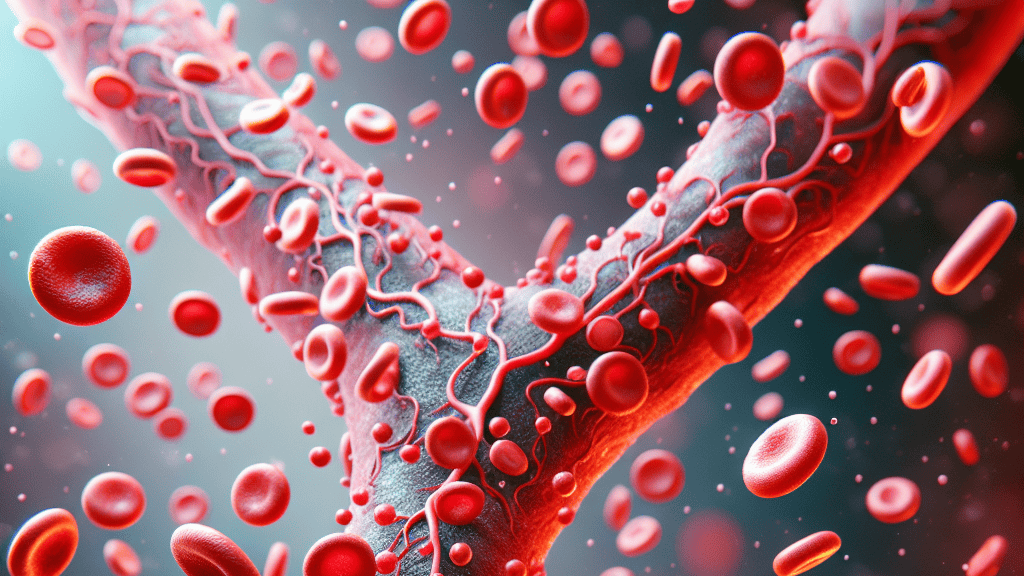
Imagine tiny blood cells racing through your veins like cars on a highway. Sometimes, these cells don’t just flow evenly; some take the fast lane, while others hug the slow lane. This uneven flow can change significantly, particularly if you’ve got a condition like sickle cell disease, where cells shape-shift and behave differently, potentially stirring up trouble for your blood circulation.
Researchers have delved deep into this by simulating the movement of red blood cells, especially focusing on sickle cell disease. Normally, red blood cells like to keep things orderly, heading straight down the middle of your veins, much like cars staying in their lane. But sickle cells, with their quirky shapes, tend to drift toward the edges, almost as if they were on a sightseeing trip. This seemingly small shift affects where and how these cells end up in your network of veins.
Why does this matter? Well, when sickle cells pile up along the vein walls, particularly in areas where veins split and twist, they can stir up pressure and friction, a bit like water rushing through a narrow pipe. This can harm the walls and lead to the kind of damage associated with conditions like sickle cell disease. So the way our blood cells move isn’t just a fun fact; it’s a puzzle piece that might help solve some of our most pressing health challenges.
Did you know that sickle-shaped red blood cells prefer the slow lane in your veins, potentially leading to health complications?
FAQs
What unexpected discovery did scientists make?
Scientists discovered that sickle cells tend to drift to the edges of veins, causing disruptions in blood flow and potentially leading to vein damage.
How does this research help with blood disorders?
This research helps us understand the mechanics of blood flow, which could lead to better treatments for blood disorders like sickle cell disease.
Why do normal red blood cells and sickle cells behave differently in veins?
Normal red blood cells often migrate towards the center due to their shape and dynamics, while sickle cells, with their unique shape, migrate toward the vessel walls, affecting blood flow.
What role do vessel branches play in blood cell behavior?
Vessel branches influence how blood cells are distributed, with cells often favoring branches that accommodate their size and shape, impacting overall circulation.
How can this study impact treatment strategies?
By understanding how sickle cells behave, we can develop targeted interventions to mitigate the damage they cause in the veins.
Background
Blood circulates through our body via a network of veins and arteries, where red blood cells play a crucial role in delivering oxygen. In disorders like sickle cell disease, red blood cells become misshapen, affecting their movement and how they interact with vessel walls. This study looks into the dynamics of these cells, particularly focusing on how they behave when veins split or bifurcate, which can influence overall blood circulation.
History
The study of blood flow dynamics has evolved significantly over the years. Initially, research focused on basic aspects of blood cell movement. However, with advancements in computational modeling, researchers can now simulate complex scenarios like sickle cell behavior in blood vessels. This study builds on past work by integrating modern simulation techniques to explore the peculiar habits of sickle cells and their impact on microcirculatory health.
Based on “Red blood cell partitioning and segregation through vascular bifurcations in a model of sickle cell disease” by Xiaopo Cheng, Christina Caruso, Wilbur A. Lam, Michael D. Graham, available on arXiv (arxiv.org/abs/2501.04017), used under CC BY 4.0 (creativecommons.org/licenses/by/4.0/).