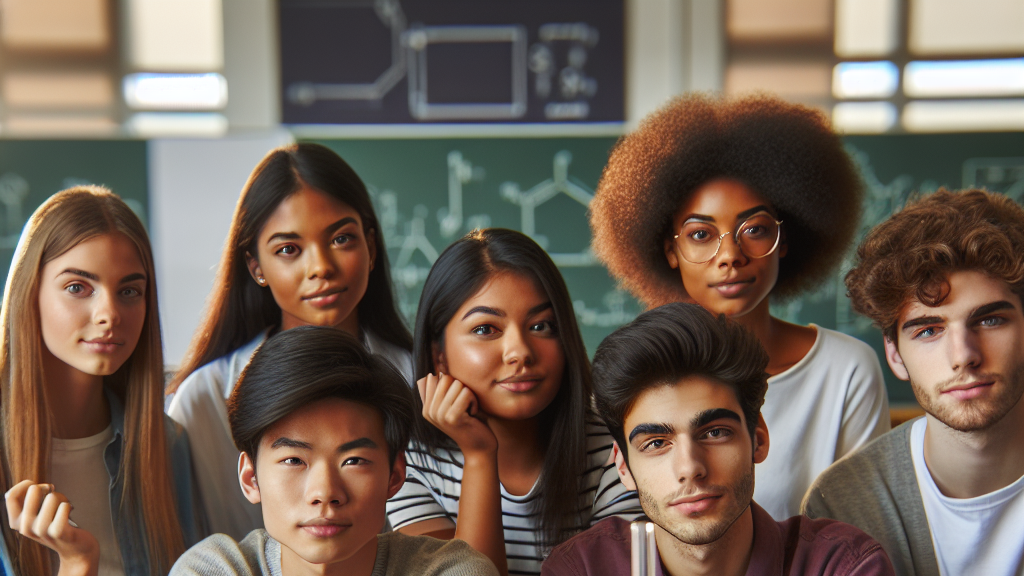
Imagine if high school students could not only learn about gravity from a textbook but also deeply understand the debates and discussions that shaped our knowledge of this powerful force. That’s precisely what’s happening with a new program that introduces gravitational physics to teenagers in an exciting and engaging way. This isn’t just about learning the facts; it’s about diving into the controversies and discussions that have advanced our understanding of gravity throughout history.
The program, inspired by the Einstein Telescope educational initiative, uses debates and thought-provoking questions to make gravitational physics come alive for students. By encouraging learners to think critically and discuss their thoughts, the program bridges the gap between static scientific concepts and dynamic, evolving knowledge. It’s like giving students a backstage pass to the history of science, where they can see how scientific debates and trials have led to the refined understanding we have today.
Ultimately, the goal is to inspire more students to pursue careers in science, technology, engineering, and mathematics (STEM) fields. By presenting science as a living, breathing discipline shaped by human creativity and debate, students are more likely to see themselves as future scientists and innovators. With a deeper understanding of how scientific knowledge evolves, more teenagers might choose to follow these captivating career paths.
Did you know the gravitational pull we feel on Earth is just 0.0000000000667 times the gravitational constant? Mind-boggling!
FAQs
How does introducing gravitational physics in high school benefit students?
Introducing gravitational physics in high school helps bridge the gap between what students learn in textbooks and the actual nature of scientific exploration. It encourages critical thinking and engagement with scientific debates, preparing students for careers in STEM fields.
What role does the Einstein Telescope educational program play in this learning approach?
The Einstein Telescope educational program provides a framework and resources for high school students to explore gravitational physics in a hands-on manner. It emphasizes the role of debates and historical context to make the learning process more engaging and realistic.
How can this teaching method inspire students to pursue STEM careers?
By showing students the dynamic and exciting process of scientific discovery and debate, this teaching method can ignite interest and passion for STEM careers. It presents science as a field of ongoing exploration and innovation, rather than just a set of facts to memorize.
Why is it important for students to understand scientific debates and controversies?
Understanding scientific debates and controversies helps students appreciate the evolving nature of scientific knowledge. It fosters critical thinking and the ability to question and analyze information, skills that are vital in any field of study.
What is a practical example of how this learning approach has impacted students?
A practical example is seen in students who have gone through this program and shown increased enthusiasm for science projects and a higher interest in pursuing further studies in physics and related fields.
Background
Gravitational physics is the study of how objects with mass attract one another, a concept crucial to understanding planets, stars, and galaxies. It’s not just theoretical; it affects everyday life, from the tides to satellite operations. Teaching it in high schools helps students connect classroom learning with real-world phenomena and introduces them to the kind of critical thinking necessary for scientific progress.
History
For centuries, gravity was a mysterious force until Isaac Newton proposed the theory of universal gravitation in the 17th century. Albert Einstein later revolutionized the field with his theory of general relativity, describing gravity as a curvature of space-time. The Einstein Telescope, a future gravitational wave observatory, aims to further our understanding of these massive cosmic phenomena. Introducing this evolving narrative into high schools connects students with the ongoing journey of scientific discovery.
Based on “The role of natural language in understanding the universe: a teaching-learning sequence for high school students” by Matteo Tuveri, Viviana Fanti, available on arXiv (arxiv.org/abs/2503.19812), used under CC BY 4.0 (creativecommons.org/licenses/by/4.0/).